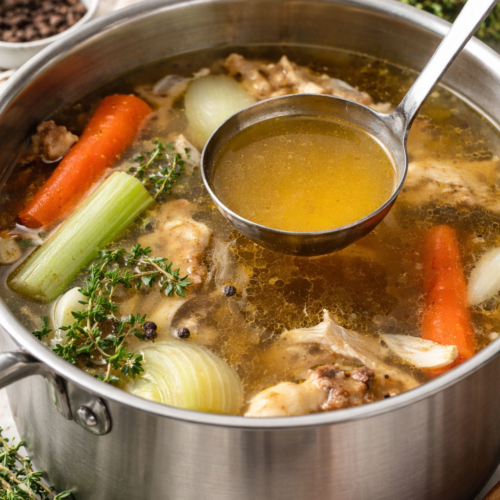
Chicken Bone Broth (homemade chicken stock recipe)
earn how to make rich homemade chicken stock, how long it lasts, and the best ways to store and use it.
Equipment
- Heavy Stock Pot or Dutch Oven with tight-fitting lid
- Fine mesh sieve
- storage containers
Ingredients
- 3.5 lbs Bony Chicken Pieces Legs, wings, necks, or back bones
- 4 ribs Celery tops and leaves, too!
- 4 medium Carrots cut into 2 inch chunks
- 2 large Onions quartered
- 3 cloves Garlic peeled
- 3 Bay leaves
- 10 Whole peppercorns
- 2 quarts Water
Optional Herbs & Spices
- Rosemary
- Thyme
- Ginger
Optional Aromatic Vegetables
- Parsnips
- Celery Root
- Green Onions (Scallions)
Instructions
- Layer all ingredients into the pot. Pour in the water.
- Bring to a boil over medium-high heat. Once the pot comes to a rolling boil, cover and reduce the heat to a slow simmer over low heat. Only a very low bubble is needed for this slow simmer. The slow simmer is what draws out all flavor!
- Simmer covered over LOW heat for 3 hours, checking the pot occasionally for the water level. If the water level seems to be dropping, add additional water to keep the pot at around two quarts of water. If foam develops, skim the foam away with a spoon and discard.
- After the stock is done, it will have a light golden color and smell and taste like chicken soup. Remove the pot from the heat and set aside to cool slightly.Remove the chicken to a large bowl or plate and set asideOnce the stock is cool enough to safely handle. strain the stock by pouring it through a fine-mesh sieve into another large pot or bowl to remove the spent vegetables, herbs, bones, and cartilage. Let the stock cool and skim the fat off the top. The cooler the stock is, the easier it will be to remove the fat floating on the surface.
- For the reserved chicken meat, This can be shredded off the bones and the bones be discarded. The shredded meat is perfect anywhere you would use pre-cooked shredded chicken meat like soups, tacos, chicken salad, and chimichangas.
- IMPORTANT TO NOTE: The chilled Chicken stock will turn gelatinous. This is perfectly normal.This has to do with the chicken bones themselves. Slowly simmering the bones draws out all the vitamins and nutrients into the broth but it also draws out the collagen and marrow. The collagen is what gives the chicken stock its silky texture. Once you reheat the stock, it will all become fully liquified again. The bone stock adds a beautiful depth of flavor to rice and chicken dishes and is great for other uses like gravy and even ramen noodles.
Notes
- Start with cold water to help extract the best flavor and collagen from the bones.
- Keep it at a gentle simmer, not a hard boil. Boiling can make stock cloudy and can give it a harsher taste.
- Skim foam during the first 30–45 minutes for a cleaner flavor and clearer stock.
- Do not heavily salt the stock while cooking. Keep it neutral so you can season recipes later without over-salting.
- Strain well through a fine-mesh strainer for a smooth stock (cheesecloth optional).
- Cool quickly and safely before storing (spread into shallow containers or set the pot in an ice bath).
- Storage: Refrigerate 4–5 days or freeze up to 6 months for best quality.
- Remove the fat layer after chilling if you want a cleaner taste, or leave it as a protective “seal” for storage.
Nutrition
Serving: 1cup | Calories: 169kcal | Carbohydrates: 7g | Protein: 23g | Fat: 5g | Saturated Fat: 1g | Cholesterol: 103mg | Sodium: 159mg | Potassium: 478mg | Fiber: 2g | Sugar: 3g | Vitamin A: 5221IU | Vitamin C: 6mg | Vitamin E: 1mg | Vitamin K: 13µg | Calcium: 47mg | Folate: 25µg | Iron: 1mg | Zinc: 2mg