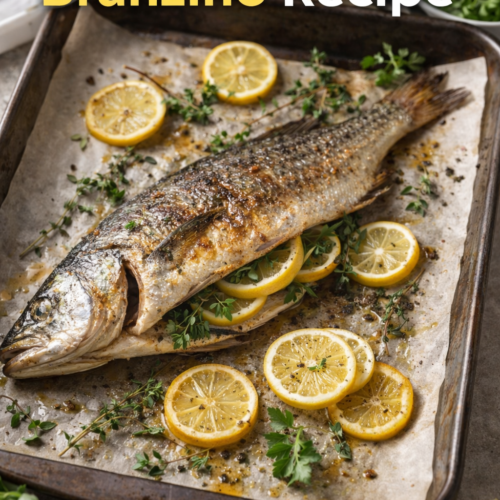
Easy Whole Branzino Recipe
This easy whole branzino recipe delivers crispy skin and tender, flaky fish with simple Mediterranean flavors. Perfect for beginners, this foolproof oven method shows you exactly how to cook whole fish with confidence.
Ingredients
- 2 whole branzino , cleaned and scaled
- 2 tablespoons olive oil
- 1 lemon , sliced
- 4 garlic cloves , smashed
- 1 handful fresh parsley
- 4 sprigs fresh thyme
- 1 teaspoon salt
- 1/2 teaspoon black pepper
Instructions
- Preheat oven to 425°F.
- If needed, use the back of a kitchen spoon to remove any remaining scales from the fish, scraping from tail toward the head.
- Pat the fish completely dry with paper towels.
- Use a sharp knife to make 2 to 3 shallow diagonal cuts on each side of the fish, cutting through the skin but not into the bone.
- Season the cavity and outside of the fish with salt and black pepper.
- Lightly drizzle olive oil inside the cavity, then stuff with lemon slices, garlic, parsley, and thyme.
- Rub or drizzle olive oil over the outside of the fish.
- Place fish on a parchment-lined baking sheet.
- Roast for 18 to 22 minutes, until the fish flakes easily or reaches an internal temperature of 145°F.
- Let rest for 3 to 5 minutes before serving.
Notes
- Always ask your fishmonger to clean and scale the fish to save prep time.
- If scaling at home, use the edge of a spoon and scrape from tail toward the head.
- Pat the fish completely dry before cooking to ensure crispy skin.
- Score only the skin—do not cut too deeply into the flesh or bone.
- Season inside the cavity generously for the best flavor throughout the fish.
- Use just a light drizzle of olive oil inside; more oil should go on the outside for crisping.
- Roast at high heat (425°F) to achieve golden, crispy skin.
- Do not overcook—branzino cooks quickly and can dry out if left too long.
- Let the fish rest for a few minutes before serving for best texture.
- To serve, gently lift the fillet away from the bones—the skeleton will separate easily.