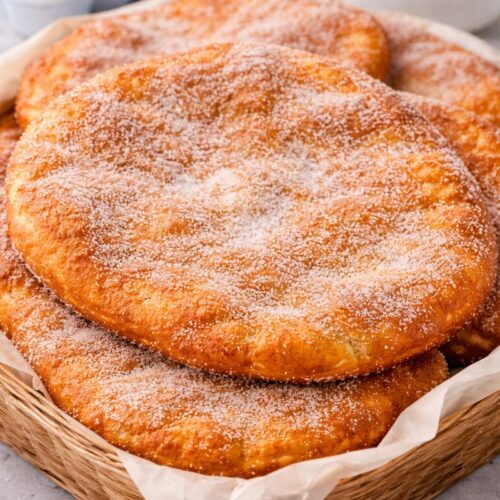
Portuguese Donuts (Malasadas) - Fall River / New Bedford Style
Fall River Portuguese donuts (malasadas): fluffy, sugar-rolled, no-hole doughnuts with rich eggy flavor. A feast-style favorite made at home.
Ingredients
- 1 package (¼-ounce) active dry yeast
- ¾ cup sugar , plus 1 teaspoon (divided)
- ¼ cup warm water (110°F)
- 6 eggs , room temperature
- 6 cups all-purpose flour
- ¼ cup butter , melted and cooled slightly
- ¼ teaspoon salt
- 1½ cups whole milk , room temperature
- ½ cup half-and-half , room temperature
- Granulated sugar , for rolling
- Oil for frying (vegetable or canola)
Instructions
Activate the yeast
- In a small bowl, whisk together the yeast, 1 teaspoon sugar, and warm water. Let sit 5–10 minutes until foamy.
Whip the eggs
- In a stand mixer fitted with the whisk attachment, beat the eggs and remaining ¾ cup sugar until thick and pale yellow (this gives malasadas its signature richness).
Form the dough
- Switch to the dough hook. With the mixer on low, slowly add: yeast mixture, melted butter, milk, half-and-half, and salt. Add the flour 1 cup at a time, mixing until a soft dough forms. The dough should pull away from the sides of the bowl and climb the hook slightly.
First rise
- Transfer dough to a lightly oiled bowl. Cover with plastic wrap and place in a warm, draft-free spot. Let rise until doubled, about 1½ hours.
Roll & second rise
- Turn dough onto a floured surface and lightly dust the top. Roll into a rectangle about ¼-inch thick. Cover with lightly greased plastic wrap and let rise again until doubled, about 1 hour.
Cut & fry
- Heat oil to 350°F.
- Cut dough into 1-inch squares (traditional—no holes!). Fry a few at a time, turning gently, until golden brown, about 3–4 minutes total.
Sugar & serve
- Drain on paper towels, then immediately roll warm malasadas in granulated sugar. This ensures the sugar sticks to the hot dough.
- Serve immediately—they’re best warm.
Notes
What Often Goes Wrong (And How to Fix It)
- Dough doesn’t rise - Check yeast freshness, confirm water is about 110°F, and let dough rise in a warm draft-free spot.
- Malasadas are greasy - Oil is too cool. Fry at 350°F and avoid overcrowding (which drops oil temperature).
- Outside browns too fast, inside undercooked - Oil is too hot. Lower the heat slightly and keep the pieces uniform in size and thickness.
- The dough is overly sticky and hard to handle. Lightly flour your work surface and your hands. Add flour sparingly; too much makes them dense.
- Dense, tight texture - Don’t rush the rises. Let the dough fully double both times and avoid adding excess flour during mixing.
- Sugar won’t stick - Roll while warm, right after draining. If they cool too much, mist lightly with water and re-roll.
Ingredient Substitutions
- Active dry yeast: You can use instant yeast (same amount), but skip blooming and mix it into the flour; rise times may shorten.
- Whole milk: 2% works, but the texture may be slightly less rich.
- Half-and-half: Use more whole milk, or replace it with light cream for extra richness.
- Butter: Can be replaced with a neutral oil, but butter gives better flavor.
- Sugar coating: Cinnamon sugar works well; superfine sugar adheres beautifully.