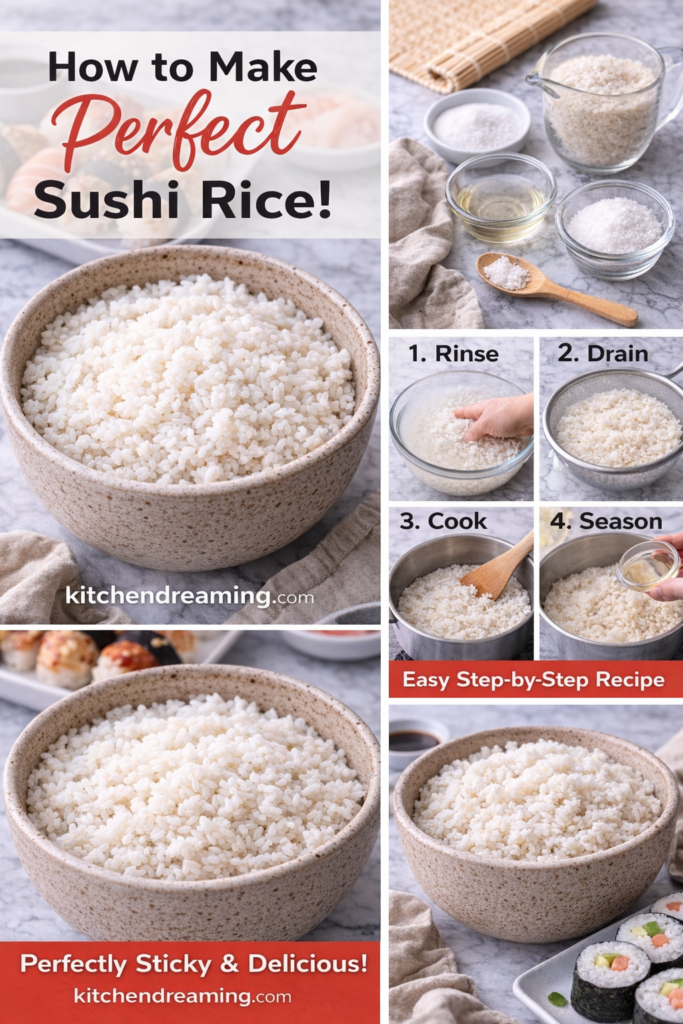
This
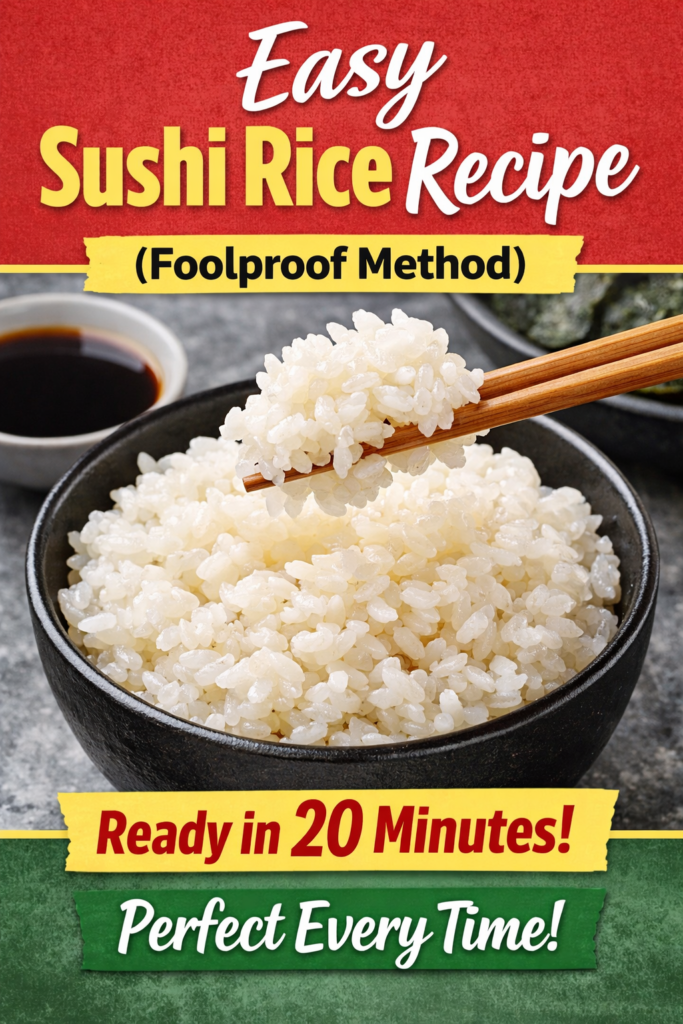
The sushi rice recipe is the foundation of great sushi at home. When the texture is right and the seasoning is balanced, everything from sushi rolls to rice bowls instantly improves.
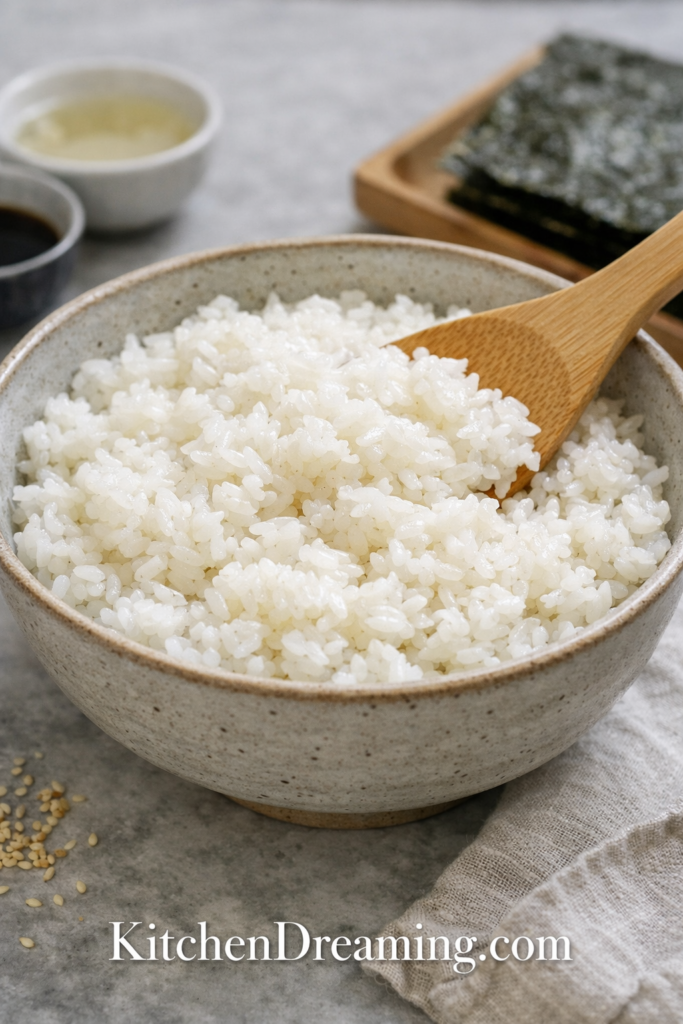
Making sushi rice at home is easier than it looks once you understand the key steps. After testing multiple methods and ratios, this approach consistently delivers the perfect sushi rice texture.
Making sushi rice at home doesn’t require special equipment—just the right method. If you’re new to it, the rice cooker method is the easiest place to start. From there, you can explore stovetop or Instant Pot [paid link] methods depending on your preference.
Why You’ll Love This Recipe
- Foolproof sushi rice water ratio for consistent results
- Works with stovetop, rice cooker, or Instant Pot [paid link]
- Balanced sushi rice seasoning that’s not overpowering
- Fluffy, slightly sticky rice that holds together without clumping
- Easy to scale for meal prep or entertaining
- Beginner-friendly with clear, step-by-step instructions
- Reliable, better-than-takeout results at home
What Is Sushi Rice?
Sushi rice is short-grain Japanese rice that’s cooked and then seasoned with rice vinegar, sugar, and salt.
Short-grain rice contains more starch than long-grain varieties like jasmine or basmati. This gives sushi rice its signature sticky texture that helps it hold together without becoming mushy.
The seasoning creates a balanced flavor that is lightly tangy and subtly sweet, which defines authentic sushi.
Sushi Rice Water Ratio (Perfect Every Time)
The right water-to-rice ratio is the most important factor in achieving perfect sushi rice texture.
- Stovetop: 1 cup rice to 1 ¼ cups water
- Rice cooker: Follow cooker lines (typically similar ratio)
- Instant Pot [paid link]: 1 cup rice to 1 cup water
If the rice turns out too soft, reduce the water slightly. If it’s too firm, add a small amount more next time.
For exact measurements and troubleshooting, see my complete sushi rice water ratio guide.
Sushi Rice Seasoning Recipe (Authentic Flavor)
This simple mixture gives sushi rice its signature taste.
- ¼ cup rice vinegar
- 2 tablespoons sugar
- 1 teaspoon salt
Gently heat until dissolved. Do not boil.
If you want to customize flavor, see my complete sushi rice seasoning recipe guide for variations.
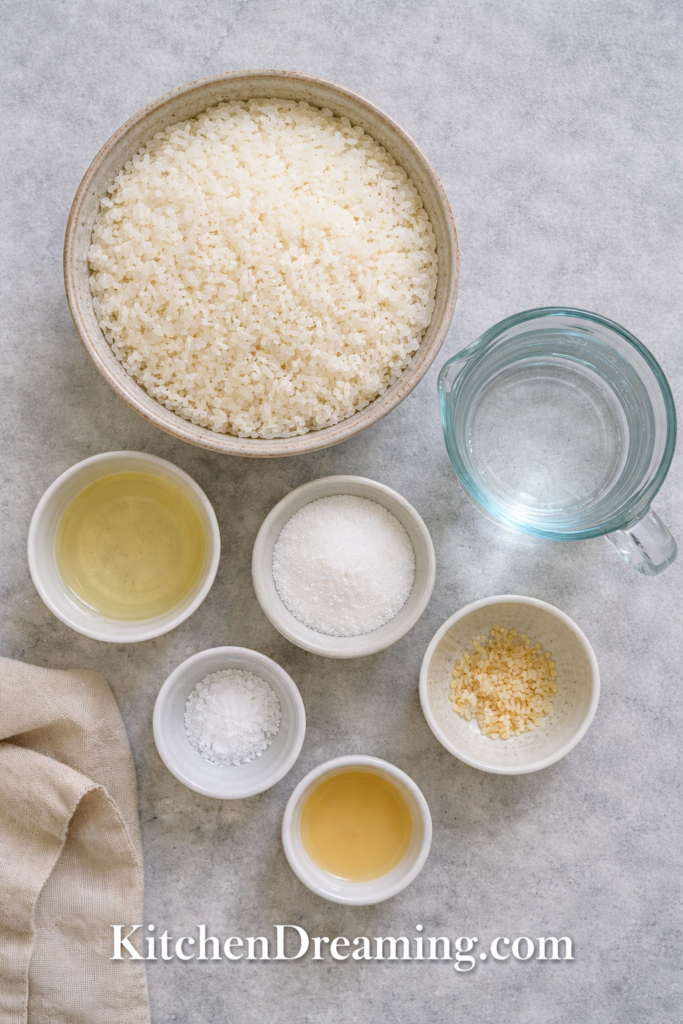
Ingredients (& What They Do)
- Short-grain sushi rice – Essential for sticky, cohesive texture
- Water – Controls doneness; correct ratio prevents mushy or dry rice
- Rice vinegar – Adds tangy flavor that defines sushi rice
- Sugar – Balances acidity and enhances overall flavor
- Salt – Rounds out and enhances all ingredients
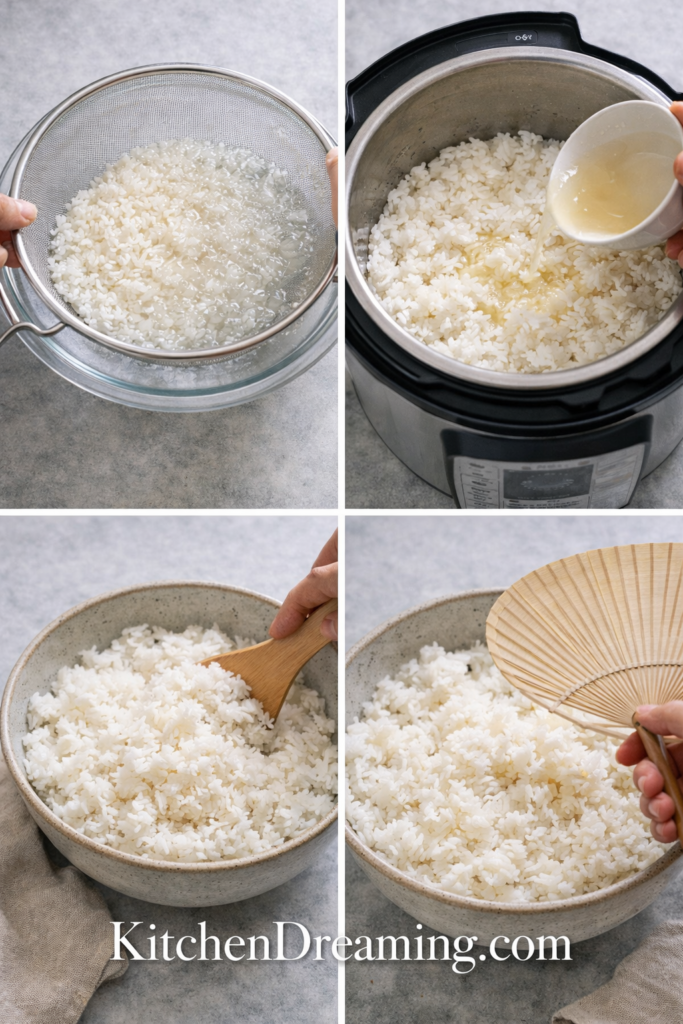
How to Make Sushi Rice
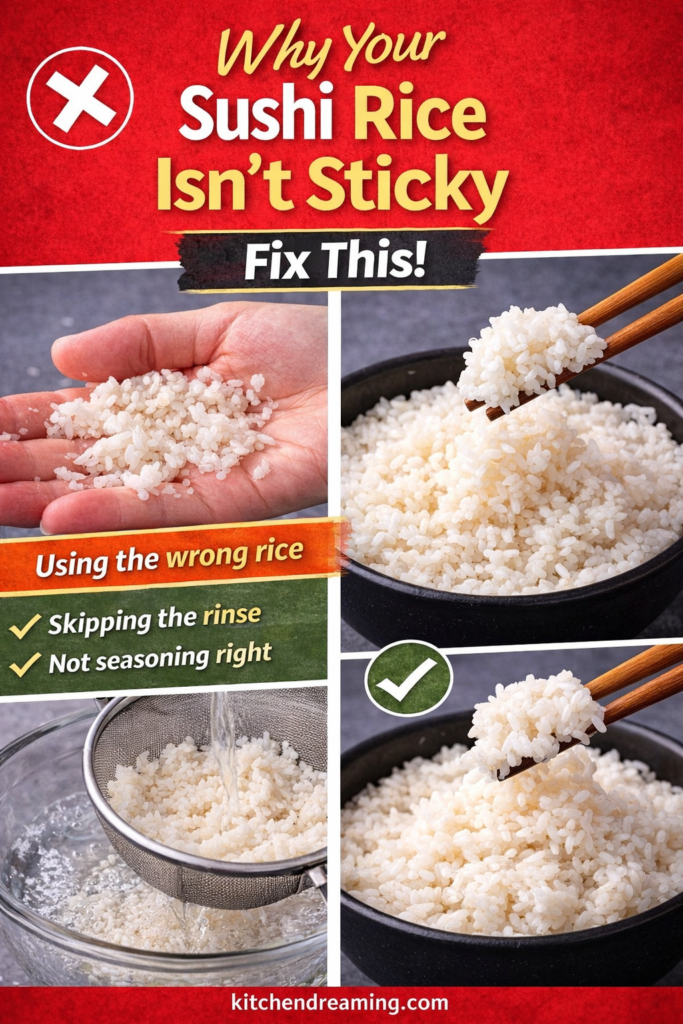
- Rinse the rice – Rinse under cold water until mostly clear to remove excess starch.
- Soak the rice – Soak in clean water for 20–30 minutes for even cooking.
- Cook the rice:
Stovetop:
Bring rice and water to a boil. Reduce heat, cover, and cook 15 minutes. Rest 10 minutes.
Rice cooker:
Cook using the white rice or sushi setting.
Instant Pot [paid link]:
Cook on high pressure for 5 minutes. Natural release for 10 minutes.
- Make the seasoning – Heat vinegar, sugar, and salt until dissolved.
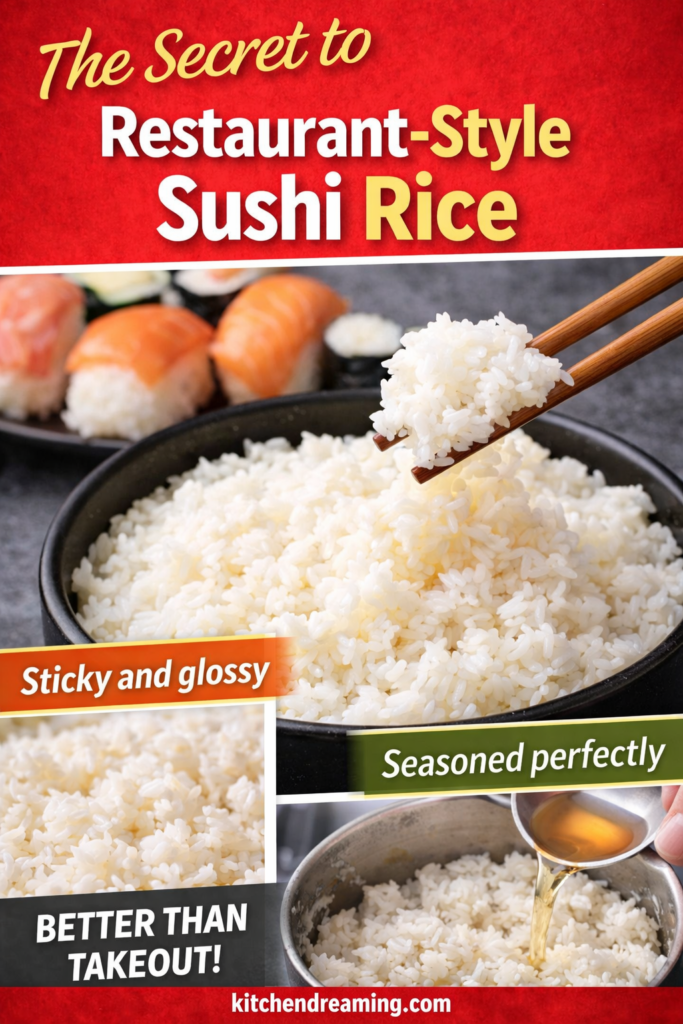
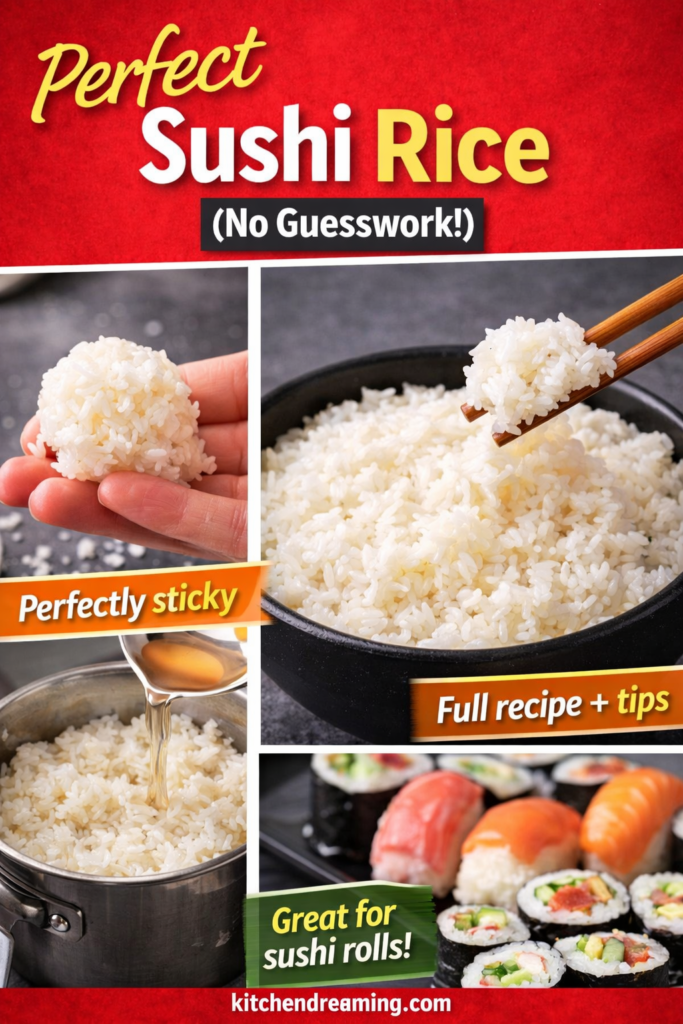
- Season the rice – Transfer rice to a wide bowl and pour seasoning evenly over the top.
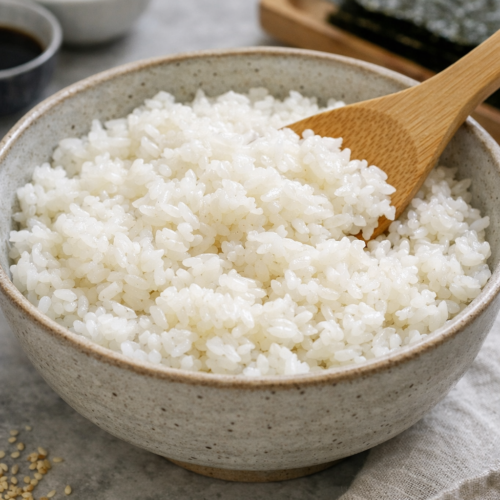
- Fold and cool – Gently fold while fanning until glossy. Grains should be separate, lightly sticky, and slightly tacky—not wet or mushy.
Sushi Rice in Rice Cooker
Using a rice cooker is the easiest way to make sushi rice.
- Add rinsed rice and water to the cooker
- Use the white rice or sushi setting
- Let the rice rest 10 minutes after cooking
- Season and fold as directed
For step-by-step instructions, see my complete guide to making sushi rice in a rice cooker.
Instant Pot Sushi Rice
Instant Pot [paid link] sushi rice is fast and reliable.
- Use a 1:1 rice-to-water ratio
- Cook on high pressure for 5 minutes
- Natural release for 10 minutes
- Fluff, season, and fold
For step-by-step instructions, see my complete Instant Pot [paid link] sushi rice method.
Best Method to Cook Sushi Rice
| Method | Best For | Texture | Ease |
|---|---|---|---|
| Stovetop | Maximum control | Best | Medium |
| Rice Cooker | Convenience | Great | Easy |
| Instant Pot [paid link] | Speed | Good | Easy |
Each method works well. Choose based on your time and equipment.
Best Sushi Rice Brands (What to Buy)
Choosing the best sushi rice makes a big difference in texture and flavor.
- Nishiki – widely available and reliable
- Kokuho Rose – soft texture and great flavor
- Lundberg – organic option with consistent quality
Look specifically for short-grain rice labeled for sushi.
What Can Go Wrong (and how to fix it)
- Rice is mushy – Too much water; reduce slightly next time
- Rice is dry or undercooked – Not enough water or time; adjust accordingly
- Rice lacks flavor – Increase seasoning slightly and mix evenly
- Rice is too sticky or clumpy – Insufficient rinsing; rinse thoroughly before cooking
- Seasoning is uneven – Fold gently and distribute evenly
What to Serve With Sushi Rice Recipe
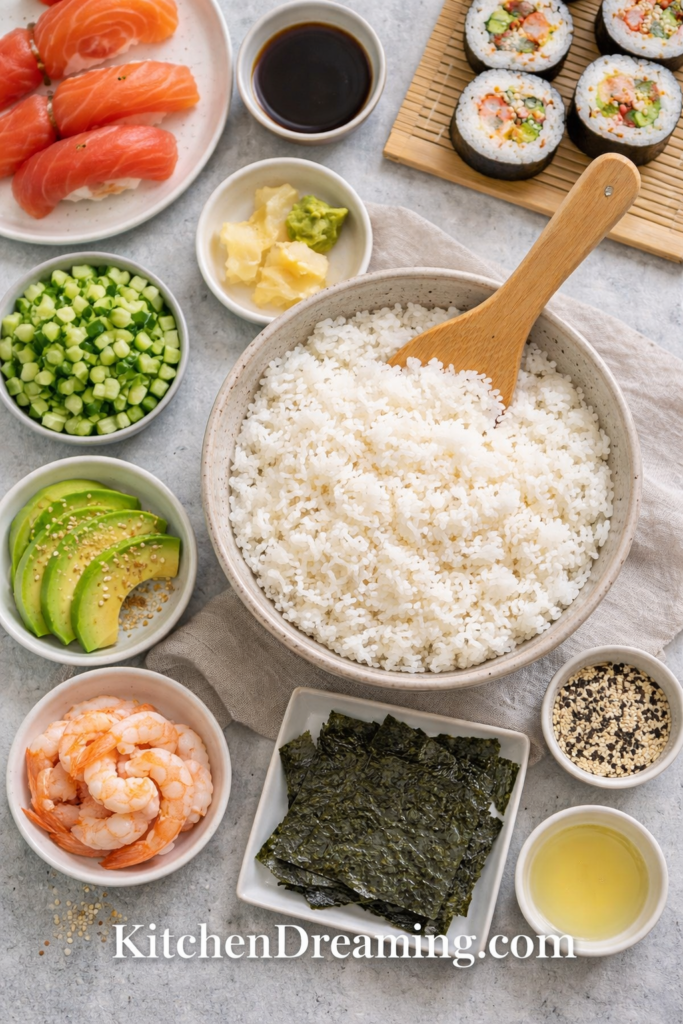
Sushi rice is also the perfect base for easy sushi rice bowls, one of the most popular ways to enjoy it at home.
- Sushi rolls and hand rolls
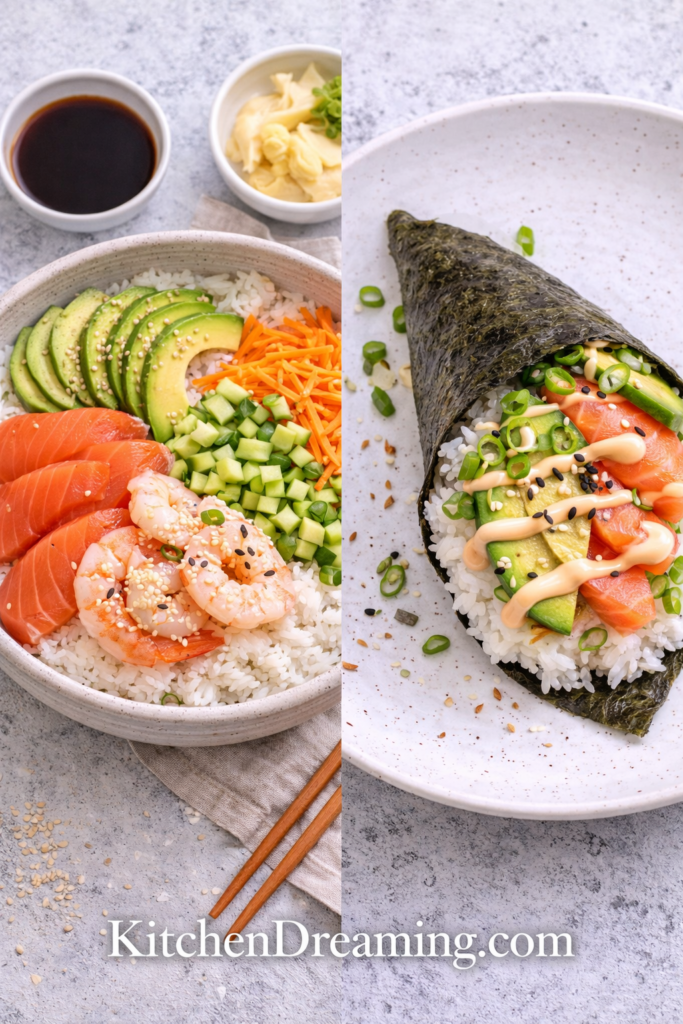
- Sushi rice bowls with salmon, avocado, cucumber, and spicy mayo
- Teriyaki chicken or grilled salmon
- Tempura vegetables or shrimp
- Stir-fry dishes or grilled meats
Storage and Reheating
Store sushi rice covered at room temperature for up to 6 hours or refrigerate for up to 2 days.
To reheat, sprinkle lightly with water and warm covered to restore moisture.
Time-Saving Tips
- Use a rice cooker for consistent, hands-off results
- Prepare seasoning ahead of time
- Double the batch for meal prep
- Measure rice and water in advance
How to Repurpose Leftovers
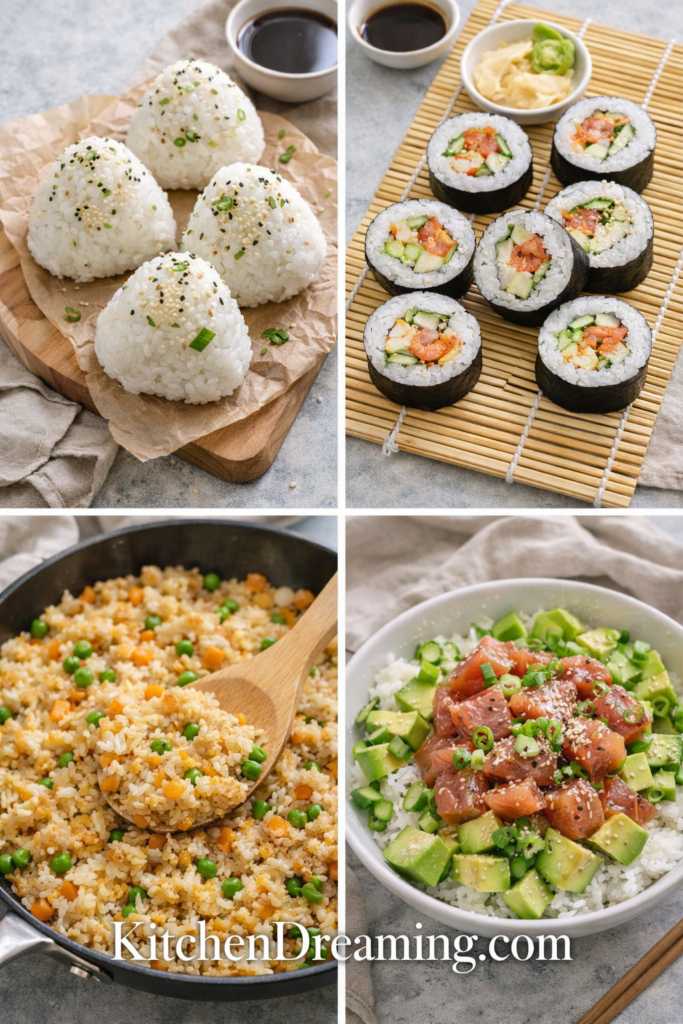
- Sushi rice bowls with fresh toppings
- Fried rice with a tangy twist
- Crispy rice patties are pan-fried until golden
- Lettuce wraps or quick rice-based meals
People Also Ask (FAQs)
What is the best rice for a sushi rice recipe?
Short-grain Japanese rice is best because of its higher starch content and sticky texture.
What is the correct sushi rice water ratio?
Typically 1:1.25 for stovetop and 1:1 for Instant Pot [paid link].
Can I make sushi rice without rice vinegar?
You can substitute white vinegar with sugar, but rice vinegar provides the most authentic flavor.
Can I use jasmine rice for sushi rice?
No. Jasmine rice is too dry and lacks the right texture.
How long should sushi rice cool?
Let it cool to room temperature. It should be slightly warm but not hot when used.
Final Thoughts
This sushi rice recipe gives you everything you need to confidently make sushi rice at home with consistent, reliable results. Once you try it, you’ll start finding new ways to use sushi rice in everyday meals.

Sushi Rice Recipe
Ingredients
- 2 cups short-grain sushi rice
- 2 ½ cups water (adjust per method)
- ¼ cup rice vinegar
- 2 tablespoons sugar
- 1 teaspoon salt
Instructions
- Rinse rice under cold water until clear
- Soak rice for 20–30 minutes and drain
- Cook rice using stovetop, rice cooker, or Instant Pot [paid link]
- Let rice rest covered for 10 minutes
- Heat vinegar, sugar, and salt until dissolved
- Transfer rice to a wide bowl
- Pour seasoning over rice
- Gently fold while cooling
Notes
- Rinse thoroughly to prevent gummy rice
- Use correct water ratio for each cooking method
- Fold gently to avoid breaking grains
- Cool while fanning for best texture and shine
- Adjust seasoning slightly to taste
- Use rice at room temperature for best results
More Recipes You’ll Love
If you loved this sushi rice recipe, you might also enjoy more recipes from our rice and grain collection. Start with our most popular rice recipes or explore step-by-step cooking guides to find your next favorite meal.
📌 Save this recipe for later