Lamb chops sound fancy… until you actually cook them and realize they’re surprisingly easy.
The problem? A lot of people overcook them, under-season them, or panic halfway through.
This guide will walk you through how to cook lamb chops correctly, whether you’re using the oven, stovetop, or grill; no guesswork required.
Why Lamb Chops Get a Bad Reputation (And How to Avoid It)
When people say lamb is “gamey,” it’s usually because of one of these mistakes:
- The chops were overcooked.
- They weren’t appropriately seasoned.
- The wrong cut was used.
- They weren’t rested after cooking.
Good news: all of that is easy to fix.
Properly cooked lamb chops are tender, juicy, and rich, not funky. Think steak but fancier.
The Best Cuts of Lamb Chops (What to Buy)
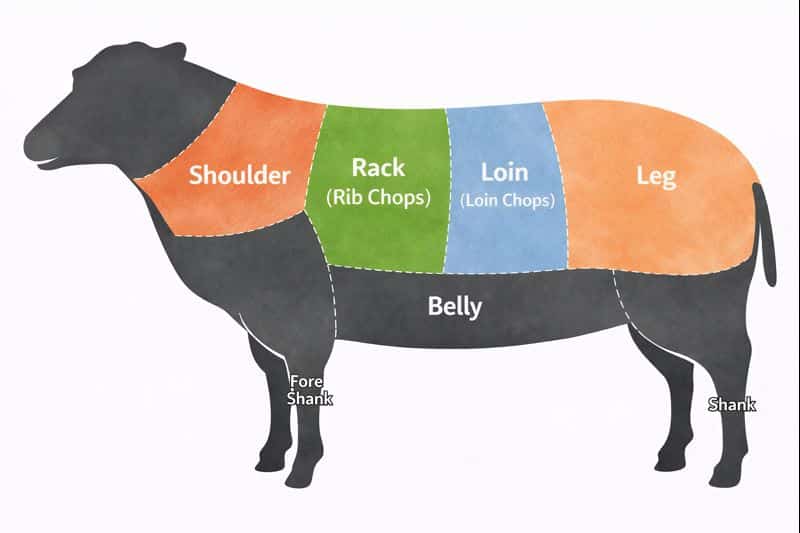
Not all lamb chops are the same. The best cuts come from the rack, loin, and shoulder, and each offers a different balance of tenderness, flavor, and cooking time. Rib chops are the most tender and rich, loin chops are lean and steak-like, and shoulder chops are more affordable but require longer cooking. Knowing which cut to buy helps you choose the right chop for your recipe, skill level, and occasion.
Rib Chops
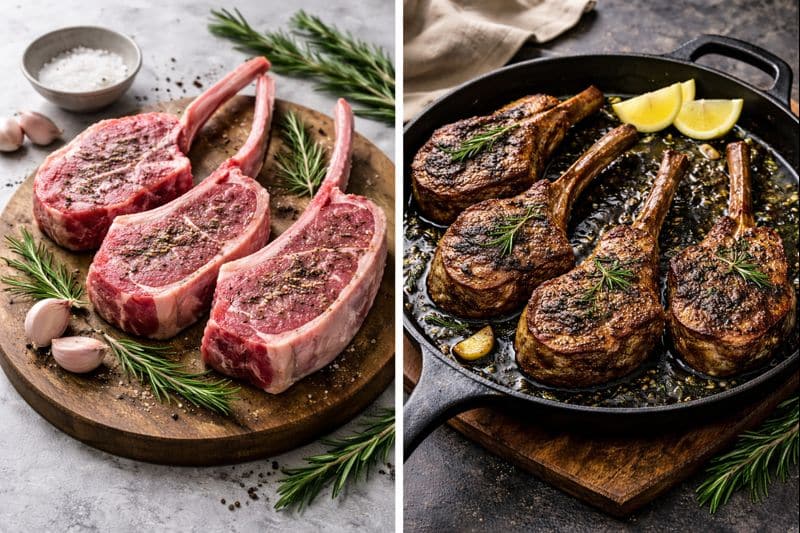
Rib chops are cut from the same section as a rack of lamb, which comes from the rib area along the upper back of the lamb. When a rack of lamb is sliced between the bones, it becomes individual rib chops.
Rib chops are often called the Cadillac of lamb chops, and for good reason. They’re rich, tender, and incredibly flavorful — without requiring complicated cooking techniques.
Why Rib Chops Are So Tender
The rib section is a low-movement muscle, meaning it doesn’t get worked much during the animal’s life. Less work = more tenderness.
That’s why rib chops:
- Have a soft, steak-like texture
- Cook quickly and evenly
- Stay juicy when cooked properly
They’re very forgiving compared to tougher cuts like shoulder chops.
What Rib Chops Taste Like
Rib chops have a mild, rich flavor that’s less “gamey” than many people expect from lamb. Because they come from the rib section—one of the least worked muscles—the meat is naturally tender and juicy.
Flavor highlights:
- Clean, beef-like richness
- Naturally juicy with fine marbling
- Takes well to simple seasoning
Because the meat is so good on its own, rib chops shine with minimal ingredients. A combination of salt, pepper, garlic, and fresh herbs like rosemary or thyme is often all you need to enhance the flavor without overpowering it.
Why Rib Chops Are Considered the Most Prized Cut
Rib chops earn their luxury reputation because they come from the rib section, one of the least worked areas of the lamb. This results in meat that’s exceptionally tender and naturally flavorful.
Rib chops are prized for their:
- Maximum tenderness
- Excellent marbling
- Beautiful presentation
- Fast cooking time
They’re often compared to a ribeye steak — rich, elegant, and impressive enough for a special occasion, yet simple enough for a confident weeknight dinner.
Best Ways to Cook Rib Chops
Rib chops are best cooked hot and fast, which helps develop a flavorful crust while keeping the inside tender and juicy.
The most reliable cooking methods include:
- Oven-roasted for even, hands-off cooking
- Pan-seared for a quick dinner with a good crust
- Grilled for added smoky flavor
For best results, aim for medium-rare to medium and always let the chops rest for a few minutes before serving. Resting allows the juices to redistribute, keeping the meat moist.
Bottom Line
If you’re new to cooking lamb or want the most reliable results, rib chops are an excellent place to start. They’re naturally tender, full of flavor, and impressive enough for special occasions without being intimidating to cook.
Rib chops are a favorite because they:
- Are among the most tender and flavorful cuts of lamb
- Cook quickly with high heat
- Are beginner-friendly and hard to overthink
Loin Chops
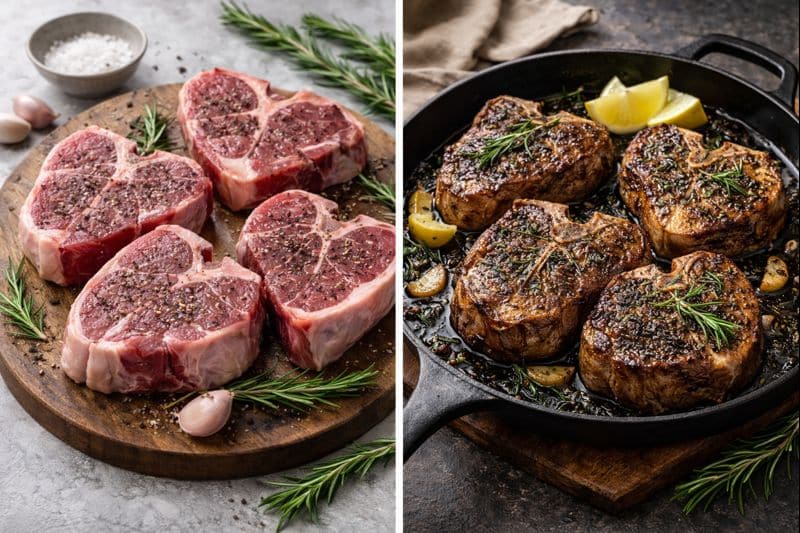
Loin chops come from the loin section of the lamb, located just behind the rack and before the leg. They’re leaner than rib chops but still tender, with a steak-like texture that’s often compared to a small T-bone. Loin chops cook quickly over high heat and work best when cooked to medium-rare or medium to prevent drying out.
Loin chops are often described as tiny T-bone steaks because they are:
- Slightly meatier than rib chops
- Still tender when cooked properly
- Very steak-like in texture
Why Loin Chops Are So Tender
Loin chops are tender because they come from the loin section of the lamb, an area along the upper back that does very little work. Since these muscles aren’t heavily used, the meat has fine muscle fibers and a naturally soft texture.
While loin chops are leaner than rib chops, they’re still tender when cooked properly. Because they contain less fat, they benefit from quick, high-heat cooking and careful attention to doneness. Overcooking can dry them out, but when cooked to medium-rare or medium, loin chops stay juicy and flavorful.
What Loin Chops Taste Like
Loin chops have a mild, clean lamb flavor with a texture that’s often compared to a small steak. Because they’re leaner than rib chops, the taste is less rich but still distinctly lamb, without being overpowering or overly gamey.
Flavor characteristics:
- Mild and balanced
- Lean, steak-like bite
- Clean finish without heavy richness
Loin chops pair well with simple seasonings and light marinades, such as garlic, herbs, lemon, or olive oil. Because they contain less fat, careful cooking is key—when cooked to medium-rare or medium, loin chops remain tender and juicy with a refined, approachable flavor.
Best Ways to Cook Loin Chops
Loin chops are best cooked using high heat and short cooking times. Because they’re leaner than rib chops, quick cooking helps keep them tender and prevents the meat from drying out.
The most effective cooking methods include:
- Pan-seared for a fast dinner and a steak-like crust
- Grilled for light char and added flavor
- Oven-roasted (watch closely) for even cooking
For the juiciest results, cook the loin chops to medium-rare or medium, then let them rest briefly before serving. Overcooking is the most common mistake with loin chops, so temperature control is key.
Bottom Line
Loin chops are a great choice if you want a lean, tender cut of lamb with a familiar, steak-like texture. They cook quickly, respond well to simple seasonings, and are ideal for cooks who are comfortable watching temperature and doneness closely.
Loin chops are especially appealing because they:
- Offer a leaner alternative to rib chops
- Have a tender, steak-like bite
- Cook quickly with high heat
- Work well for weeknight meals or smaller portions
Shoulder Chops
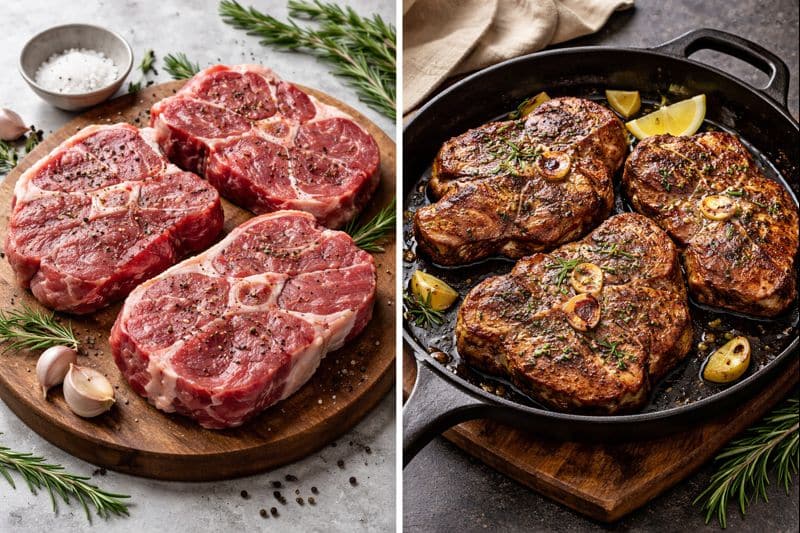
Shoulder chops come from the shoulder of the lamb, a well-worked muscle that produces meat with bold, rich flavor. They’re less tender than rib or loin chops but are more affordable and well-suited to slow or longer cooking methods that help break down connective tissue.
- More affordable
- Need longer cooking
- Better for braising than quick cooking
Shoulder Chops: Flavor and Tenderness
Because the shoulder is a heavily worked area, shoulder chops develop more connective tissue. This adds bold, lamb-forward flavor, but also means they’re tougher than rib or loin chops if cooked too quickly.
That extra connective tissue is also what gives shoulder chops their rich, lamb-forward taste. When cooked properly, the meat becomes tender and succulent, with a fuller flavor than leaner cuts.
Key characteristics:
- Bold, hearty lamb flavor
- Less tender than rib or loin chops
- Become tender with longer cooking
- Excellent value compared to premium cuts
Best Ways to Cook Shoulder Chops
Shoulder chops benefit from slower cooking methods or techniques that retain moisture, helping break down connective tissue and improve tenderness.
The most effective cooking methods include:
- Braising in broth or sauce
- Slow roasting at lower temperatures
- Slow cooker [paid link] or pressure cooker methods
Quick, high-heat cooking can leave shoulder chops tough, so patience pays off with this cut. When given enough time, shoulder chops become intensely flavorful and fork-tender.
Bottom Line
Shoulder chops are ideal if you’re looking for maximum flavor at a lower cost. They require a bit more time and care, but when cooked properly, they deliver rich, satisfying results that rival more expensive cuts.
The Golden Rule of Lamb Chops
High heat + short cooking time = success.
Most lamb chops are cut from naturally tender areas of the lamb, which means they don’t benefit from long, slow cooking. Instead, lamb chops cook best when exposed to high heat for a short period of time, allowing the outside to develop flavor while the inside stays tender and juicy.
Except for shoulder chops, lamb chops should be treated much like a good steak. Quick cooking methods such as pan-searing, grilling, or oven roasting help prevent the meat from drying out and preserve its natural tenderness.
Overcooking is the most common mistake people make with lamb chops. Cooking to medium-rare or medium and allowing the meat to rest before serving ensures the best texture and flavor every time.
How to Cook Lamb Chops (Best Methods)
There’s more than one right way to cook lamb chops, and the best method depends on the cut, thickness, and your cooking setup. Some lamb chops benefit from quick, high-heat cooking, while others need more time to become tender. Choosing the proper cooking method helps ensure lamb chops that are juicy, flavorful, and cooked to the proper doneness every time. Always follow current food safety guidelines and cook lamb to your preferred level of doneness.
Oven Roasted Lamb Chops (Easiest & Most Reliable)
Oven roasting is one of the most reliable ways to cook lamb chops, especially if you’re looking for consistent results with minimal hands-on time. Cooking lamb chops in the oven allows heat to circulate evenly, helping prevent overcooking and keeping the meat tender and juicy.
Why it works:
- Even cooking from consistent oven heat
- Hands-off method that requires little monitoring
- Hard to mess up, even for beginners
Best for: weeknight dinners, beginner cooks, and thicker lamb chops that benefit from steady heat.
If you’re looking for a simple oven method, my roasted lamb chops recipe is a great place to start.
Pan-Seared Lamb Chops (Fast & Flavorful)
Pan-searing is ideal when you want lamb chops on the table quickly without sacrificing flavor. Cooking lamb chops in a hot skillet creates a flavorful crust while keeping the inside tender when done correctly.
Why it works:
- Beautiful crust from direct contact with the pan
- Quick cooking time for fast meals
- Great flavor with minimal ingredients
Best for: thinner chops, smaller portions, and quick weeknight dinners.
Tip: Don’t overcrowd the pan — lamb chops need space to sear properly. Overcrowding traps moisture, causing steaming rather than browning.
Grilled Lamb Chops (Smoky & Bold)
Grilling lamb chops adds a distinct smoky flavor and charred exterior that’s hard to beat. Because lamb chops cook quickly, grilling requires close attention, but the payoff is big in both flavor and presentation.
Why it works:
- Charred edges that add depth of flavor
- Smoky taste from the grill
- Great for entertaining and outdoor cooking
Best for: warm weather cooking, thicker chops, and casual gatherings.
Tip: Keep the grill hot and watch closely — lamb chops cook fast, and even a minute too long can affect tenderness.
Lamb Chop Cooking Temperatures (No Guessing)
Using a meat thermometer is the most reliable way to cook lamb chops correctly. Because lamb chops cook quickly, even a few extra minutes can take them from juicy to dry. Temperature—not time—is the key to consistent results.
For best accuracy, insert the thermometer into the thickest part of the chop, avoiding the bone.
Recommended internal temperatures:
- Rare: 120–125°F
Very soft texture with a deep red center - Medium-rare: 130–135°F (most popular)
Tender, juicy, and flavorful with a warm pink center - Medium: 140–145°F
Firmer texture with less moisture - Well-done: 155°F+ (not recommended — sorry 😬)
Lamb becomes dry and tough at this stage
Important: Carryover Cooking
Pro Tip – Lamb chops will continue to cook for a few minutes after being removed from heat, causing the internal temperature to rise by about 3–5°F while resting. For best results, remove the chops from the heat slightly early and let them rest before serving. This helps lock in juices and prevents overcooking.
How Long to Rest Lamb Chops (Don’t Skip This!)
Rest lamb chops for about 5 minutes after cooking, then slice or serve. During this time, the meat relaxes and the internal juices redistribute rather than spilling onto the plate.
Why resting matters:
- Juices redistribute throughout the meat
- Meat stays tender and juicy
- Less juice runs onto the plate when cut
Lamb chops continue to cook slightly while resting, gently finishing the meat without drying it out. Cutting into lamb chops too soon releases those juices immediately, leaving the meat drier and less flavorful.
Skipping this step almost always leads to dry lamb—and after all that effort, nobody wants that.
Best Seasonings for Lamb Chops
Lamb chops pair best with bold but simple flavors that enhance the meat without overpowering it. Because lamb has a naturally rich taste, a few well-chosen seasonings go much further than heavy spice blends.
Some of the most reliable seasoning combinations include:
- Garlic and rosemary for classic lamb flavor
- Lemon and thyme for a fresh, bright finish
- Salt, pepper, and olive oil (perfect and straightforward)
- Dijon mustard and herbs for depth and balance
These combinations highlight lamb’s natural richness while keeping the flavor clean and approachable.
When seasoning lamb chops, it’s best to avoid overly aggressive spices or heavy rubs that mask the meat’s flavor. Lamb doesn’t need much—just enough seasoning to complement its natural taste rather than compete with it.
Common Lamb Chop Mistakes (And Easy Fixes)
Even good lamb chops can turn out disappointing if a few key steps are missed. These are the most common mistakes home cooks make — and how to fix them.
Overcooking
Fix: Cook to temperature, not time.
Lamb chops cook quickly, and relying on cooking time alone often leads to dry meat. Thickness, cut, and heat level all affect how fast lamb cooks. Using a meat thermometer ensures you hit the correct doneness without guesswork. For most chops, medium-rare to medium delivers the best balance of tenderness and flavor.
Under-Seasoning
Fix: Season generously — lamb can handle it.
Lamb has a naturally rich flavor that stands up well to seasoning. Too little salt or seasoning can leave lamb tasting flat rather than bold. Season both sides of the chops evenly, and don’t be afraid to use herbs, garlic, or citrus to enhance the meat.
Cooking Straight From the Fridge
Fix: Let the chops sit at room temperature for about 20 minutes first.
Cold lamb chops cook unevenly, often browning too quickly on the outside while staying undercooked inside. Allowing the meat to warm slightly before cooking helps it cook more evenly and improves overall texture.
Skipping the Rest
Fix: Always rest before serving.
Resting lamb chops after cooking allows the juices to redistribute throughout the meat. Cutting too soon causes those juices to run out, leaving the chops drier than necessary. A short rest makes a noticeable difference in tenderness and moisture.
What to Serve With Lamb Chops
Lamb pairs beautifully with simple sides.
Great options:
- Roasted vegetables
- Mashed or roasted potatoes
- Couscous or rice
- Fresh salads
- Mint or yogurt sauces
(Simple sides let the lamb shine.)
Frequently Asked Questions About Lamb Chops
Do lamb chops really taste gamey?
Good-quality lamb, appropriately cooked, tastes rich and savory, not gamey. What many people describe as “gamey” usually comes from overcooking, poor-quality meat, or heavy seasoning choices that clash with lamb’s natural flavor. Fresh lamb from reputable sources, cooked to medium-rare or medium, has a clean taste that’s closer to beef than many expect.
Are lamb chops healthy?
Yes, lamb chops are a nutrient-dense protein. They’re naturally high in protein, iron, and B vitamins, which support muscle health, energy production, and red blood cell formation. Like other red meats, lamb is best enjoyed in moderation as part of a balanced diet, but it can absolutely fit into a healthy meal plan.
Can I cook lamb chops ahead of time?
Lamb chops are best enjoyed fresh, but leftovers reheat well when done gently. To reheat, warm them slowly over low heat or in short microwave intervals to avoid drying them out. Adding a small splash of broth or resting them covered can help preserve moisture.
Final Thoughts: Lamb Chops Don’t Have to Be Intimidating
Lamb chops don’t have to feel complicated or intimidating. Once you understand which cut to buy, how to cook to the right temperature, and how to season, lamb chops become one of the easiest, most impressive dinners you can make at home.
With just a few basic techniques, lamb cooks quickly, delivers bold flavor, and feels special without requiring advanced skills. Whether you’re pan-searing, oven-roasting, or grilling, mastering the basics makes lamb chops approachable and reliable.
Once you’ve built that foundation, recipes like oven-roasted lamb chops feel effortless instead of intimidating, making lamb an easy option for both weeknight dinners and special occasions.


