Dry chicken breast is one of the most common cooking frustrations — and one of the easiest to fix.
If you’ve ever pulled chicken from the oven only to find it tough, stringy, or bland, you’re not alone. Chicken breast is lean, so it dries out quickly if not cooked properly.
This guide will show you how to bake chicken breast so it stays juicy every single time, even if you’re brand new to cooking. We’ll cover why chicken dries out, the best oven temperature, how long to bake it, and why bone-in chicken breast is one of the most foolproof options.

Why Chicken Breast Dries Out So Easily
Chicken breast is one of the leanest cuts of meat you can cook. That’s great for healthy meals, but it’s also the reason chicken breast has a reputation for turning dry fast.
Unlike chicken thighs or drumsticks, chicken breast has very little fat to protect it during cooking. When it’s exposed to high heat for too long, moisture escapes quickly, leaving the meat tough, stringy, and bland. 😬
The most common reasons chicken breast dries out are:
- Overcooking – Even a few extra minutes in the oven can push chicken past the point of juiciness.
- Cooking at the wrong temperature – Too hot, and the outside dries before the inside cooks. Too low, and it stays in the oven too long.
- Skipping the thermometer – Guessing doneness almost always leads to overcooked chicken.
- Using boneless, skinless chicken without protection – No bone and no skin means no built-in moisture buffer.
Chicken breast doesn’t give much warning before it dries out, which is why so many home cooks struggle with it — especially beginners.
That’s where bone-in chicken breast shines. The bone helps regulate heat, slows moisture loss, and makes the chicken far more forgiving in the oven. When cooked properly, it delivers juicy, tender meat with much less stress in the kitchen.
Why Bone-In Chicken Breast Stays Juicy
Bone-in chicken breast is one of the most forgiving ways to cook chicken in the oven. The bone acts as a natural heat shield, slowing down how quickly the meat cooks and helping it retain moisture throughout the roasting process.
As the chicken bakes, heat travels more evenly through the meat instead of blasting it from the outside in. This reduces the risk of the outer edges drying out before the center is fully cooked. The result is chicken that stays tender, flavorful, and juicy.
If the skin is left on, that adds another layer of protection. The skin helps lock in moisture and adds flavor as it renders during roasting. Even if you don’t plan to eat the skin, cooking with it on makes a noticeable difference in the final texture and juiciness of the meat.
Bone-in chicken breast offers a wider margin for error. It’s simply harder to overcook than boneless chicken, which makes it an excellent choice for reliable, stress-free meals.
Ingredients for Juicy Oven-Baked Chicken Breast
This recipe uses simple, everyday ingredients that work together to keep the chicken moist and flavorful.
** You can find the full recipe ingredients and instructions on the printable recipe card below.

- Bone-in split chicken breasts – Cooking chicken on the bone helps regulate heat and retain moisture during baking.
- Extra-virgin olive oil – Lightly coats the chicken, preventing moisture loss on the surface while adding flavor.
- Dried rosemary – A classic pairing with chicken that adds a savory, earthy note.
- Dried parsley – Brings a mild herbal flavor and balances the rosemary.
- Kosher salt – Enhances flavor and helps the chicken retain moisture as it cooks.
- Black pepper – Adds gentle heat and depth.
- Paprika (optional) – Used mainly for color, but smoked or hot paprika can add extra flavor if desired.
NOTE: Fresh herbs may be substituted for dried herbs, but you’ll want to use about double the amount.
Tools That Guarantee Juicy Chicken Breast
Using the right tools makes baking a chicken breast much more predictable.
- Digital thermometer – This is the most essential tool. Chicken dries out when it’s overcooked, and a thermometer removes all guesswork.
- Rimmed baking sheet [paid link] – Gives the chicken space to roast evenly without steaming.
- Parchment paper [paid link] or foil – Makes cleanup easy and prevents sticking.
A thermometer allows you to pull the chicken at the exact right moment, which is the single best way to keep chicken breast juicy.
How to Bake Chicken Breast So It Stays Juicy
** You can find the full recipe ingredients and instructions on the printable recipe card below.

- Oven Prep – Preheat the oven and line a rimmed baking sheet with parchment paper or foil.
- Prepare the Chicken – Pat the chicken dry with paper towels. Lightly rub with olive oil, then season evenly with herbs, salt, pepper, and paprika if using. Place the chicken skin-side up on the prepared pan.
- Bake the Chicken – Roast the chicken until the internal temperature reaches 160°F in the thickest part of the breast, making sure the thermometer tip does not touch the bone. Remove the chicken from the oven and let it rest. During this time, the temperature will rise to 165°F due to carryover cooking, keeping the meat juicy instead of dry.
- Serve – Serve as-is, or remove the meat from the bone and slice, shred, or cube for other recipes.
NOTE: Baking time will vary depending on the size of the chicken breasts. Larger breasts may take up to 45 minutes, while smaller ones may be done closer to 30 minutes.
Easy Flavor Variations for Baked Chicken Breast
This baked chicken breast recipe is a blank canvas. Once you master the method, changing the flavor is easy.
- French Provincial: Omit rosemary and parsley. Add 2 teaspoons Herbes de Provence.
- Greek: Omit rosemary, parsley, and paprika. Add 2 tablespoons fresh lemon juice, 2 teaspoons minced garlic, and 2 teaspoons dried oregano.
- Italian: Omit rosemary and paprika. Add 2 teaspoons dried oregano, 2 teaspoons dried parsley, and 2 teaspoons minced garlic.
- Southwestern: Omit rosemary and parsley. Add 2 tablespoons fresh lime juice, 2 teaspoons chili powder, and 1 teaspoon garlic powder.

How Long to Bake Chicken Breast in the Oven
Cooking time depends on the size of the chicken breasts and your oven’s temperature.
- Large bone-in chicken breasts: about 40–45 minutes
- Medium bone-in chicken breasts: about 30–35 minutes
The most reliable way to tell when chicken is done is by temperature, not time. Always check the thickest part of the breast with a thermometer.
How to Tell When Chicken Breast Is Done
Chicken breast is fully cooked when it reaches an internal temperature of 165°F. For the juiciest results, remove it from the oven at 160°F and allow it to rest.
The juices should run clear when pierced, and the meat should feel firm but not hard. A thermometer is still the most accurate and safest way to check doneness.
How to Store, Freeze, and Reheat Cooked Chicken Breast
Storing Leftovers
Once completely cooled, store cooked chicken in an airtight container in the refrigerator for up to 3 days.
Freezing Cooked Chicken
Place cooled chicken in a freezer-safe container or bag and freeze for up to 3 months.
Reheating Without Drying Out
- Oven: Wrap chicken in foil and reheat at 325°F until warmed through.
- Microwave: Reheat at 50% power in short intervals, checking frequently.
Adding a splash of broth or covering the chicken helps retain moisture while reheating.
How to Use Juicy Baked Chicken Breast
This oven-baked chicken breast works in almost any recipe that calls for cooked or rotisserie chicken.
Use it for:
- Chicken salads and wraps
- Pasta dishes and casseroles
- Meal prep for the week
- Soups, tacos, and grain bowls
Because it stays moist, it reheats better and tastes great even days later.
Final Thoughts
Learning how to bake chicken breast so it stays juicy is a game-changer for home cooking. Once you understand why chicken dries out and how bone-in chicken breast protects moisture, this method becomes easy, reliable, and repeatable.
This simple oven-baked chicken breast recipe is one you’ll come back to again and again. It works for busy weeknights, meal prep, and even casual entertaining. With just a few basic ingredients and a thermometer, you can make tender, flavorful chicken without stress or guesswork.
Master this technique once, then make it your own. Swap the seasonings, pair it with different sides, or use the leftovers in salads, pasta, and wraps. When you have a dependable method like this in your kitchen, dinner always feels a little easier — and a lot more delicious.

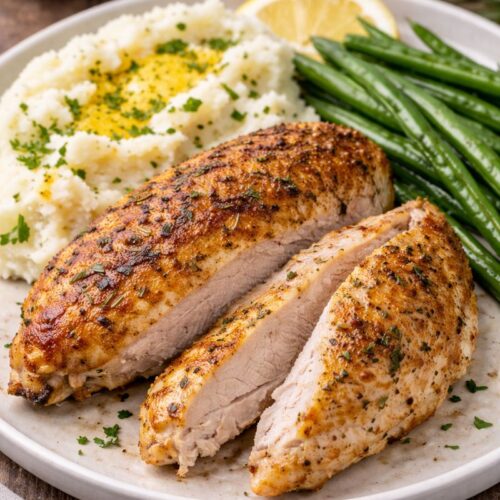
Juicy Oven-Baked Chicken Breast (Boneless or Bone-In)
Equipment
- Meat thermometer
- Rimmed Baking Sheet [paid link] or 13×9-inch pan
- Parchment paper [paid link] or aluminum foil for easy clean up.
Ingredients
- 32 oz bone-in skin-on chicken breasts
- 1 tbsp olive oil , just enough to coat chicken
Spice Rub:
- 1 teaspoon crushed dried rosemary
- 1 teaspoon Dried Parsley
- 1/2 teaspoon salt , more or less to taste
- 1/4 teaspoon ground black pepper , more or less to taste
- 1/2 teaspoon Paprika regular, hot, or smoked all work well
Instructions
- Preheat the Oven. Heat oven to 425 degrees F. Line a baking pan with parchment paper [paid link] or aluminum foil and set aside.
- Prepare the Chicken. Rub chicken with a small amount of olive oil and then lightly season with herbs and spices. Place chicken breast on the pan skin-side up.
- Bake the Chicken. Place pan in the oven and roast 40-50 minutes or until the juices run clear and the internal temperature is 165 degrees F. Check the temperature with a meat thermometer into the thickest part of the meat. Be sure the tip is not touching bone. Baking times will vary slightly based on the size of the breasts.Remove the chicken from the oven and allow it to rest for 5 minutes before slicing.
- Serve. (Optional) Remove chicken from the bone and slice into individual servings.
Notes
Flavor Variations:
French Provential – Omit the rosemary and dried parsley and substitute 2 teaspoons of Herbes de Provence. Greek – Omit the rosemary, dried parsley, and paprika and add 2 tbsp fresh lemon juice, 2 tsp minced garlic, and 2 tsp dried oregano. Italian – Omit the rosemary, dried parsley, and paprika and add 2 tsp dried oregano, 2 tsp dried parsley, 2 tsp minced garlic. Southwestern – Omit the rosemary and dried parsley and add 2 tbsp fresh lime juice, 2 tsp chili powder, and 1 tsp garlic powder.Nutrition


What is the rule of thumb for thawing out chicken before you cook? I’ve heard room temp is the best. I’ve also heard the exact opposite.
Thank you
Hi Steve,
According to the USDA, counter thawing is not a safe way to defrost meat since the meat temperature during the defrost goes into the danger zone for growing bacteria for a significant amount of time.
Instead the USDA recommends refrigerator thawing of meat which takes longer, but is the safest method.
If you do not have time to thaw in the refrigerator, the USDA then suggests a cold water defrost.
Refrigerator Thawing – plan on 1 full day for per one-pound package of chicken. After thawing in the refrigerator, items should remain safe and good quality for an additional day or two before cooking.
Cold Water Thawing – This method is faster than refrigerator thawing but requires more attention. The food must be in a leak-proof package or plastic bag. If the bag leaks, bacteria from the air or surrounding environment could be introduced into the food. Also, the meat tissue may absorb water, resulting in a watery product. The bag should be submerged in cold tap water, changing the water every 30 minutes so it continues to thaw. Small packages of meat, about a pound, may thaw in an hour or less.
Once thawed completely, the food must be cooked immediately.
Around our kitchen, we cold water thaw most often and use the refrigerator for larger cuts of meat like roasts or turkey. For smaller everyday cuts, we use the cold water method described above.
Hope this helps, Steve! Thank you for stopping in and taking the time to ask. I am going to include your question in our FAQ for this recipe.
Loved it. Very easy to make
It was easy to follow and very delicious. The chicken was moist and tender. I would make it again for my family.
I just made this and it was delicious, thank you for the recipe
Thank you, Susan. I appreciate that so much! Thanks for stopping back by and letting me know – I’m so glad you enjoyed it.
These turned out great!
Why are people afraid of cooking chicken? This a good basic recipe, and can be scaled up, just try to keep there chicken peices from touching to cook evenly.
Great advice, Magpie. Thanks for stopping in.
I usually avoid chicken, but this was so easy to make! Delicious
Bone in chicken can be scary. This was perfect
These came out so tender and juicy. Thanks for sharing.