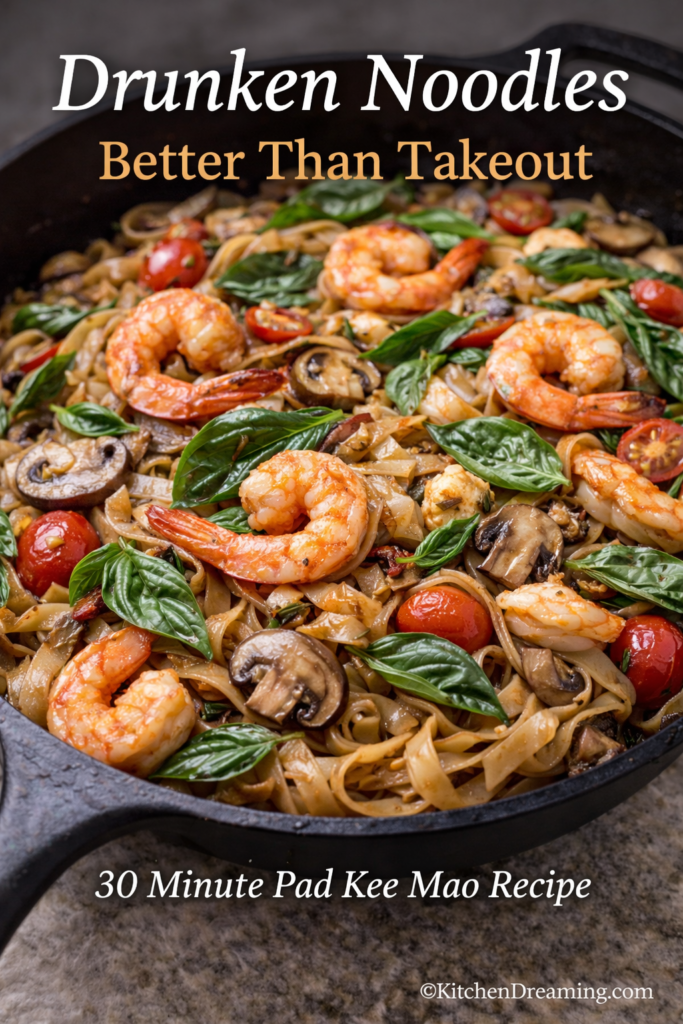
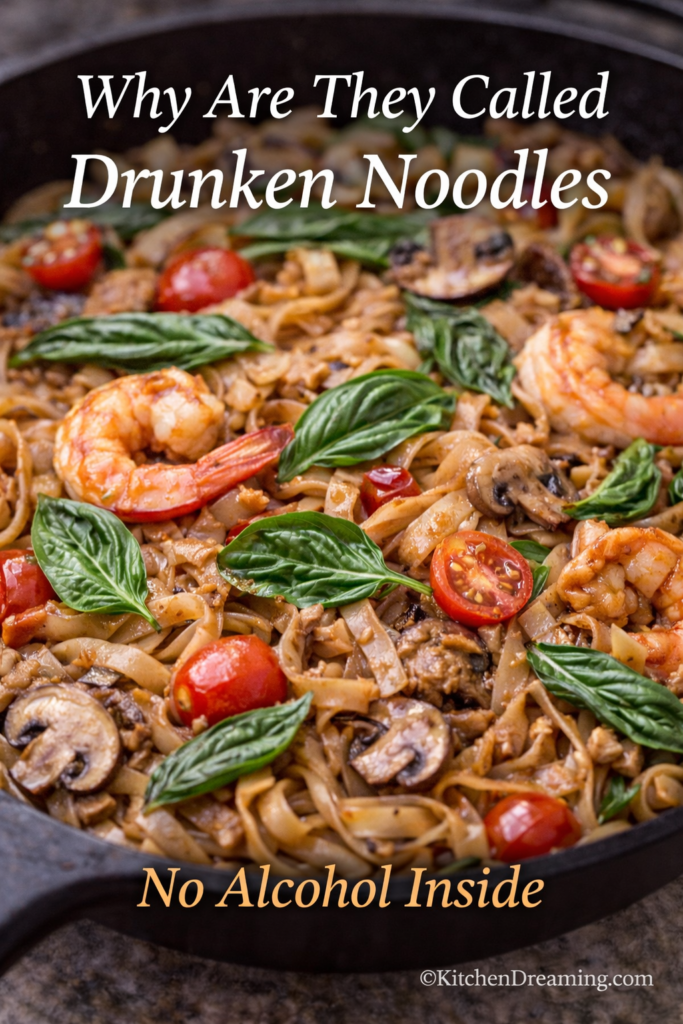
This Drunken Noodles recipe, also known as Pad Kee Mao, is a bold Thai stir-fry made with wide rice noodles, shrimp, mushrooms, Thai basil, and fresh chilies in a savory soy-based sauce. Cooked in a hot cast-iron skillet [paid link], it develops deep flavor and lightly caramelized edges without needing a wok.
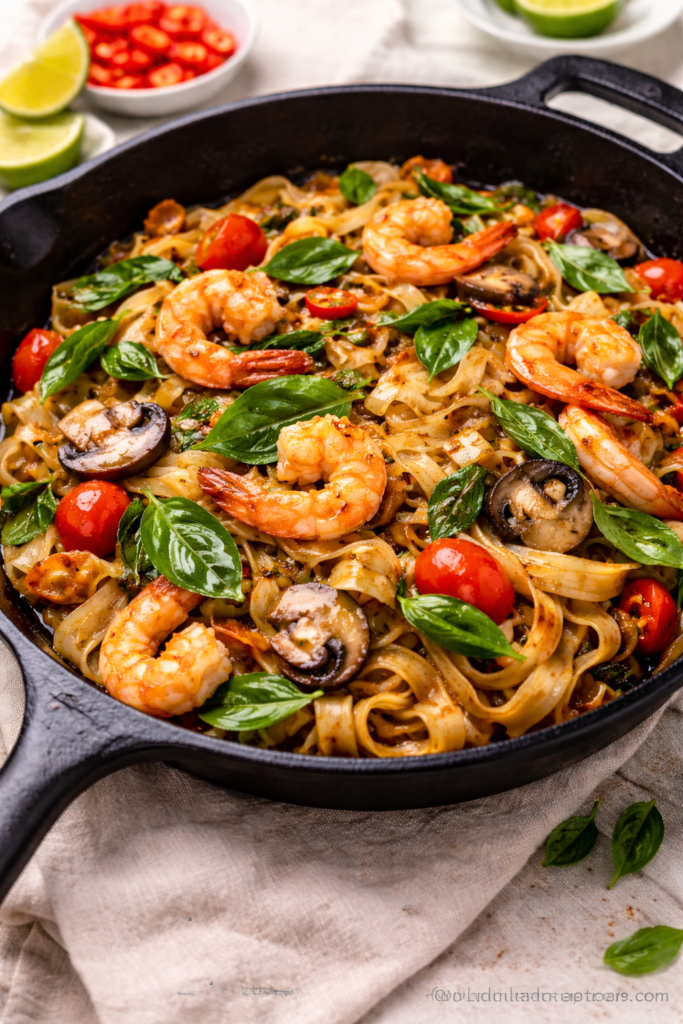
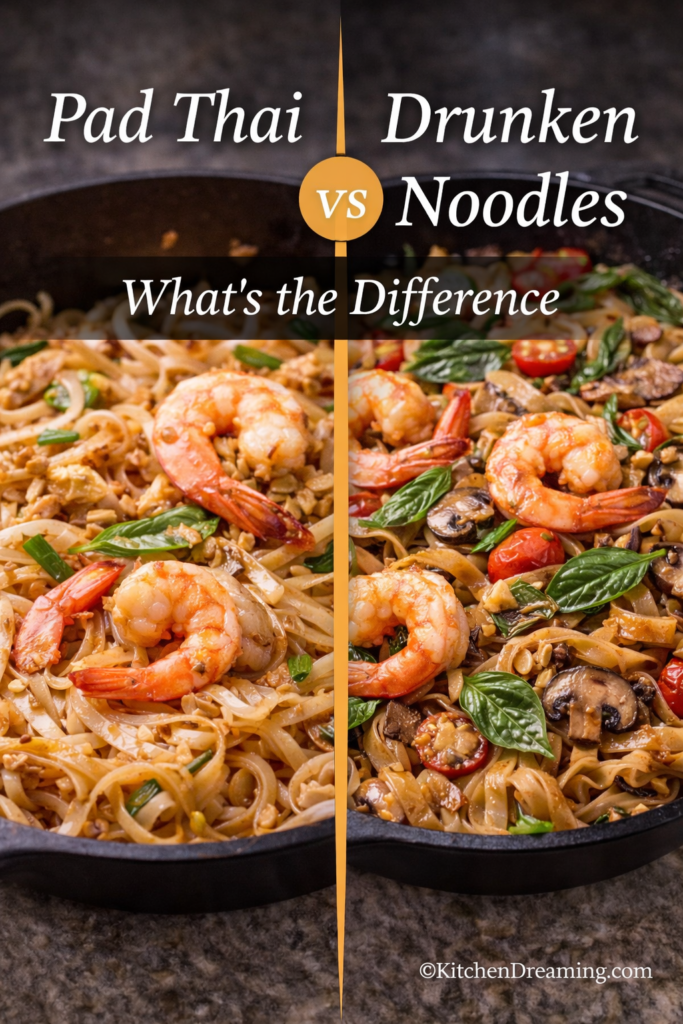
If you have ever searched “what are drunken noodles,“ they are savory, spicy, and herb-forward. Unlike Pad Thai, they are not sweet and tangy. Instead, they rely on soy sauce, dark soy sauce, fish sauce, garlic, and Thai basil for their signature flavor.
This version is naturally egg-free, uses easy-to-find dried rice noodles, and delivers better-than-takeout texture in about 30 minutes.
Why You Will Love This Drunken Noodles Recipe
• Easy 30-minute stovetop dinner
• Made with dried wide rice noodles
• Cooked in a cast-iron skillet [paid link]
• Naturally egg-free
• Deep umami from mushrooms
• Adjustable heat level
What Are Drunken Noodles
Drunken noodles are a Thai stir-fry made with wide rice noodles, protein, garlic, chilies, and Thai basil. The Thai name for drunken noodles is Pad Kee Mao.
The dish balances salty, savory, spicy, and lightly sweet flavors in one skillet.
Why Are They Called Drunken Noodles
Drunken noodles do not contain alcohol. The name comes from cultural folklore rather than the ingredients.
Pad Kee Mao translates to drunkard’s stir-fry. The word refers to the person eating the dish, not the way it is cooked.
The After Drinking Theory
Pad Kee Mao is bold, spicy, and intensely flavorful. It is often described as a dish eaten late at night after drinking, as its strong flavors wake up the palate.
The Drinking Food Theory
Some believe the dish was meant to be enjoyed alongside alcohol. The heat and saltiness pair well with cold beer.
The Drunk Cook Story
A popular story says someone came home late and created a quick stir-fry from noodles, basil, and chilies. While charming, this version is more folklore than documented history.
Traditional drunken noodles do not include wine or beer.
Drunken Noodles Sauce Explained
The sauce defines this dish.
• Soy sauce provides salt and foundational flavor
• Dark soy sauce adds color and richness
• Oyster sauce builds savory depth
• Fish sauce adds authentic umami
• Sugar balances salt and heat
• Thai basil infuses herbal aroma
The result is glossy, bold, and deeply savory.
Best Noodles for Drunken Noodles
Traditional Pad Kee Mao uses fresh wide rice noodles, but dried noodles are more readily available and work just as well.
Dried Wide Rice Noodles
• Easy to find in most grocery stores
• Sold in the international aisle
• Labeled as wide rice noodles
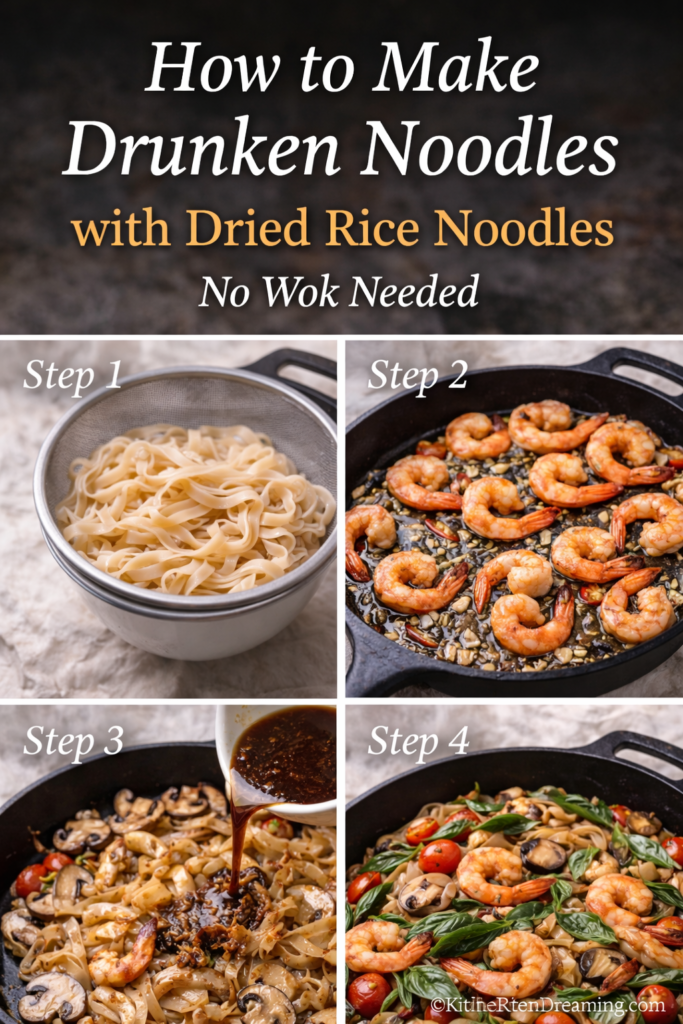
How to Prepare Dried Rice Noodles
- Bring a large pot of water to a boil.
- Turn off the heat.
- Add noodles and soak until flexible but still slightly firm.
- Drain thoroughly.
- Toss lightly with oil to prevent sticking.
Do not fully cook dried noodles before stir-frying. They will finish cooking in the skillet.
Heat Level Guide
Mild – Use one serrano with seeds removed.
Medium – Use two serrano chiles or one Thai chile.
Spicy – Use two Thai chiles with seeds intact.
Extra Spicy – Add chili oil before serving.
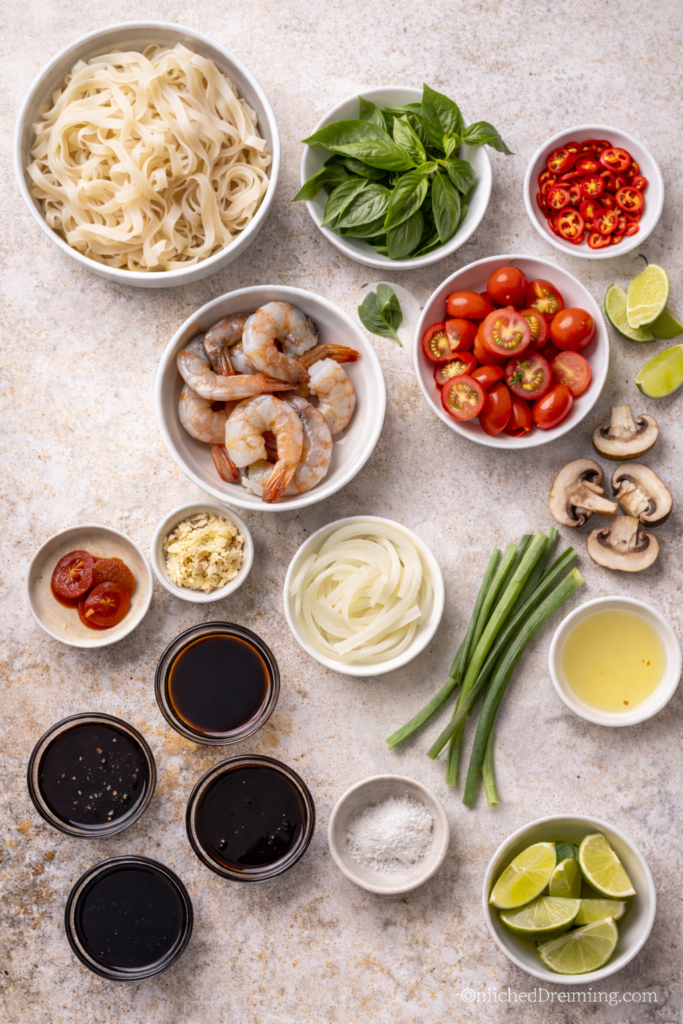
Ingredients (& What They Do)
Sauce
• Soy sauce: Provides salt and foundational savory flavor.
• Dark soy sauce: Adds deeper color and subtle richness.
• Oyster sauce: Builds thick, savory umami depth.
• Fish sauce: Adds authentic Thai saltiness and complexity.
• Sugar: Balances salt and heat for a rounded flavor.
• Sriracha: Contributes controlled heat and mild acidity.
• Minced garlic: Adds aromatic sharpness and depth.
• Thai basil leaves: Infuse herbal, slightly licorice-like fragrance.
Noodles
• Dried wide rice noodles: The chewy base that absorbs the sauce.
• Canola or peanut oil: High-heat cooking oil for proper searing.
• Garlic: Forms the flavor foundation of the stir fry.
• Thai chiles or serrano chiles: Provide fresh, adjustable heat.
• Shrimp: Adds light protein and natural sweetness.
• White onion: Gives structure, mild sweetness, and texture.
• Mushrooms: Add umami and meaty depth.
• Thai basil leaves: Deliver the signature herbal finish.
• Grape tomatoes: Contribute light acidity and moisture.
• Green onions: Add freshness and a mild onion bite at the end.
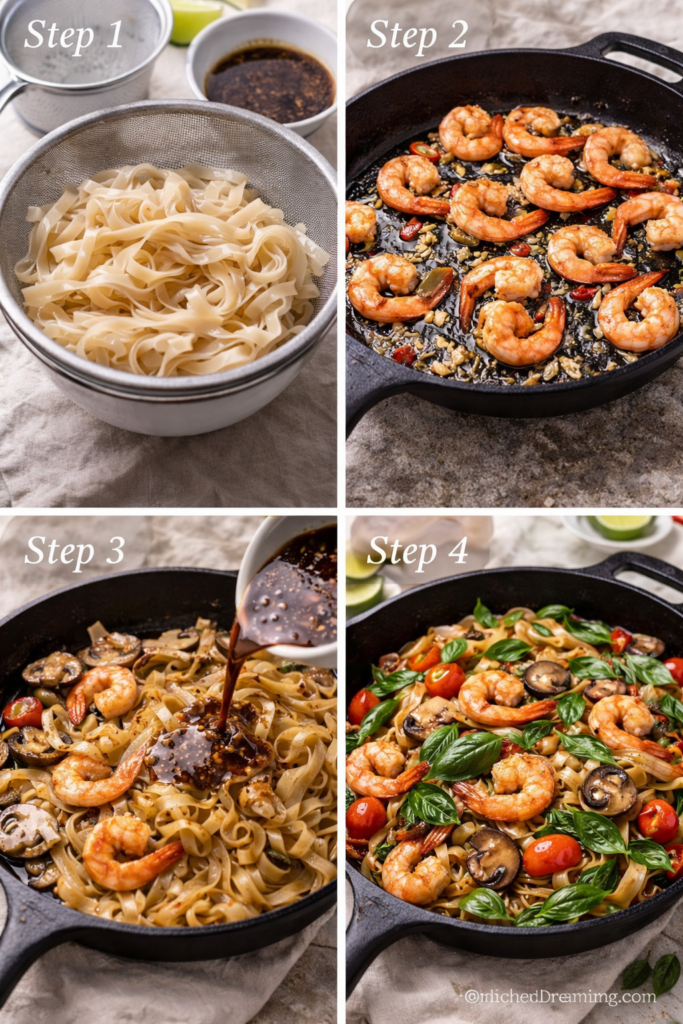
How to Make Drunken Noodles in a Cast-Iron Skillet
Have all ingredients prepped before heating the skillet. Cooking moves quickly.
Cast-Iron Skillet Method
- Prepare noodles using the soaking method above. Drain and set aside.
- Combine soy sauce, dark soy sauce, oyster sauce, fish sauce, sugar, Sriracha, minced garlic, and basil chiffonade in a small bowl. Set aside.
- Heat a large cast-iron skillet [paid link] over high heat. Add oil and heat until shimmering.
- Add minced garlic and sliced Thai chile or serrano. Cook briefly until fragrant.
- Add shrimp and cook until just turning pink, about 1 minute per side. Remove if needed to prevent overcooking.
- Add onion and mushrooms. Cook until mushrooms release moisture and begin to brown.
- Add drained noodles and allow them to sit briefly for direct pan contact to develop light caramelization.
- Pour in sauce and toss to coat evenly. Scrape the bottom of the skillet to incorporate browned bits.
- Add Thai basil, tomatoes, and green onions. Toss for 1 to 2 minutes until basil wilts and noodles are tender and coated.
- Serve hot.
What Can Go Wrong and How to Fix It
- Too salty – Add a splash of water and a pinch of sugar.
- Noodles too firm – Add 1 to 2 tablespoons water and cook another minute.
- Noodles mushy – Avoid over-soaking before cooking.
- Shrimp overcooked – Cook only until pink and opaque.
- Mushrooms watery – Allow them to brown fully before adding noodles.
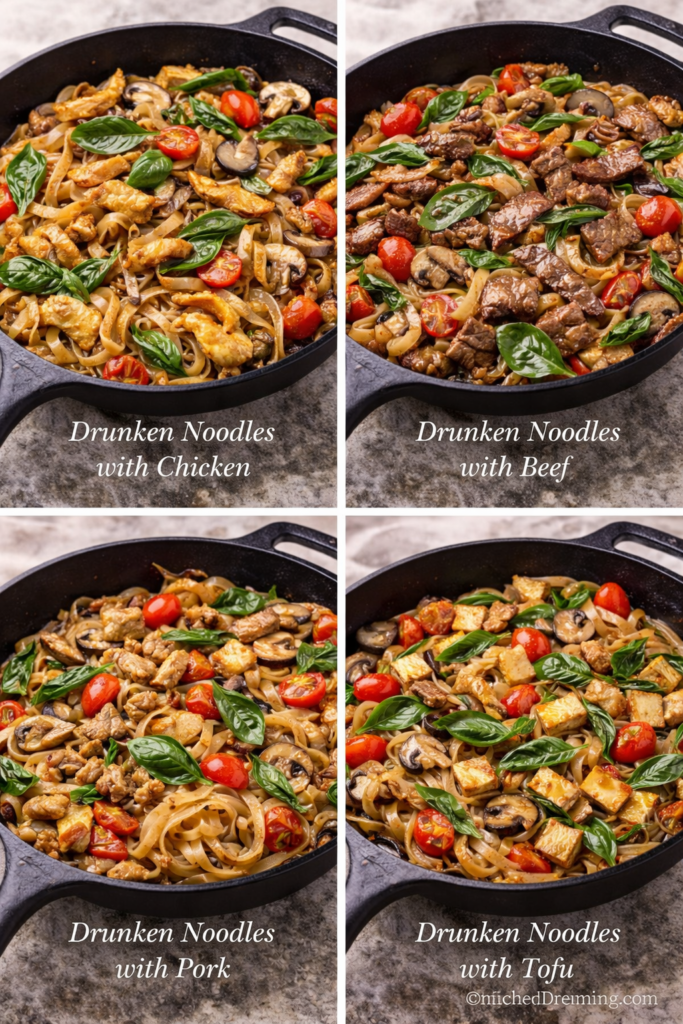
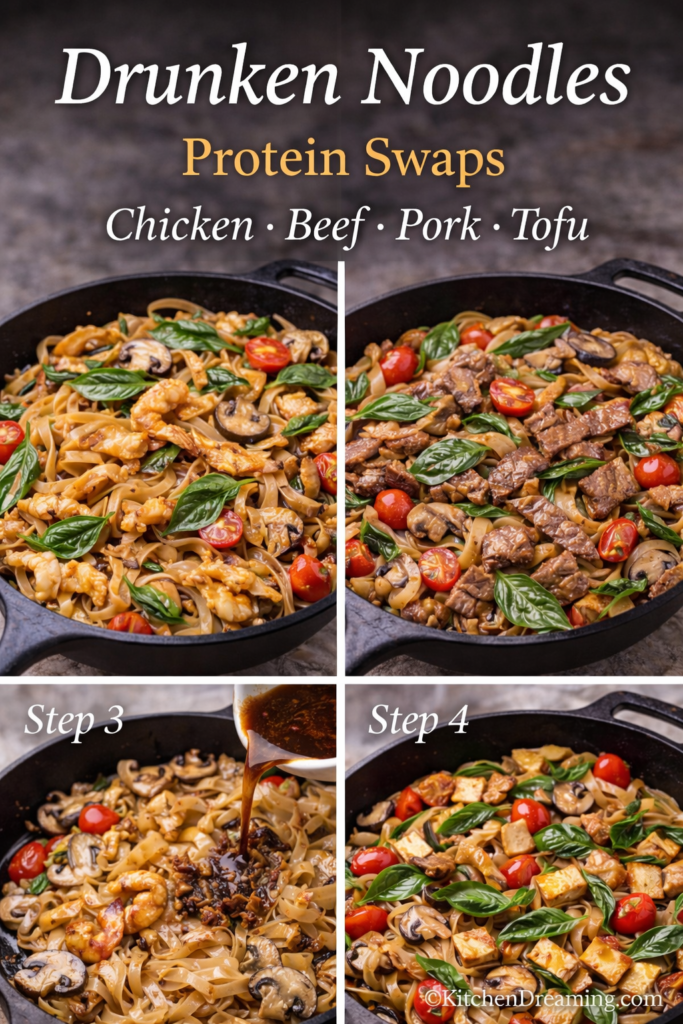
Protein Swaps for Drunken Noodles
This drunken noodles recipe works beautifully with different proteins. The sauce and noodle method stay the same. Only the cooking time changes.
Drunken Noodles with Chicken
• Use thinly sliced boneless skinless chicken breast or thighs
• Cook 3 to 4 minutes until just cooked through before adding noodles
This is the most popular variation and very family-friendly.
Drunken Noodles with Beef
• Use thinly sliced flank steak or sirloin
• Cook 1 to 2 minutes until just browned
Avoid overcooking to prevent toughness.
Drunken Noodles with Pork
• Use thinly sliced pork tenderloin or ground pork
• Cook until fully browned before adding vegetables
Ground pork adds extra savory depth.
Drunken Noodles with Tofu
• Use firm tofu, pressed and cubed
• Sear until golden before adding to noodles
For a vegetarian version, replace fish sauce with soy sauce or tamari.
Drunken Noodles with No Protein
You can also make this dish vegetable-forward by skipping the shrimp and increasing mushrooms or adding bell peppers.
Drunken Noodles Without Common Ingredients
Without Fish Sauce
• Substitute soy sauce or tamari
• Add lime juice for brightness
Without Oyster Sauce
• Use hoisin sauce
• Or soy sauce with a pinch of sugar
Without Eggs
This version is naturally egg-free.
What to Serve With Drunken Noodles
• Thai cucumber salad
• Fresh spring rolls
• Steamed bok choy
• Coconut soup
Storage
Store leftovers in an airtight container for up to 3 days.
Reheat in a skillet with a splash of water.
Freezing is not recommended because rice noodles lose texture.
People Also Ask (FAQs)
What is the Thai name for drunken noodles?
The Thai name for drunken noodles is Pad Kee Mao.
Can I use dried rice noodles for drunken noodles?
Yes. Soak until flexible but slightly firm, then finish cooking in the skillet.
Are drunken noodles spicy?
Yes. Traditional versions are moderately spicy, but the heat level can be adjusted.
Is dark soy sauce necessary?
Dark soy sauce adds color and depth, but regular soy sauce can be used if needed.
Final Thoughts
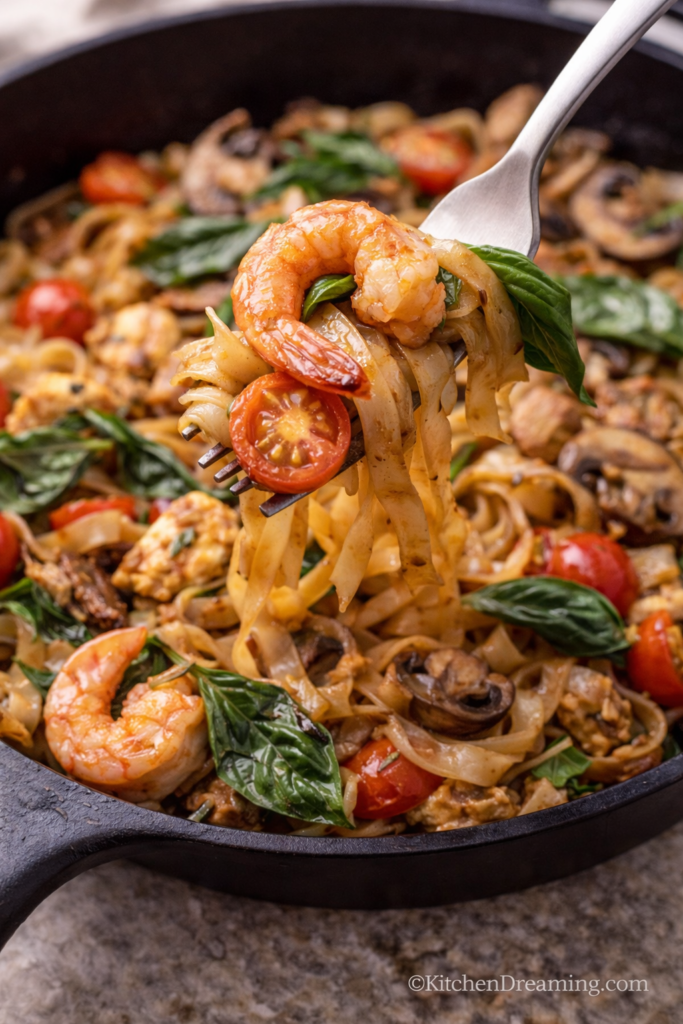
This drunken noodles recipe delivers bold basil aroma, savory depth, and beautifully seared rice noodles using dried noodles and a cast-iron skillet [paid link]. With balanced soy sauces and fresh chilies, you can recreate authentic Pad Kee Mao at home using simple ingredients and no special equipment.

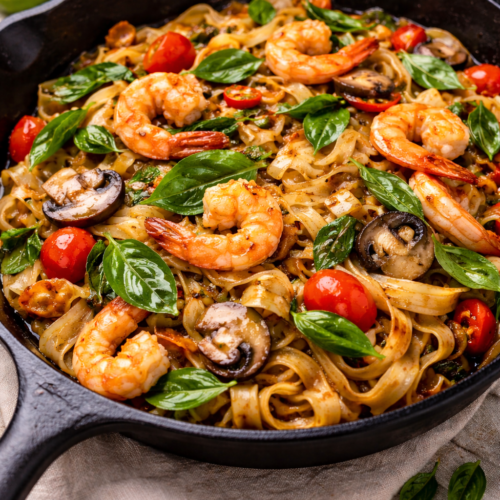
Thai Drunken Noodles
Ingredients
Sauce
- 1 tablespoon soy sauce
- 1 tablespoon dark soy sauce
- 1 tablespoon oyster sauce
- 1 1/2 tablespoons fish sauce
- 1 tablespoon sugar
- 1 teaspoon Sriracha
- 1 teaspoon minced garlic
- 6 to 8 Thai basil leaves , cut chiffonade
Noodles
- 8 to 10 ounces dried wide rice noodles
- 3 tablespoons canola or peanut oil
- 2 to 3 cloves garlic , minced
- 1 to 2 Thai chiles or serrano chiles , thinly sliced
- 2 green onions , sliced
- 1/2 medium white onion , sliced
- 1 cup sliced mushrooms
- 6 to 8 large shrimp , peeled and deveined
- 1 cup Thai basil leaves , loosely packed
- 1/2 cup grape tomatoes , halved
Instructions
Dried Rice Noodles
- Bring a large pot of water to a boil. Turn off the heat.
- Add noodles and soak until flexible but still slightly firm. Do not fully cook dried noodles before stir-frying. They will finish cooking in the skillet.
- Drain thoroughly.
- Toss lightly with oil to prevent sticking.
Cast Iron Skillet Method
- Have all ingredients prepped before heating the skillet. Cooking moves quickly.
- Combine soy sauce, dark soy sauce, oyster sauce, fish sauce, sugar, Sriracha, minced garlic, and basil chiffonade in a small bowl. Set aside.
- Heat a large cast iron skillet over high heat. Add oil and heat until shimmering.
- Add minced garlic and sliced Thai chile or serrano. Cook briefly until fragrant.
- Add green onions, onions, and mushrooms. Cook until mushrooms release moisture and begin to brown.
- Add shrimp and cook until just turning pink, about 1 minute per side. Remove if needed to prevent overcooking.
- Add drained noodles and allow them to sit briefly for direct pan contact to develop light caramelization.
- Pour in sauce and toss to coat evenly. Scrape the bottom of the skillet to incorporate browned bits.
- Add Thai basil, tomatoes, and green onions. Toss for 1 to 2 minutes until basil wilts and noodles are tender and coated. Serve hot.
Notes
Soak dried rice noodles only until flexible but still slightly firm. They will finish cooking in the skillet. Over-soaked noodles turn mushy. 2. Use High Heat
Drunken noodles rely on high heat for proper texture and light caramelization. Make sure the skillet is fully hot before adding ingredients. 3. Cook Mushrooms Until Browning
Allow mushrooms to release moisture and begin browning before adding noodles. This prevents a watery sauce. 4. Do Not Overcook Shrimp
Shrimp cook quickly. Remove from the pan as soon as they turn pink and opaque to prevent rubbery texture. 5. Adjust Salt Carefully
Fish sauce and soy sauce are salty. If the dish tastes too salty, ad d a splash of water and a pinch of sugar to rebalance. 6. Add Basil at the End
Thai basil should be added in the final minute so it wilts gently without losing aroma. 7. Cast Iron Tip
Preheat the skillet well before adding oil. A properly heated pan prevents sticking and improves searing.
More Recipes You’ll Love
If you loved this Drunken Noodles Recipe, you might also enjoy more recipes from our Asian Dinner Recipes collection. Looking for even more ideas? Browse our full set of Recipe Group Boards to find your next favorite meal.
📌 Save this recipe for later