If you love Chinese takeout lo mein but want to make it even better at home, this Loaded House Lo Mein delivers. Tender noodles, juicy shrimp, beef, and chicken, crisp vegetables, and a savory umami-rich sauce come together in a way that tastes restaurant-quality — without needing a commercial wok or extreme heat.
This recipe is designed specifically for home kitchens, using smart techniques that replicate the bold flavors of Chinese restaurants while staying realistic for American stoves.
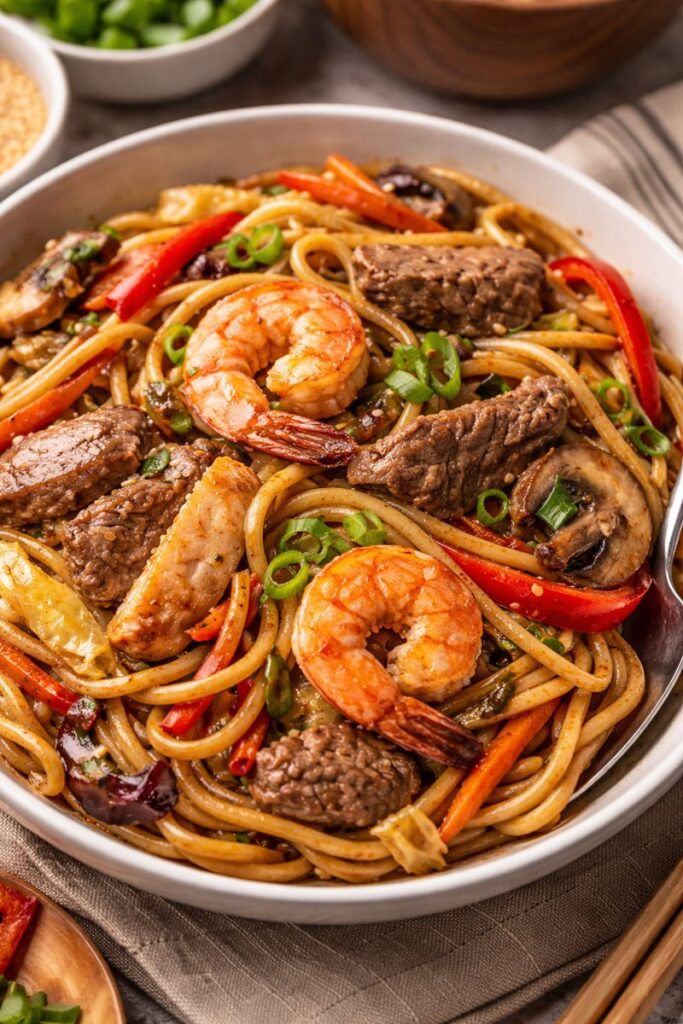
Why You’ll Love This Recipe
- Better than takeout — fresher, bolder, and customizable
- Loaded with protein — shrimp, beef, and chicken in one dish
- Works on a home stove — no special equipment required
- Flexible — swap noodles, proteins, or vegetables easily
- Perfect for leftovers — reheats and repurposes beautifully
Why This Recipe Works (Even Without Restaurant BTUs)
Chinese restaurant wok stations can reach 100,000+ BTUs, while most American stoves top out around 12,000–18,000 BTUs. That gap is why homemade lo mein often tastes good — but not wok-good.
This recipe bridges that gap by focusing on technique, not heat alone:
- Ingredients are cooked in stages, not all at once
- Proteins are seared first, then removed to preserve texture
- Vegetables cook quickly to stay crisp-tender
- Sauce is added last, preventing soggy noodles
- Noodles are tossed, not simmered, to keep them glossy
The result is bold, layered flavor that tastes like takeout — without overwhelming your stove.
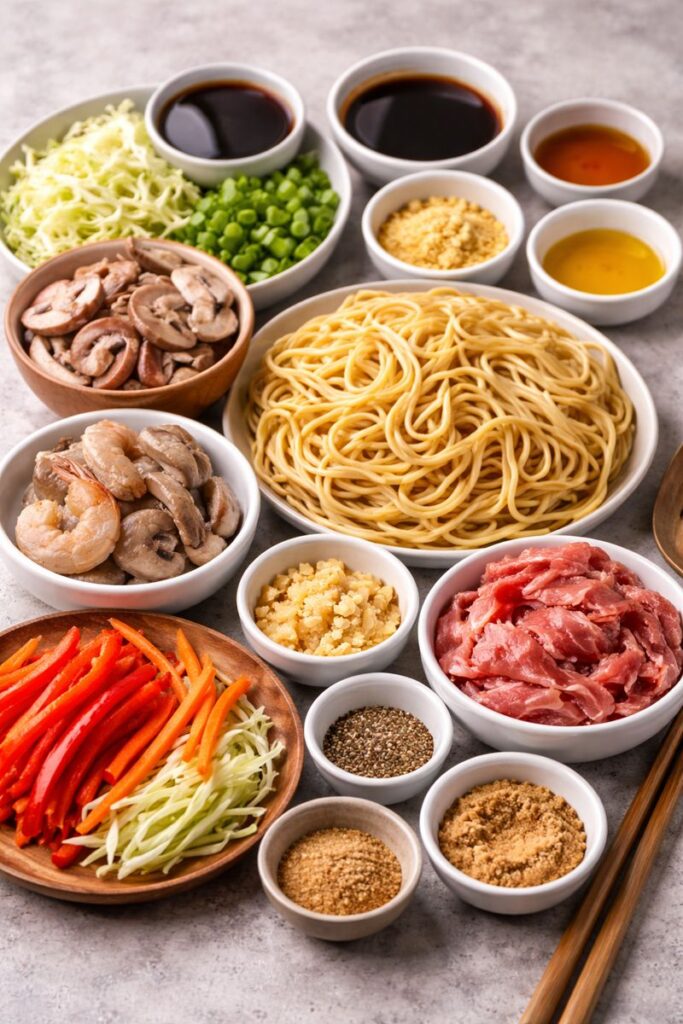
Ingredients
** You can find the full recipe ingredients and instructions on the printable recipe card below.
Instead of thinking in terms of measurements, think in terms of roles. Each ingredient here exists to build layers of flavor, texture, and balance.
Noodles (The Foundation)
- Egg noodles / lo mein noodles
These provide the classic chewy, springy texture lo mein is known for. Egg noodles hold sauce well and stay tender without falling apart.
Substitutions: spaghetti, chow mein noodles, or wide rice noodles (see variations).
Proteins (The “House” in House Lo Mein)
- Shrimp
Adds sweetness and quick-cooking tenderness, balancing the savory sauce. - Beef
Brings richness and depth; thin slices absorb sauce beautifully. - Chicken
Provides mild, juicy contrast and helps round out the dish.
Cooking proteins separately prevents steaming and keeps each one flavorful.
Aromatics (Flavor Starters)
- Garlic
Builds savory depth and warmth. - Ginger
Adds brightness and subtle heat that cuts through richness. - Green onions
Contribute freshness and light onion flavor without overpowering.
These are added briefly so they perfume the dish without burning.
Vegetables (Texture & Balance)
- Cabbage
Adds crunch and mild sweetness that softens when tossed with hot noodles. - Carrots
Bring sweetness and color. - Bell peppers
Add brightness and a gentle bite. - Mushrooms
Provide umami and a meaty texture, deepening the sauce.
Vegetables are sliced thin so they cook fast and stay crisp-tender.
Sauce Components (Umami Layering)
- Soy sauce
The salty backbone of the dish. - Dark soy sauce or oyster sauce (optional)
Adds depth, color, and complexity. - Sesame oil
Used sparingly for aroma and nuttiness. - Mirin or a touch of sweetness
Balances salt and enhances caramelization.
The sauce is intentionally simple — lo mein is about coating, not drowning.
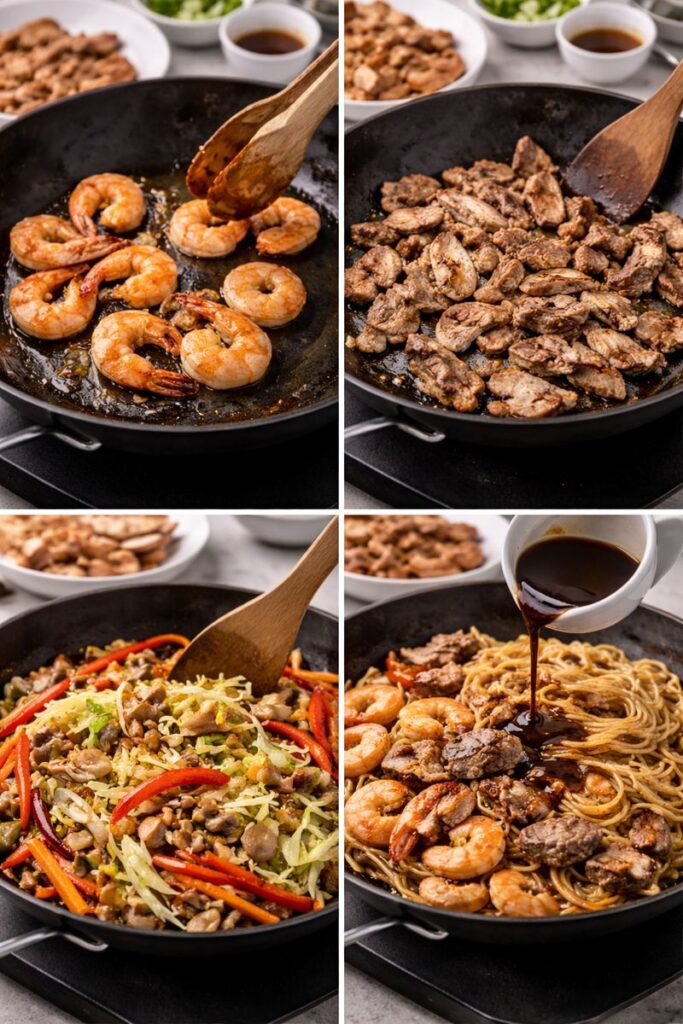
How to Make Loaded House Lo Mein (High-Level Method)
** You can find the full recipe ingredients and instructions on the printable recipe card below.
- Prep everything first. Stir-fry cooking moves fast.
- Cook noodles separately, drain well, and set aside.
- Sear proteins in batches over high heat; remove and reserve.
- Add aromatics, stirring briefly until fragrant.
- Stir-fry vegetables until crisp-tender.
- Return noodles and proteins, then add sauce.
- Toss quickly and remove from heat once glossy and coated.
Letting the noodles sit briefly in the hot pan helps flavors meld without overcooking.
Pro Tips for Restaurant-Style Results at Home
- Preheat your pan longer than it feels necessary
- Avoid overcrowding — cook in batches
- Pat the proteins and vegetables dry before cooking
- Add the sauce only at the end
- Use the largest burner on your stove
- Turn on your vent fan and don’t be afraid of the heat
These small adjustments make a big difference.
Noodle Variations (Including Rice Noodles)
Can Lo Mein Be Made with Rice Noodles?
Yes — with adjustments.
- Use wide rice noodles
- Soak until pliable, don’t overcook
- Add gently at the end
- Expect a softer, silkier texture
Rice noodles are great for gluten-free lo mein, though they won’t have the same chew as egg noodles.
Do Traditional Lo Mein Noodles Use Brown Wheat?
No. Traditional lo mein uses pale yellow wheat egg noodles. Brown or whole-wheat noodles are a modern adaptation.
Serving Suggestions
Serve with:
- Spring rolls or potstickers
- Simple cucumber salad
- Stir-fried greens like bok choy
- Chili crisp or hot sauce on the side
Storage & Leftovers
- Refrigerate in an airtight container up to 4 days
- Reheat in a hot skillet or microwave with a splash of sauce
- Freezing is not recommended (noodles soften too much)
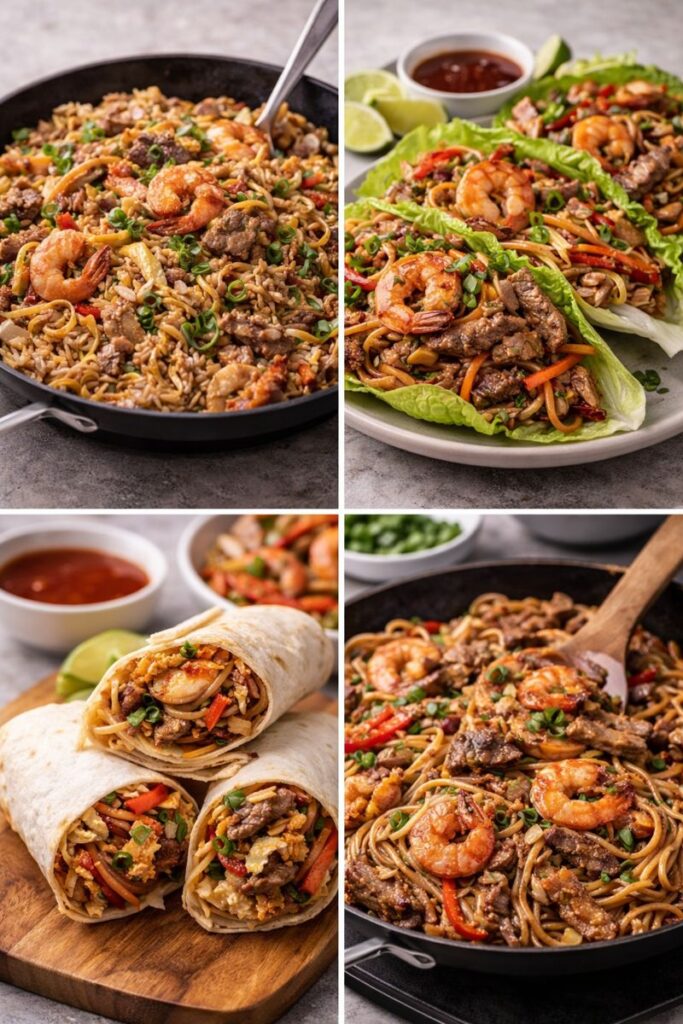
Creative Ways to Repurpose Leftover Lo Mein
Leftover lo mein is incredibly versatile:
- Stir-fry with eggs for a quick fried noodle bowl
- Spoon into lettuce wraps
- Roll into wraps or burritos
- Reheat and top with a fried egg
Second-day lo mein often tastes even better as flavors continue to develop.
People Often Ask (FAQs)
What’s the difference between lo mein and chow mein?
Lo mein uses soft noodles tossed in sauce, while chow mein noodles are typically fried and crisped.
Can I make lo mein ahead of time?
Yes, but it’s best freshly cooked. Prep ingredients ahead and stir-fry just before serving.
Why did my lo mein turn soggy?
Overcrowding the pan, adding sauce too early, or adding too much moisture causes sogginess.
What soy sauce is best for lo mein?
A combination of regular soy sauce and dark soy (or oyster sauce) gives the best depth.
Can I make this vegetarian?
Yes. Skip the proteins and add tofu, mushrooms, or extra vegetables.
Can I use spaghetti instead of lo mein noodles?
Absolutely. Cook it al dente and toss gently with sauce.
Final Thoughts
This Loaded House Lo Mein proves that you don’t need restaurant equipment to make bold, satisfying Chinese takeout at home. With smart sequencing, simple ingredients, and high-heat confidence, you get glossy noodles, layered flavor, and a dish that truly earns the title better than takeout.
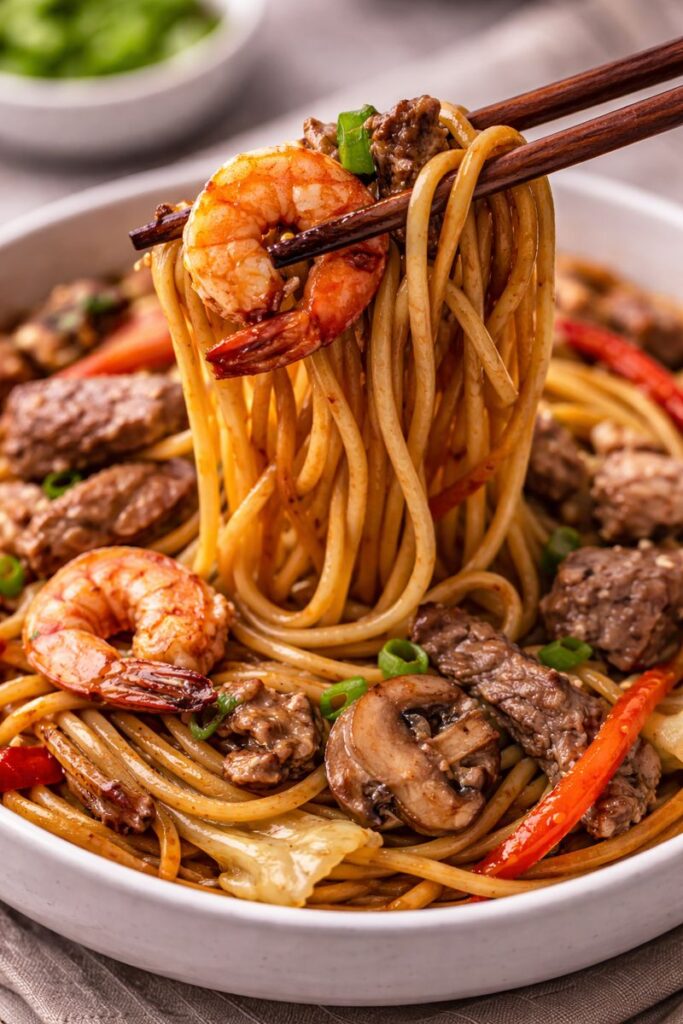

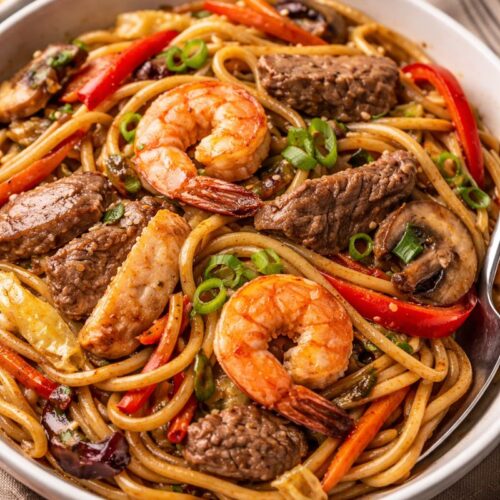
Loaded “House” Lo Mein
Ingredients
For the Sauce:
- 1/2 cup soy sauce (regular, dark, less sodium, or a blend – I use a blend) See note 1
- 1 tbsp oyster sauce (optional) See Note 2
- 2 tsp sesame oil
For the Lo Mein:
- 12 ounces Lo Mein noodles (or spaghetti) cooked to package directions
- 2 tsp garlic , minced
- 1 tsp ginger paste
- 4 green onions , sliced
- 1/4 cup julienne carrots
- 1/2 cup julienne red peppers
- 1/2 cup thinly sliced cabbage
- 1 cup sliced mushrooms
- 2 Tbsp mirin (Asian sweet cooking wine and rice seasoning)
For the Proteins
- 6 oz shrimp , any variety, peeled and cooked, tails on (i used colossal)
- 4 oz chicken , pounded thin, sliced and saute (or leftover roasted)
- 4 oz beef steak , pounded thin, sliced thin and sauteed
- Salt and Pepper , to taste
Instructions
- It’s best for this recipe to prepare everything you will need before starting. Chop and measure everything. Once you start cooking, it really comes together fast.
- Combine the sauce ingredients together in a small bowl. Set aside.
- Cook the noodles according to package directions. Drain and set aside. Using fresh, rinse under cool water, drain and set aside.
- Add 1 tbsp oil to a 10 to 12-inch skillet and heat on high until it is good and hot.
- Add the shrimp to the hot skillet, season with salt and pepper and cook about 1 – 2 minutes per side; or until the shrimp turn a light pink color and the tails curl in. Remove to a plate and set aside.
- Add chicken and saute until the chicken is cooked through and the juices are clear. Remove to the plate with the shrimp and set aside.
- Add the beef strips into the hot skillet. Season with salt and pepper. Cook for 1-2 minutes or until your desired doneness is achieved. I saute mine just to a medium. They will finish cooking with transfer heat when they are added back to the pan. Remove to the plate with the chicken and shrimp and set aside.
- Now, add the sesame oil into the skillet and add the vegetables plus garlic and ginger. Stir fry until fork-tender, about 5 minutes.
- Add the Mirin to the pan. The mirin will bubble rapidly. Allow this to simmer until it is mostly evaporated and the vegetables are tender.
- Add the cooked noodles and sauce to the pan- toss to coat.
- Return the meats to the pan along and toss to coat with the sauce.
- To get a nice browning to the noodles, allow it to sit for 30 seconds or so to allow caramelization, if crispiness in not desired, stir until the noodles are heated through.
- Taste and adjust seasonings. If desired, add more soy sauce.
- Optional garnishes include scallions, sesame oil, toasted sesame seeds, and sriracha sauce or chili paste (spicy).
Notes
Nutrition
More Recipes You’ll Love
If you loved this KW, you might also enjoy more recipes from our CATEGORY/TAG Collection. Looking for even more ideas? Browse our full set of Recipe Group Boards to find your next favorite meal.
📌 Save this recipe for later


Do I use fresh garlic?
Hi Tony,
I do use fresh garlic, but you can use jarred minced garlic in place of it.
I can make Chinese at home! Thanks for this!!
Thanks, Taylah – so glad you enjoyed it.
I saw the fresh noodle you used and opted for the dried version you suggested as a replacement. I’m so glad I did because it came out great. I couldn’t believe I made Asian take out on my little apartment stove.
I did not care for the noodles in the package either. Next time I will buy them at the Asian market or use spaghetti noodles instead. It was still tasty but just not as pretty.
Hi Jazmin, I couldn’t agree more.