No-ring bread machine [paid link] English muffins: let the dough cycle do the work, then skillet-cook for chewy muffins with nooks and crannies made at home.

If you’ve ever wanted homemade English muffins but hated the idea of special molds, this method is the sweet spot. Your bread machine [paid link] handles the mixing, kneading, and first rise, and you finish them in a skillet for that classic toasty exterior and tender, chewy inside.
Why this recipe works
- The bread machine [paid link] handles the hard part: consistent kneading and the first rise without babysitting.
- No rings required: shaping by hand keeps it simple and still gives great height.
- A second rise adds texture: a longer second rise yields taller muffins with more interior pockets.
- Skillet cooking creates the signature crust: you get that browned, toast-friendly exterior without turning on the oven.

Ingredients (& what each one does)
** You can find the full recipe ingredients and instructions on the printable recipe card below.
- 1 1/4 cups warm water – hydrates the flour and helps the yeast activate so the dough rises well.
- 3 Tbsp honey – feeds the yeast and adds gentle sweetness and browning. (You can swap 1:1 with sugar.)
- 3 tsp active dry yeast OR 2 tsp fast rise yeast – the lift that makes muffins airy instead of dense.
- 1/2 tsp salt – strengthens gluten and keeps the flavor from tasting flat.
- 3 cups bread flour – higher protein helps structure and chew (key for a good English muffin bite).
- 3/4 cups whole wheat flour – adds a nutty note and a bit more “hearty” flavor.
- 2 Tbsp butter, softened/room temp – adds richness and softness so the crumb stays tender after toasting.
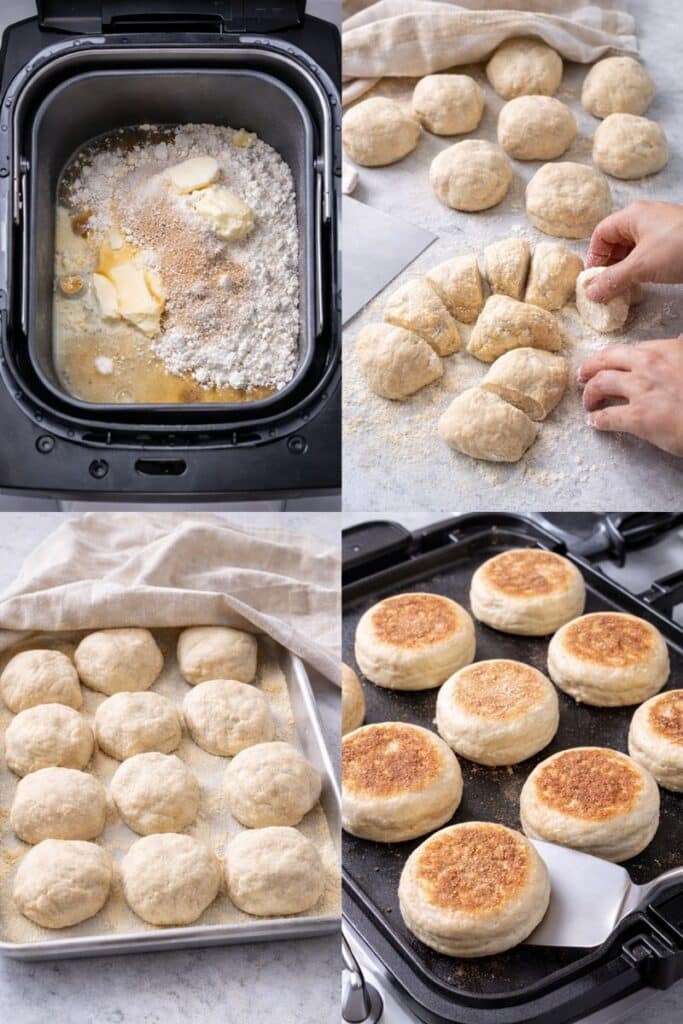
How to make bread Machine English Muffins
** You can find the full recipe ingredients and instructions on the printable recipe card below.
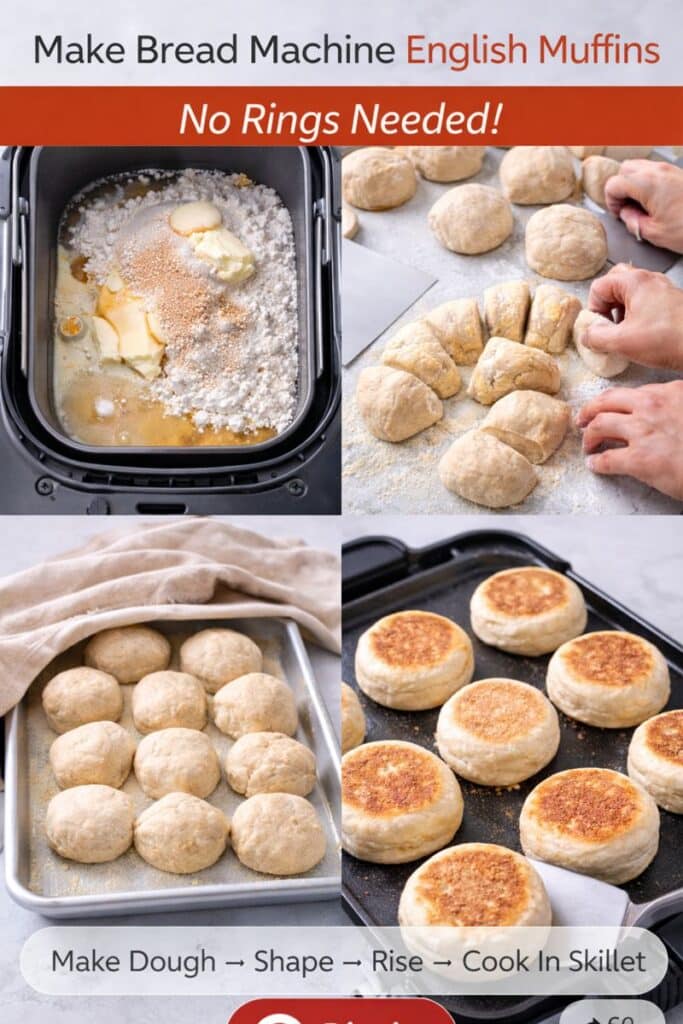
1) Make the dough in the bread machine
- Add warm water, yeast, and honey to the bread machine [paid link] pan. Check that the yeast foams/bubbles (a quick test to see if it’s active).
- Add the remaining ingredients (salt, flour, butter). Set the machine to the 1.5 lb setting and run the Dough/Manual cycle (per your machine).
2) Shape the muffins
- When the cycle finishes, turn the dough onto a lightly floured surface. If it’s too sticky to handle, knead in a small amount of bread flour just until workable.
- Shape into a 12-inch log and cut into 12 equal pieces. Roll each piece into a ball, then gently flatten to a muffin shape.
3) Second rise
- Place on a baking sheet either lightly coated with cornmeal (optional) or lightly sprayed with nonstick spray. Let rise 40–60 minutes, until doubled; the full 60 minutes gives taller muffins with more nooks and crannies.
4) Cook
- Cook on an electric griddle set to 300°F, or in a nonstick skillet over medium-high heat, for about 4 minutes per side, until golden brown.
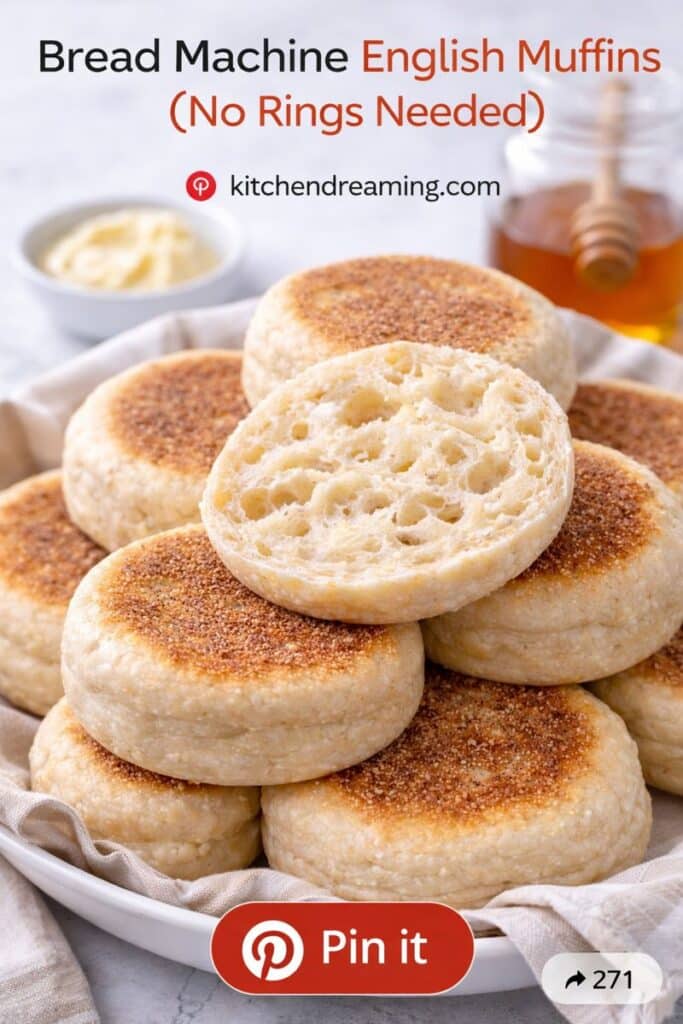
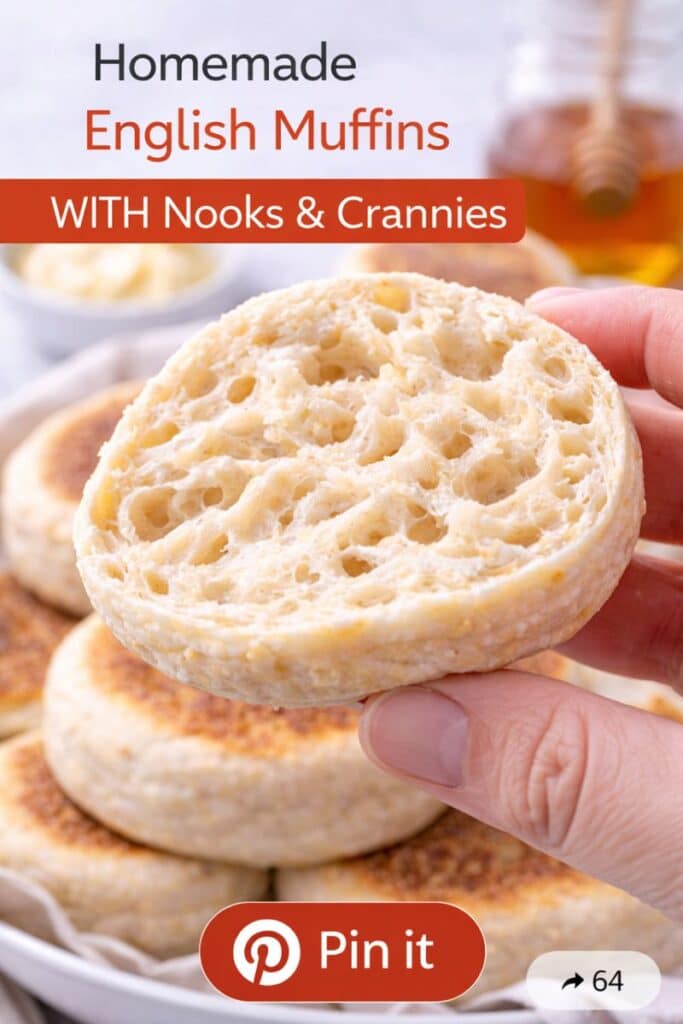
- Split with a fork for the traditional craggy interior, or use a serrated knife for clean slices.
Pro Tips
- Don’t skip the yeast check: if it doesn’t foam at the start, your muffins won’t rise well.
- Go for the longer second rise: 60 minutes tends to give better height and more interior texture.
- Don’t press down while cooking: it knocks out the air you just worked to build.
- If they brown too fast but feel underdone inside, lower the heat and cook a bit longer. (Some readers also finish briefly in a 350°F oven if needed, depending on skillet temp and thickness.)
Recipe variations
- Cinnamon-raisin: knead in the cinnamon with the dry ingredients, and add the raisins near the end of kneading (or knead them in by hand before shaping).
- Savory herb: add dried Italian seasoning [paid link] or rosemary/thyme; serve with eggs or soup.
- Honey swap: use sugar instead of honey (1:1) if preferred or needed.
- Oat twist: replace the whole wheat portion with oat flour (or finely ground oats) for a softer, slightly sweet grain flavor.
- Cheddar-black pepper: fold in shredded cheddar and a few cracks of black pepper during shaping.
Serving suggestions
- Breakfast sandwich: egg + cheese + ham/bacon/sausage
- Toasted with butter and jam or honey butter
- Avocado + sliced tomato + salt and pepper
- Alongside soup or chili instead of crackers
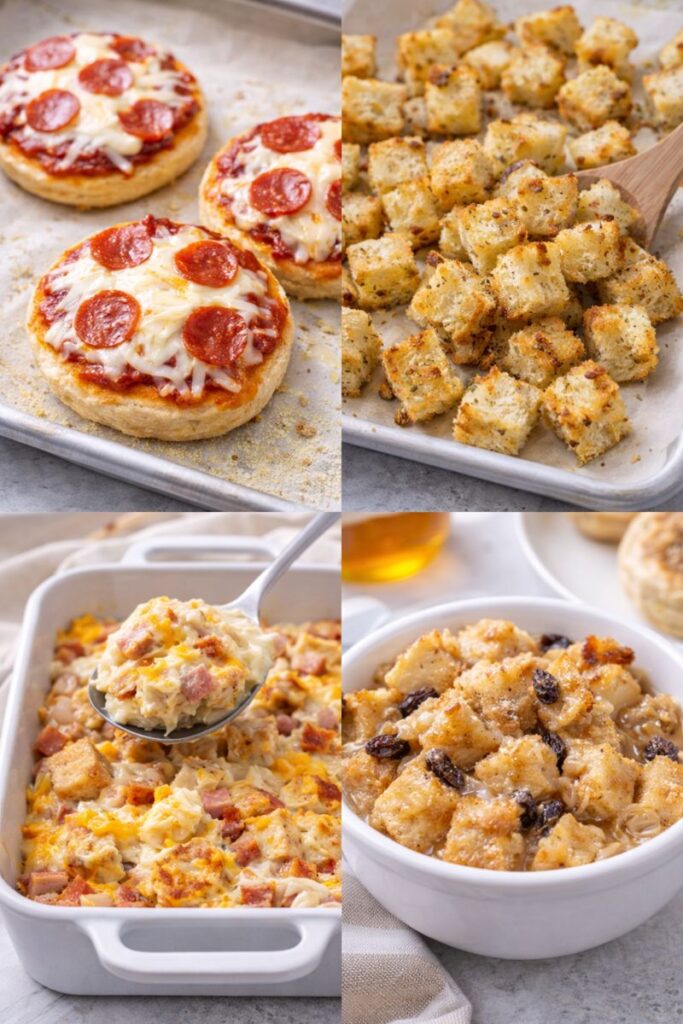
New life for leftovers
- Mini pizzas: split, toast lightly, add sauce + cheese, broil until bubbly
- Breakfast strata: cube and bake with eggs, milk, cheese, and sautéed veggies
- Croutons: cube, toss with oil + seasoning, bake until crisp
- Bread pudding: especially good if your muffins have dried out a bit
Storage
- Refrigerator: up to 1 week
- Freezer: up to 3 months
Tip: split before freezing so you can toast straight from frozen.
People often ask (FAQs)
Do I really need bread flour?
It’s strongly recommended for structure and chew; all-purpose can work, but you may get a softer, less “English muffin” texture.
Why didn’t my muffins get many nooks and crannies?
Common causes are underproofing the second rise, pressing them while cooking, or cooking them too hot (browning the outside too fast). The longer second rise helps most.
Do I need cornmeal?
It’s optional here—mainly helps prevent sticking and adds a classic exterior texture.
Can I swap honey for sugar?
Yes—this recipe notes a 1:1 swap for honey and sugar (including certain alternatives).
What’s the best way to split English muffins?
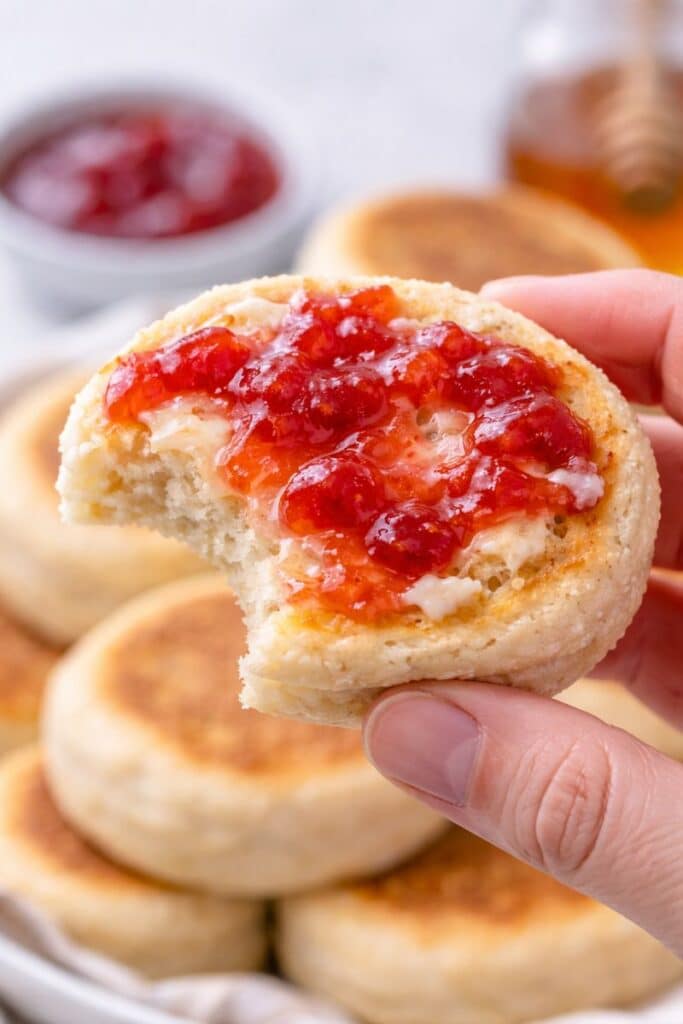
A fork gives a more rugged interior (better for catching butter/jam), while a serrated knife gives cleaner halves.
Final thought
If you love the idea of bread-machine convenience but want real, skillet-cooked English muffins, this “no rings” method is the one to save. Pin it now, because once you taste a warm, freshly toasted batch, store-bought won’t hit the same.


Bread Machine English Muffins
Ingredients
- 1-1/4 cups warm water
- 3 Tbsp Honey [see note 1]
- 3 tsp active dry yeast OR 2 tsp fast rise yeast
- 1/2 tsp salt
- 3 cups bread flour
- 3/4 cups whole wheat flour
- 2 Tbsp butter , softened or room temperature
Instructions
Bread Machine:
- Load the bread machine [paid link] starting with the warm water, yeast and honey. Check that the yeast is bubbling and foaming. If not, the yeast has gone bad and the bread will not rise. This is a common bread mishap.
- Next, add the dry ingredients and butter and set the machine to the 1.5lb loaf and use the dough or manual cycle depending on your manufacturer.
Shape the Dough by Hand
- Once the cycle is fully completed, turn the dough out from the machine onto a lightly floured surface. If the dough is too sticky to work with, knead in a bit of extra bread flour.
- Shape the dough into a log about 12 inches long. Then cut it into uniform 1-inch pieces (12 total). Shape each piece into a ball (or a circle) and then lightly press flat between palms or hands to form the muffin shape and size.
- Place the muffins on a cookie sheet lightly coated with cornmeal (optional) or lightly sprayed with non-stick oil to keep them from sticking during the second rise. Allow them to rise for about 1 hour or until they double in size. This can be as short as 40 minutes, but the full 60 minutes results in a much taller muffin with more nooks and crannies. Both rise times taste great but the latter yields a better look and texture.
Cook the English Muffins
- Using an electric griddle set to 300 degrees F or a non-stick skillet over medium-high heat, cook the muffins for 4 minutes on each side or until golden brown.
- Split them open with a fork to keep in tradition or opt for a serrated knife. This helps the muffins to hold shape as you slice.
Storage
- Store in the refrigerator for up to a week or freeze for up to 3 months.
Notes
- Honey and sugar (or sugar alternatives like Splenda and stevia) have an even 1 to 1 swap ratio.
More Recipes You’ll Love
If you love THIS RECIPE, you might also enjoy more recipes from our Bread collection. Looking for even more ideas? Browse our full set of recipe group boards to find your next favorite meal.
📌 Save this recipe for later



These turned out very well! The dough was a little sticky, but with a little bit of corn meal it was very easy to roll into a log and cut into slices.
I really enjoyed making these English muffins. I had to use The Rock pan to cook them as I have a glass top stove and cannot use cast iron on it. I wiped a “little” oil on the pan and cooked them for 7 minutes one side and 6 the other with the lid on and they are great. We all love them and they are so much better than the ones from the grocery store.
Hi there I’m super keen to try this recipe! Can I ask if the griddle needs to have oil or butter in it before starting to cook it? Thanks!
My griddle is non-stick teflon so oil was not needed.
These were a bit of a challenge. 4 minutes per side was definitely not long enough! Even when they browned after about 7-8 minutes per side the internal temp did not reach 200. I had to pop them into a 350 degree oven to finish them otherwise the inside was still gummy.
Hi Maureen,
what was the temperature of your skillet?
I used plant butter (dairy makes me break out). Yes, more crunchy than recipes with milk and egg but NO DAIRY so these are for me! I have a muffin splitter which is awesome and toasted lightly then topped with mashed avocado
worked so well even with two mistakes! I waited too long before pulling the dough out of the bread maker to shape (1 whole hour, oops!), and they still rose well after another hour in their individual muffin shape…. but then I forgot to flatten them before that rise. But no worries– I just cooked on both sides to brown and then baked for 10 minutes on 350° or until they were 195-200° inside. winner recipe!
These are fantastic! And easy! Also, because they don’t have eggs and milk, they are lower-calorie. When I don’t have whole wheat flour I grind 3/4 cup old-fashioned oats and when I don’t have bread flour, I sift the all-purpose. They rise up nice and taste amazing. Thank you, Ronda!!! *****
how much sugar instead of honey, please, I am allergic to honey and love english muffins
Hi Susan –
Honey and sugar have an even 1 to 1 swap ratio until you get up to 1 cup of honey in any recipe. I will add this information to the post. Thank you for taking the time to reach out and ask this question.
Hi! I tried this recipe and it was wonderful, easy and the family really enjoyed them. I was wondering if I could use all white bread flour, since I don not like anything with wheat in it.
Thanks so much for your help in this.
Can I bake them in the oven?
Hi Kathy, I have not tried this method.
Just baked them at 350 degrees for 20 minutes on top of parchment paper…very light feeling
SO easy to make and now I must try your serving suggestions.
Thanks, Danute – I am so glad you enjoyed it. Let me know how you like the serving suggestions when you try them, I can’t wait to hear from you! :)
I’ve been looking for a good egg free recipe for my son who is allergic to chicken and eggs. These made the perfect muffin for our needs! Thanks for a great tasting egg-free recipe
The aroma of freshly-baked bread would bring out one’s appetite and remind them of home with the holidays.
I really liked reading your post! Quallity content. Thanks for this recipe.
Made these tonight. They turned out like really nice fluffy, airy dinner rolls, not really like English Muffins… My husband said “they’re great!..for rolls!” They didn’t quite have the denser, heartier texture that I am used to in an English muffin. I am thinking this may be due to the absence of an egg (the non-bread machine recipe I almost made instead called for an egg, as did all of the other recipes I looked at). But for a pan-cooked roll, they were excellently light and tasty! Will probably keep these in my repertoire of semi-frequently used recipes as they really were good. Thanks for sharing!
Thanks Abby! At your suggestion, I’ll try and egg next time. These are a great egg-free version for those allergic to eggs.
How did they turn out with the egg??
I had to add about a half cup of water to get my old machine to mix.
Unfortunately, since we are not weighing the flour out to exact grams, we will have variations on how we all measure a “cup” some are packed more tightly or more loosly. This will cause the variation in water. Thanks for asking.
Definitely not enough water for mine either. Mine had no problem mixing, but didn’t have a dough in the rise period. Took it out, added water, and started over again. They’re rising in the oven right now.
Love English muffins! Will try this easy recipe, but in the second step it says add dry ingredients and put butter on top of water. Is butter put in the first step or is more water added in the second step? I’m sorry, but I’m confused.
Hi Theresa,
I’ve updated the step 2 instructions to (hopefully) make it more clear. You are just adding everything else into the pan with the yeast/water mixture. Thanks for taking the time to leave a comment and ask. I hope you enjoy them!
Just made your recipe for the English muffins (first time) I cannot wait for breakfast tomorrow morning, they look so deliciouuuuuuuuuus!!!!!!!
Hi Patricia, I hoped you liked them. They were a hit around my office.