If you love rich, garlicky seafood with a bright, spicy kick and plenty of sauce to soak up with crusty bread or fluffy white rice, Shrimp Mozambique (Camarão à Moçambique) is about to become your new go-to weeknight showstopper. Born from the culinary crossroads of Portugal and its former colony Mozambique—and popularized across Portuguese-American communities in places like Fall River and New Bedford—this dish hits the sweet spot between comfort food and bold coastal flavor.
Best of all, using smart pantry staples like peri-peri sauce or Calabrian chili paste, tomato paste, and a splash of beer or dry white wine, you can pull together restaurant-worthy Shrimp Mozambique in about 30 minutes.
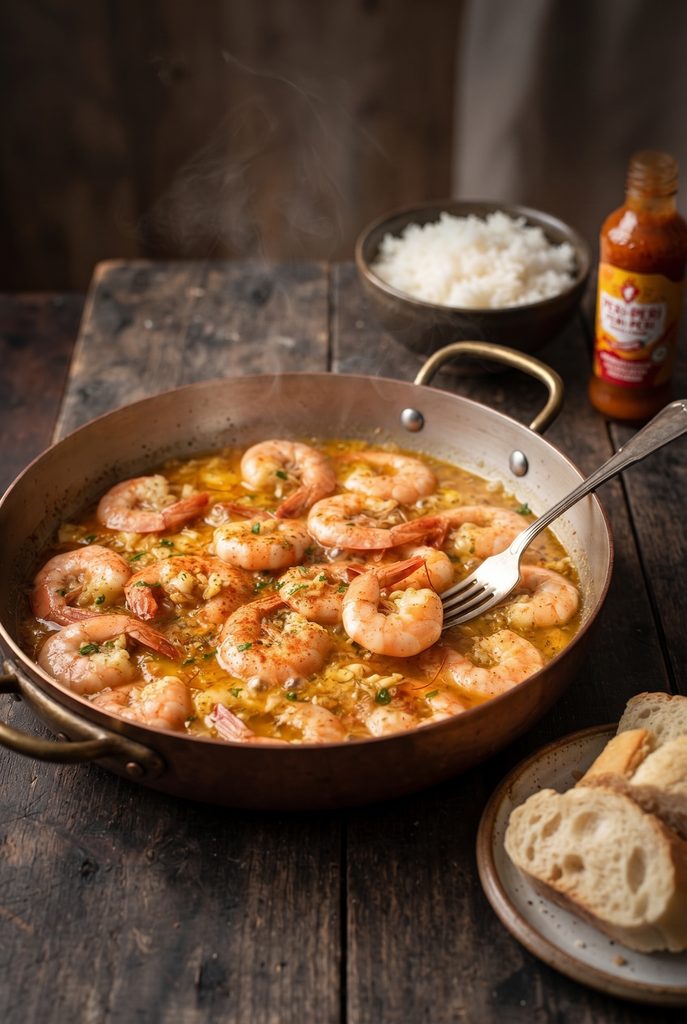
What Is Shrimp Mozambique?
Traditionally, Shrimp Mozambique leans on piri-piri (African bird’s eye chilies), massa de pimentão (fermented sweet red pepper paste), olive oil, garlic, and beer or white wine.
In everyday American kitchens—and in authentic Portuguese-American preparations—you don’t have to hunt down specialty imports to get that signature flavor:
- Peri-Peri Sauce or Calabrian Chili Paste: Instead of plain crushed red pepper flakes, peri-peri sauce or jarred Calabrian chilies bring bright, fruity heat that echoes traditional piri-piri peppers.
- Tomato Paste or Roasted Red Pepper Paste: A spoonful of concentrated tomato paste stands in for Portuguese massa de pimentão, giving the broth deep color and savory seafood synergy.
- Liquid Base: A full can of crisp lager beer (or Portuguese beer like Super Bock or Sagres) or a splash of dry white wine cooks down into a rich, savory pan sauce.
Why This Recipe Works
- Shell-On Shrimp Protects Texture and Builds Flavor: Cooking shrimp with the shells intact insulates the delicate meat from direct heat so it stays juicy and tender rather than rubbery. At the same time, the shells infuse the beer-and-garlic broth with rich, authentic seafood depth that peeled shrimp simply can’t match.
- Smart American Pantry Swaps Nail Traditional Flavor: Authentic Portuguese-American Camarão à Moçambique relies on piri-piri chilies, massa de pimentão (fermented red pepper paste), and saffron or Sazón packets. Swapping in widely available peri-peri sauce or Calabrian chili paste, concentrated tomato paste, sweet paprika, and a pinch of turmeric delivers the exact same fruity heat, savory richness, and signature golden-yellow hue without a specialty grocery run.
- Blooming Spices in Fat Unlocks Maximum Aroma: Sautéing the garlic, paprika, turmeric, tomato paste, and chili paste directly in the olive oil and onion base before adding liquid toasts the spices and caramelizes the tomato paste, eliminating any raw edge and giving the broth a deep, slow-simmered taste in under two minutes.
- Reducing the Beer Concentrates the Broth: Simmering the lager for a few minutes before adding the shrimp cooks off the harsh alcohol bite and reduces the liquid into a flavorful base—meaning the shrimp only need a gentle 3 to 5 minutes in the pan to finish cooking.
- Cold Butter Finishes the Sauce Like a Restaurant: Swirl-mounting cold butter into the broth off the heat (monter au beurre) emulsifies the liquid with fresh lemon juice, transforming a thin pan broth into a silky, glossy sauce that clings to every shell, grain of rice, and piece of crusty bread.
Why Shell-On Shrimp & Pantry Swaps Work So Well
- Shell-On Shrimp: Cooking shrimp with the shells intact is the hallmark of an authentic preparation. The shells protect the shrimp from overcooking, lock in moisture, and infuse the beer-and-butter broth with rich seafood flavor. Look for “easy-peel” shrimp that are already deveined to save prep time at the table.
- Olive Oil + Cold Butter Finish: Building the aromatics in extra-virgin olive oil keeps the base grounded in traditional flavor, while whisking cold butter into the off-heat sauce at the end (monter au beurre) creates a glossy, restaurant-style finish that clings to the shrimp and rice.
- Easy Chicken Swap (Frango à Moçambique): If you’re in the mood for poultry instead of seafood, swap the 2 pounds of shrimp for 2 pounds of boneless, skinless chicken breasts or thighs cut into 1½-inch chunks. Season with salt and pepper, sear in olive oil and butter over medium-high heat for 3–4 minutes until lightly browned, remove to a plate, prepare the onion, garlic, spice, and beer base as directed, and return the chicken to simmer in the sauce until cooked through.
- Alcohol-Free Option: Swap the beer or wine for 1 cup of low-sodium seafood stock or chicken broth.
Ingredients
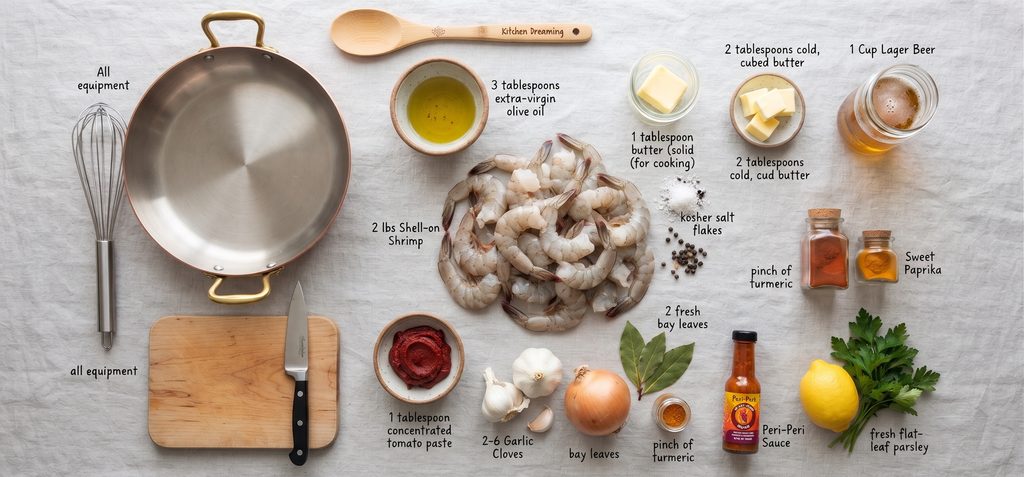
- 2 lbs large raw shrimp (16/20 or 21/25 count), thawed, deveined, with shells and tails left on
- 3 Tbsp extra-virgin olive oil, divided
- 3 Tbsp butter, divided (1 Tbsp for cooking, 2 Tbsp cold for finishing)
- 1 medium onion, diced
- Garlic (minced/sliced to taste)
- 2 bay leaves
- Sweet paprika (such as colorau)
- A pinch of turmeric (for signature golden-yellow color without needing saffron threads or Goya Sazón packets)
- Tomato paste (or roasted red pepper paste)
- Peri-peri sauce or Calabrian chili paste (start with 1 tsp for mild-to-medium heat, or 2 tsp for traditional spicy heat)
- A pinch of salt (plus kosher salt and freshly ground black pepper to taste)
- 1 cup (8 oz) crisp lager beer (or dry white wine)
- 1 fresh lemon, juiced (about 1 ½ Tbsp)
- ¼ cup fresh flat-leaf parsley or cilantro, finely chopped (plus extra for garnish)
- Cooked white rice and crusty bread (such as Portuguese rolls / papo-secos), for serving
Step-by-Step Instructions
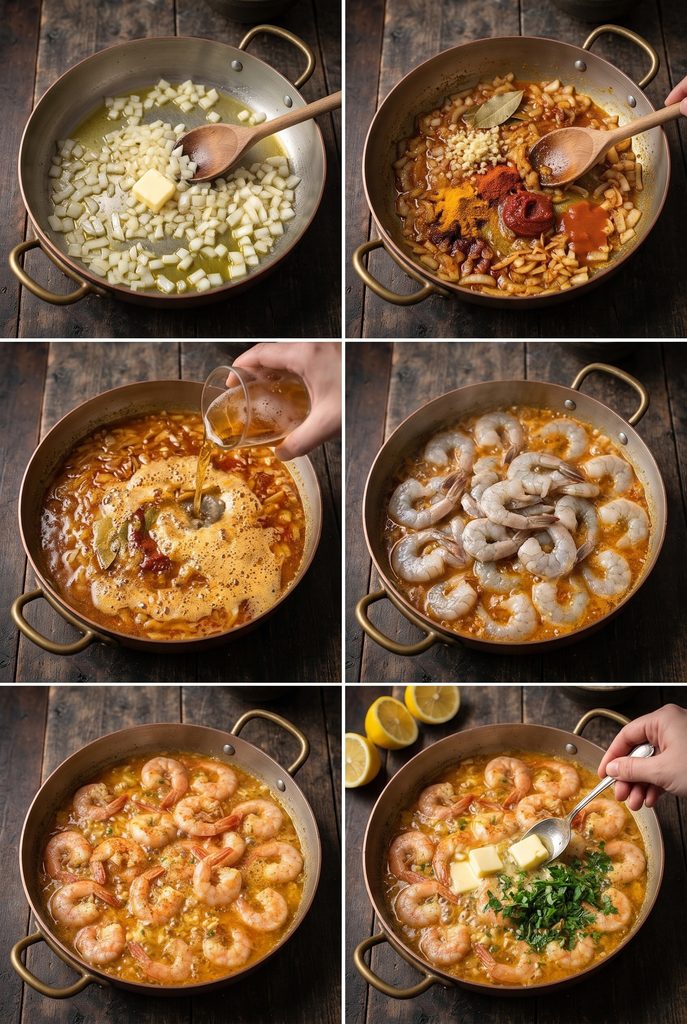
- Prep the Shrimp: Pat your thawed, shell-on shrimp dry with paper towels and season them lightly with kosher salt and freshly ground black pepper.
- Build the Aromatic Base: Heat the olive oil and 1 tablespoon of butter in a large, deep skillet or Dutch oven over medium heat. Add the diced onion and a pinch of salt, and sauté for 5–6 minutes until translucent and soft.
- Bloom the Spices: Add the garlic, bay leaves, paprika, turmeric, tomato paste, and peri-peri sauce (or Calabrian chili paste). Stir constantly for 1–2 minutes until the garlic is fragrant and the paste darkens slightly.
- Simmer the Broth: Pour in the lager beer (or dry white wine), scraping up any browned bits from the bottom of the pan. Bring to a boil, then lower the heat and simmer uncovered for 3–4 minutes to cook off the raw alcohol and concentrate the flavors.
- Cook the Shrimp: Nestle the shrimp into the pan in an even layer. Toss to coat in the sauce, cover the pan, and simmer over medium-low heat for 3–5 minutes, stirring halfway through, until the shrimp turn bright pink and are opaque. (Avoid boiling once the shrimp go in, as high heat can toughen them.) Shrimp should be cooked to an internal temperature of 145 degrees F (62.8 degrees C).
- Finish the Sauce: Remove the skillet from the heat and discard the bay leaves. Swirl in the remaining 2 tablespoons of cold butter, fresh lemon juice, and chopped parsley or cilantro until the butter melts into a glossy sauce.
- Serve: Taste and adjust salt if needed, garnish with extra herbs, and serve immediately over hot white rice with crusty bread on the side to soak up every drop of the broth.
Recipe Notes & Storage Tips
- Keep It Gentle: Don’t boil the shrimp—keep the heat at a gentle simmer once they hit the pan so they stay juicy and tender.
- Storage: Leftovers can be refrigerated in an airtight container, though reheating an emulsified butter sauce and thawing/reheating cooked shrimp isn’t ideal—the sauce can separate and the shrimp may turn tough. Enjoy it fresh for the best texture and gloss!
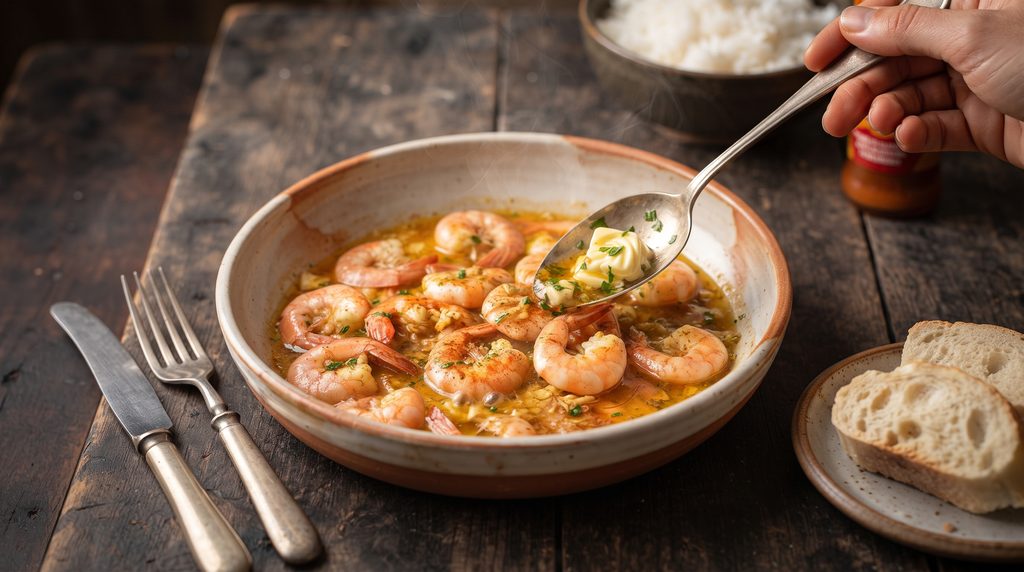
Final Thoughts
Shrimp Mozambique (Camarão à Moçambique) proves that big, bold coastal flavor doesn’t require hours over the stove or a cart full of hard-to-find specialty ingredients. With just 30 minutes, a single skillet, and everyday pantry staples like beer, garlic, tomato paste, and peri-peri or Calabrian chili paste, you get tender, shell-on shrimp swimming in a silky, spicy-savory butter broth that begs to be soaked up with crusty Portuguese rolls and warm white rice. Whether you serve it piled high as a crowd-pleasing appetizer or make it the centerpiece of a weeknight dinner, this classic Portuguese-American comfort dish is guaranteed to earn a permanent spot in your recipe rotation.
More Recipes You’ll Love
- Portuguese Cacoila Pulled Pork – Tender, fall-apart pork marinated and slow-simmered in garlic, wine, paprika, and warm Portuguese spices—incredible piled onto crusty rolls.
- Portuguese Sausage and Kale Soup – A hearty, comforting one-pot soup packed with smoky Portuguese sausage, tender potatoes, and fresh kale.
- Homemade Linguica – Make authentic, garlicky, smoky Portuguese pork sausage right in your own kitchen to use in soups, stews, and breakfast dishes.
- Portuguese Sweet Bread – Soft, pillowy, slightly sweet traditional bread (Massa Sovada) that’s perfect alongside savory Portuguese mains or toasted with butter.
- Fall River Portuguese Donuts (Malasadas) – Light, airy, golden-fried Portuguese doughnuts rolled in sugar for the ultimate sweet finish after dinner.


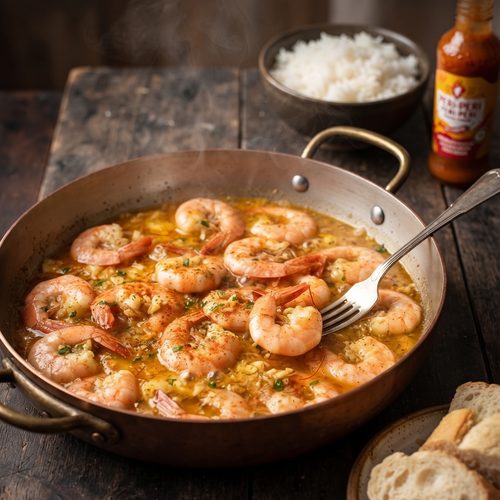
Authentic Shrimp Mozambique (Camarão à Moçambique)
Ingredients
- 2 lbs large raw shrimp (16/20 or 21/25 count), thawed, deveined, with shells and tails left on
- 3 Tbsp extra-virgin olive oil
- 3 Tbsp butter (divided: 1 Tbsp for cooking, 2 Tbsp cold for finishing)
- 1 medium onion , diced
- 4 –6 cloves garlic , minced or thinly sliced
- 2 bay leaves
- 1 ½ tsp sweet paprika (or colorau)
- ¼ tsp turmeric
- 1 Tbsp tomato paste (or roasted red pepper paste)
- 1 –2 tsp peri-peri sauce or Calabrian chili paste (1 tsp for mild-medium, 2 tsp for traditional heat)
- 1 cup (8 oz) crisp lager beer (or dry white wine)
- 1 fresh lemon , juiced (about 1 ½ Tbsp)
- ¼ cup fresh flat-leaf parsley or cilantro , finely chopped (plus extra for garnish)
- Kosher salt and freshly ground black pepper , to taste
- Cooked white rice and crusty bread (such as Portuguese rolls / papo-secos), for serving
Instructions
- Prep the Shrimp: Pat your thawed, shell-on shrimp dry with paper towels and season them lightly with kosher salt and freshly ground black pepper.
- Build the Aromatic Base: Heat the extra-virgin olive oil and 1 tablespoon of butter in a large, deep skillet or Dutch oven over medium heat. Add the diced onion and a pinch of salt. Sauté for 5–6 minutes until translucent and soft.
- Bloom the Spices: Add the garlic, bay leaves, sweet paprika, turmeric, tomato paste, and peri-peri sauce (or Calabrian chili paste). Stir constantly for 1–2 minutes until the garlic is fragrant and the paste darkens slightly.
- Simmer the Broth: Pour in the lager beer (or dry white wine), scraping up any browned bits from the bottom of the pan. Bring to a boil, then lower the heat and simmer uncovered for 3–4 minutes to cook off the raw alcohol and concentrate the flavors.
- Cook the Shrimp: Add the shrimp in an even layer. Toss to coat in the sauce, cover the pan, and simmer over medium-low heat for 3–5 minutes, stirring halfway through, until the shells turn bright pink and the shrimp are just opaque. (Avoid boiling once the shrimp go into the pan, as high heat will cause the proteins to tighten and turn rubbery.)
- Finish the Sauce: Remove the skillet from the heat and discard the bay leaves. Swirl in the remaining 2 tablespoons of cold butter, fresh lemon juice, and chopped parsley or cilantro until the butter melts into a glossy sauce.
- Serve: Taste and adjust salt if needed. Garnish with extra herbs and serve immediately over white rice with crusty rolls on the side.
Notes
- Why Shell-On Shrimp? Cooking shrimp with the shells intact locks in moisture and adds rich seafood flavor to the broth. Buying “easy-peel” shrimp (which are split along the back and deveined) makes peeling at the table effortless.
- Don’t Boil the Shrimp: Keep the heat at a gentle simmer once the shrimp go into the pan so they stay tender and juicy.
- Heat Level: Start with 1 teaspoon of peri-peri sauce or Calabrian chili paste for a mild-to-medium kick, or increase to 2 teaspoons for traditional spicy heat.
- Alcohol-Free Option: Substitute 1 cup of low-sodium seafood stock or chicken broth for the beer or wine.
- Chicken Mozambique Variation (Frango à Moçambique): Swap the 2 pounds of shrimp for 2 pounds of boneless, skinless chicken breasts or thighs cut into 1 ½-inch chunks. Season with salt and pepper and sear in the olive oil and 1 tablespoon butter over medium-high heat for 3–4 minutes until lightly browned; remove to a plate. Prepare the onion, garlic, spice, and beer base as directed, then return the chicken to the pan, cover, and simmer for 8–12 minutes until cooked through before finishing with cold butter, lemon juice, and herbs.
- Storage: Best enjoyed immediately. Freezing an emulsified sauce is not recommended, as the sauce can separate and the shrimp may become tough upon thawing.