Fall River Portuguese donuts (malasadas): fluffy, sugar-rolled, no-hole doughnuts with rich eggy flavor. A feast-style favorite made at home.
These Fall River and New Bedford-style malasadas deliver bakery-level results at home: soft, fluffy centers, golden crisp edges, and a classic sugar coating. The dough is enriched with eggs and dairy for that old-fashioned Portuguese feast texture, and the simple square cut means no special cutters or shaping skills required.
Ingredients for Fall River Portuguese donuts (malasadas), including eggs, flour, milk, yeast, butter, and sugar.1
If you love nostalgic, old-school doughnuts with a tender bite and simple sugar finish, this is your recipe. It’s the kind of treat that feels special but uses familiar pantry staples, and the method is straightforward: two rises, quick cuts, and a fast fry for warm, fresh malasadas.

Why This Recipe Works
- Enriched dough (eggs, milk, half-and-half, butter) creates a soft, tender crumb
- Whipping eggs with sugar builds structure and helps the dough rise well
- Two rises improve flavor and give the classic airy interior
- Rolling to a consistent thickness ensures even frying
- Small 1-inch squares fry quickly and evenly without collapsing
- Sugar coating sticks best when rolled while warm
What Often Goes Wrong (And How to Fix It)
- Dough doesn’t rise – Check yeast freshness, confirm water is about 110°F, and let dough rise in a warm draft-free spot.
- Malasadas are greasy – Oil is too cool. Fry at 350°F and avoid overcrowding (which drops oil temperature).
- Outside browns too fast, inside undercooked – Oil is too hot. Lower the heat slightly and keep the pieces uniform in size and thickness.
- The dough is overly sticky and hard to handle. Lightly flour your work surface and your hands. Add flour sparingly; too much makes them dense.
- Dense, tight texture – Don’t rush the rises. Let the dough fully double both times and avoid adding excess flour during mixing.
- Sugar won’t stick – Roll while warm, right after draining. If they cool too much, mist lightly with water and re-roll.
Ingredient Substitutions
- Active dry yeast: You can use instant yeast (same amount), but skip blooming and mix it into the flour; rise times may shorten.
- Whole milk: 2% works, but the texture may be slightly less rich.
- Half-and-half: Use more whole milk, or replace it with light cream for extra richness.
- Butter: Can be replaced with a neutral oil, but butter gives better flavor.
- Sugar coating: Cinnamon sugar works well; superfine sugar adheres beautifully.

Ingredients and What Each One Does
** You can find the full recipe ingredients and instructions on the printable recipe card below.
- Active dry yeast: Leavens the dough and creates the airy texture
- Sugar: Sweetens and feeds yeast; helps browning
- Warm water: Activates the yeast
- Eggs: Enrich the dough, improve structure, adds tenderness
- Flour: Provides the dough’s framework and chew
- Melted butter: Adds flavor, softness, and richness
- Salt: Balances sweetness and strengthens dough structure
- Whole milk: Moisture and richness; softens crumb
- Half-and-half: Extra richness for a bakery-style interior
- Sugar for rolling: Signature finish and classic malasada bite
How to Make Fall River Portuguese Donuts (Malasadas)
** You can find the full recipe ingredients and instructions on the printable recipe card below.
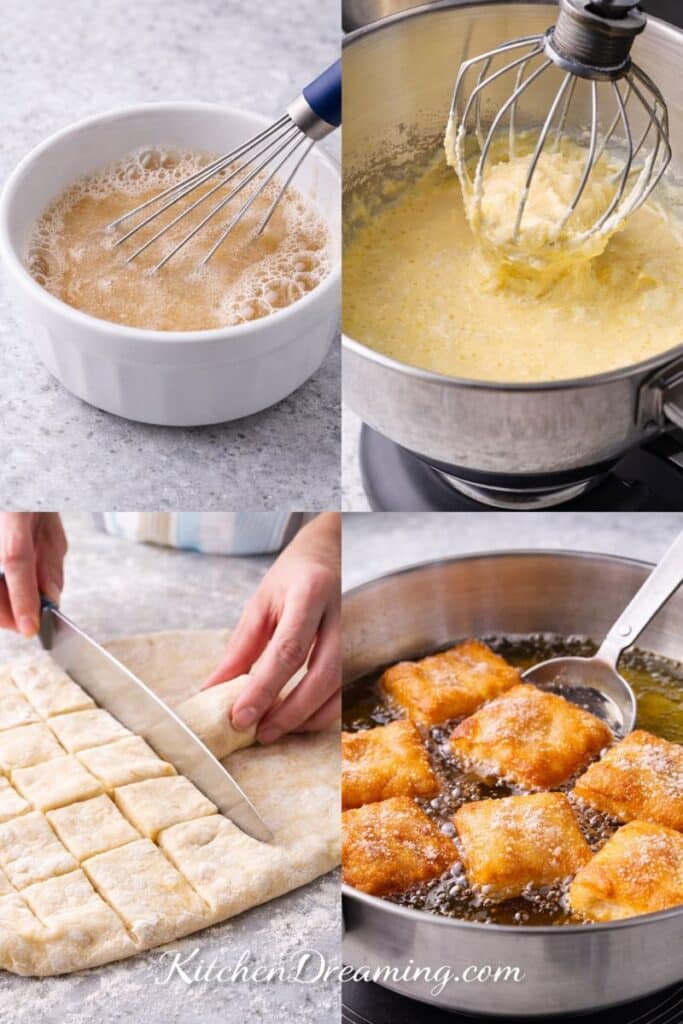
Bloom the yeast, whip the eggs and sugar until thick and pale, then mix in the enriched ingredients and flour to form a soft dough. Let the dough rise until doubled, roll to an even thickness, rise again, then cut into squares and fry until golden. Drain briefly and roll in sugar while warm. For full step-by-step instructions, use the recipe card.
Recipe Tips and Tricks
- Keep ingredients closer to room temperature for smoother mixing and better rise.
- Aim for a soft dough; adding too much flour makes dense malasadas.
- Use a thermometer to hold the oil at 350°F for the best texture.
- Fry in small batches to maintain oil temperature.
- Roll in sugar immediately after draining for the best coating.
Recipe Variations
- Cinnamon-sugar malasadas: Replace plain sugar with cinnamon sugar for a warmer flavor.
- Lemon-sugar malasadas: Add lemon zest to the rolling sugar for a bright finish.
- Vanilla malasadas: Add vanilla to the wet mixture for a classic bakery note.
- Filled malasadas (modern style): Pipe with pastry cream or jam after frying (not traditional, but popular).
Serving Suggestions
- Serve warm with coffee, espresso, or strong tea.
- Pair with fresh berries or a fruit salad for balance.
- Add a side of vanilla yogurt for dipping.
- For a brunch spread: serve alongside scrambled eggs and fresh fruit.
New Life for Leftovers
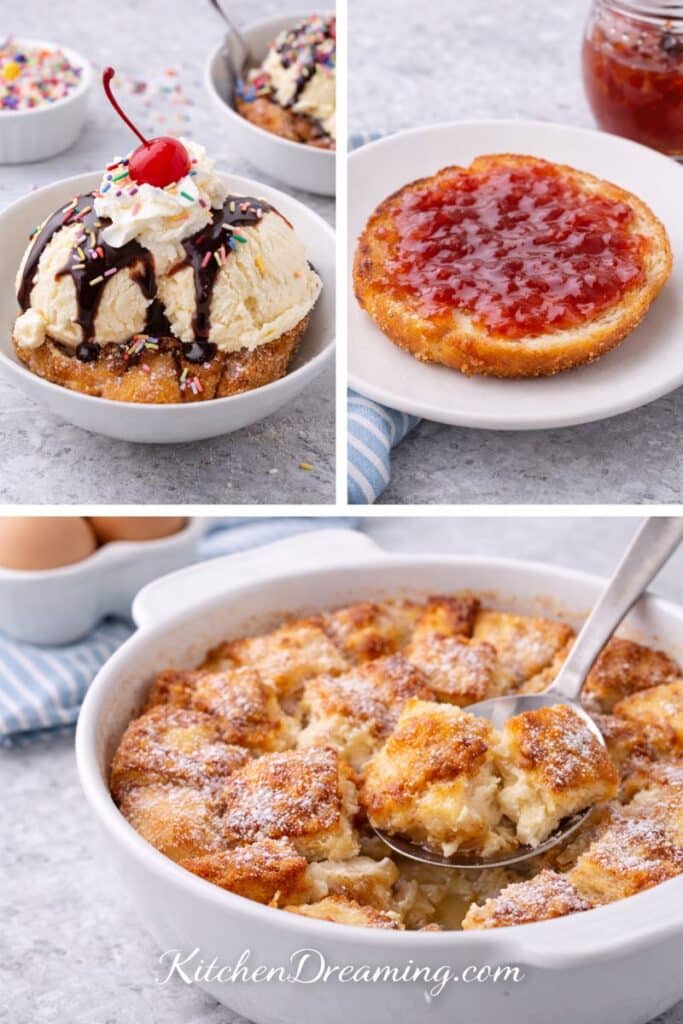
- Rewarm briefly and serve with ice cream for a doughnut sundae.
- Slice and toast lightly, then top with jam for a quick, sweet breakfast.
- Cube and use as a dessert “bread pudding” base (especially if they’ve gone a bit stale).
Storage
- Room temperature: Store in an airtight container up to 2 days. Sugar may absorb moisture; re-roll if needed.
- Best texture: Malasadas are best the day they’re fried.
People Often Ask (FAQs)
Are malasadas the same as regular doughnuts?
They’re similar, but malasadas are typically richer, often without a hole, and commonly rolled in sugar while warm.
Why are these cut into squares?
Square cuts are a traditional, simple method and help them fry evenly without special tools.
Can I make the dough ahead of time?
Yes. You can refrigerate the dough after the first rise, then bring to room temperature, roll, let rise again, and fry.
What oil is best for frying?
A neutral, high-smoke-point oil like vegetable or canola is ideal.
How do I know when they’re done?
They should be evenly golden brown and feel light for their size. Consistent oil temperature is the key.
Final Thought
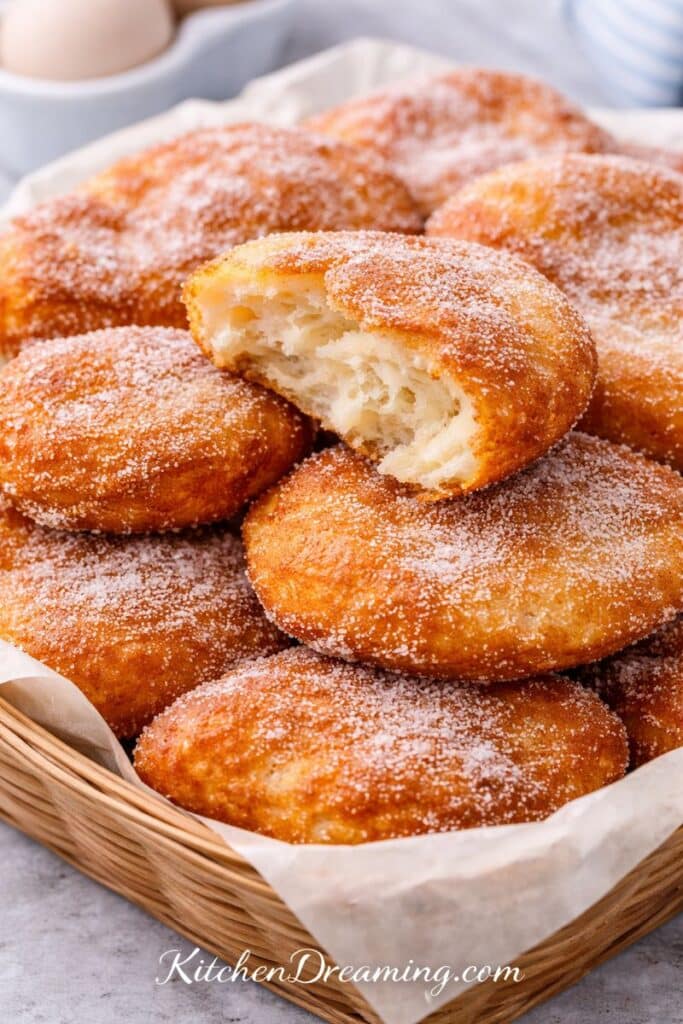
These Fall River Portuguese donuts deliver the classic Southeastern Massachusetts malasada experience at home: soft, golden, sugar-rolled doughnuts made from a rich, eggy dough. If you want a nostalgic, feast-style treat that tastes like it came from a local bakery, this is the recipe to keep and make again.

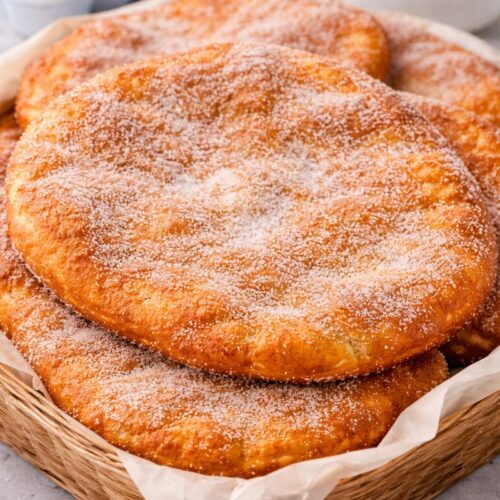
Portuguese Donuts (Malasadas) – Fall River / New Bedford Style
Ingredients
- 1 package (¼-ounce) active dry yeast
- ¾ cup sugar , plus 1 teaspoon (divided)
- ¼ cup warm water (110°F)
- 6 eggs , room temperature
- 6 cups all-purpose flour
- ¼ cup butter , melted and cooled slightly
- ¼ teaspoon salt
- 1½ cups whole milk , room temperature
- ½ cup half-and-half , room temperature
- Granulated sugar , for rolling
- Oil for frying (vegetable or canola)
Instructions
Activate the yeast
- In a small bowl, whisk [paid link] together the yeast, 1 teaspoon sugar, and warm water. Let sit 5–10 minutes until foamy.
Whip the eggs
- In a stand mixer [paid link] fitted with the whisk [paid link] attachment, beat the eggs and remaining ¾ cup sugar until thick and pale yellow (this gives malasadas its signature richness).
Form the dough
- Switch to the dough hook. With the mixer on low, slowly add: yeast mixture, melted butter, milk, half-and-half, and salt. Add the flour 1 cup at a time, mixing until a soft dough forms. The dough should pull away from the sides of the bowl and climb the hook slightly.
First rise
- Transfer dough to a lightly oiled bowl. Cover with plastic wrap and place in a warm, draft-free spot. Let rise until doubled, about 1½ hours.
Roll & second rise
- Turn dough onto a floured surface and lightly dust the top. Roll into a rectangle about ¼-inch thick. Cover with lightly greased plastic wrap and let rise again until doubled, about 1 hour.
Cut & fry
- Heat oil to 350°F.
- Cut dough into 1-inch squares (traditional—no holes!). Fry a few at a time, turning gently, until golden brown, about 3–4 minutes total.
Sugar & serve
- Drain on paper towels, then immediately roll warm malasadas in granulated sugar. This ensures the sugar sticks to the hot dough.
- Serve immediately—they’re best warm.
Notes
What Often Goes Wrong (And How to Fix It)
- Dough doesn’t rise – Check yeast freshness, confirm water is about 110°F, and let dough rise in a warm draft-free spot.
- Malasadas are greasy – Oil is too cool. Fry at 350°F and avoid overcrowding (which drops oil temperature).
- Outside browns too fast, inside undercooked – Oil is too hot. Lower the heat slightly and keep the pieces uniform in size and thickness.
- The dough is overly sticky and hard to handle. Lightly flour your work surface and your hands. Add flour sparingly; too much makes them dense.
- Dense, tight texture – Don’t rush the rises. Let the dough fully double both times and avoid adding excess flour during mixing.
- Sugar won’t stick – Roll while warm, right after draining. If they cool too much, mist lightly with water and re-roll.
Ingredient Substitutions
- Active dry yeast: You can use instant yeast (same amount), but skip blooming and mix it into the flour; rise times may shorten.
- Whole milk: 2% works, but the texture may be slightly less rich.
- Half-and-half: Use more whole milk, or replace it with light cream for extra richness.
- Butter: Can be replaced with a neutral oil, but butter gives better flavor.
- Sugar coating: Cinnamon sugar works well; superfine sugar adheres beautifully.
More Recipes You’ll Love
If you loved this Portuguese Malasadas Donut recipe, you might also enjoy more recipes from our Portuguese Collection. Looking for even more ideas? Browse our full set of Recipe Group Boards to find your next favorite meal.
📌 Save this recipe for later


I used to live in Fall River and I always love the Portuguese feast held in New Bedford. The Melissa was as big as your head! I love the way it’s crispy on the outside yet. Fluffy on the inside sprinkled with just a little bit of cinnamon sugar and it is absolutely amazing! I can’t wait to try this at home.
I used to live there too and they were amazing especially at the annual feast! In Hawaii, Malasadas are small like a donut.