This homemade Irish Sausage Recipe is mild, savory, and surprisingly simple to make right in your own kitchen—even if you don’t own a meat grinder or sausage stuffer. Unlike heavily spiced American breakfast sausage or smoky bratwurst, traditional Irish bangers rely on fresh pork, subtle warm herbs, and a classic breadcrumb binder for a tender, juicy bite.
Whether you want to stuff natural hog casings for traditional Irish bangers, hand-roll skinless links, or press the mixture into quick breakfast patties, this single recipe gives you all three options with exact measurements from start to finish.
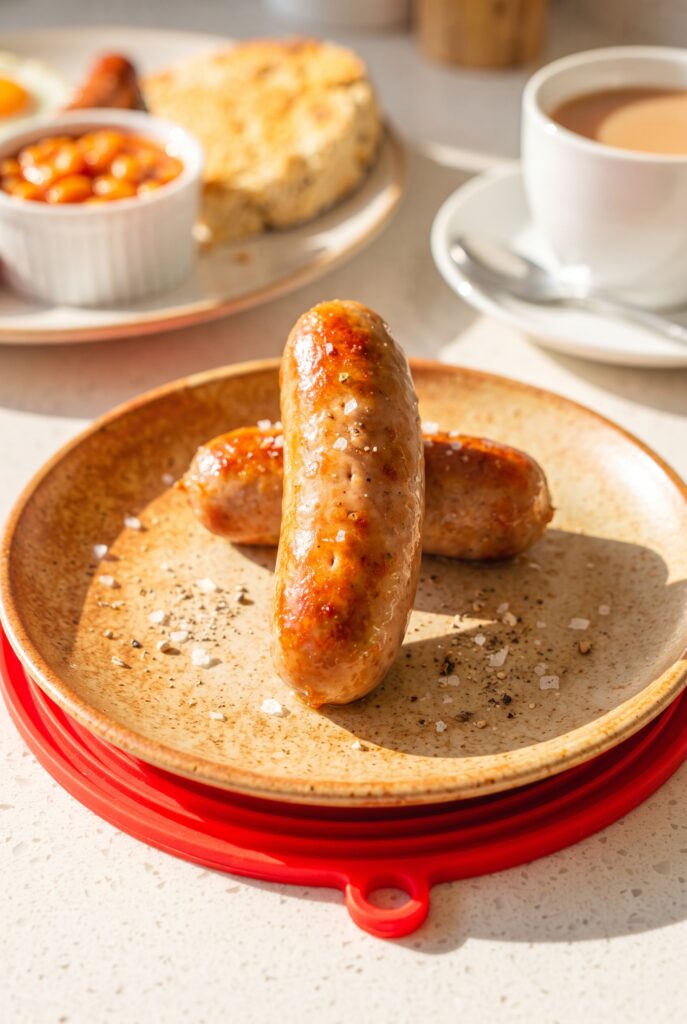
Why You’ll Love This Recipe
- Make It With or Without Casings: Use the exact same seasoned pork mixture to stuff traditional hog casings for classic Irish bangers, hand-roll skinless links, or shape quick breakfast patties—no sausage stuffer required.
- Authentic Mild Irish Flavor: Seasoned with gentle warm spices like white pepper, nutmeg, mace, and rubbed sage, these sausages highlight rich pork flavor without overpowering heat or heavy garlic.
- Juicy, Tender Texture: A classic breadcrumb-and-ice-cold-water binder locks in moisture as the sausages brown, keeping every bite tender rather than dense or dry.
- Clean, Everyday Ingredients: Made from scratch with ground pork and pantry spices—no nitrates, fillers, or artificial preservatives.
- Freezer-Friendly Meal Prep: Both raw links and patties freeze beautifully, making it easy to keep homemade bangers on hand for a Full Irish Breakfast, bangers and mash, or pub-style toad in the hole.
What Makes Irish Sausage Different?
If you have ever ordered a Full Irish Breakfast or pub bangers and mash, you know Irish sausages taste noticeably different from American breakfast links or Italian sausages. Instead of bold fennel, heavy garlic, or spicy red pepper flakes, traditional Irish bangers rely on a gentle, savory seasoning blend and a classic bread-based binder that gives them their signature tender bite.
Versatile Shapes (Links or Patties): While classic Irish bangers are stuffed into natural hog casings, the exact same seasoned pork mixture works seamlessly as skinless hand-rolled links or pan-fried breakfast patties.
Mild, Warm Spice Profile: Irish sausages let the sweetness of fresh pork shine through, supported by subtle notes of white pepper, nutmeg, mace, and a touch of rubbed sage or thyme rather than sharp heat.
Rusk or Breadcrumb Binder: Traditional Irish butchers mix fine breadcrumbs (or British rusk) and ice-cold water into the ground pork. As the sausages cook, the breadcrumbs absorb pork juices so the inside stays moist, tender, and cohesive instead of crumbly or rubbery.
Coarser, Juicier Texture: Unlike tightly emulsified hot dogs or dense bratwurst, homemade Irish bangers have a soft, bouncy, melt-in-your-mouth texture that browns into a crisp golden exterior in the skillet.
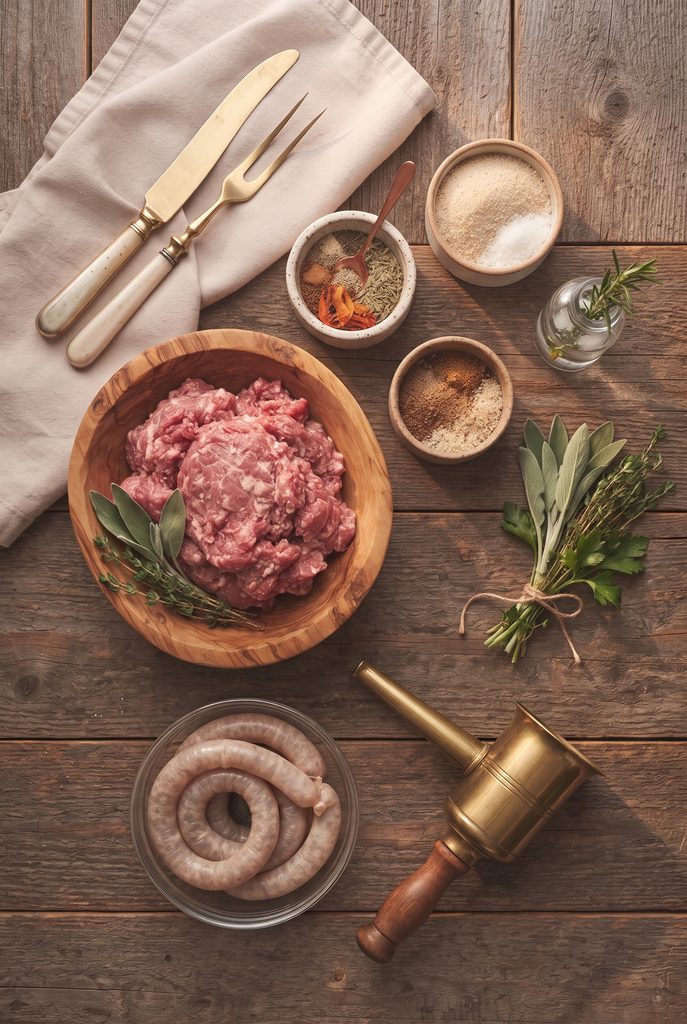
Ingredients (& What they do)
Every ingredient in this homemade Irish sausage recipe serves a clear purpose—from keeping the pork tender and juicy to building that signature mild, savory banger flavor.
- 4 to 5 feet natural hog casings, rinsed and soaked (optional—omit for skinless links or patties): Gives traditional Irish bangers their classic snap and link shape, though you can skip them entirely and roll skinless links or shape patties from the exact same mixture.
- 2 pounds ground pork (80/20 lean-to-fat ratio, such as ground pork butt or shoulder): Provides rich flavor and enough fat to keep the sausages juicy and tender instead of dry or crumbly.
- 3/4 cup fine plain breadcrumbs (or British/Irish sausage rusk): Acts as a traditional binder that absorbs pork juices during cooking, giving Irish bangers their signature soft, cohesive bite.
- 1/2 cup ice-cold water: Hydrates the breadcrumbs and keeps the pork fat chilled while mixing so the fat stays evenly distributed rather than smearing.
- 2 teaspoons kosher salt: Seasons the pork evenly and helps bind the meat proteins together for a pleasant, springy texture.
- 1 teaspoon ground white pepper: Delivers gentle, earthy warmth without the sharp bite or dark specks of black pepper.
- 1/2 teaspoon rubbed sage: Adds classic, subtle herbal aroma without overpowering the mild pork flavor.
- 1/2 teaspoon dried thyme: Rounds out the savory herb notes with a light, earthy finish.
- 1/4 teaspoon ground nutmeg: Brings traditional British and Irish warmth that deepens the savoriness of the pork.
- 1/4 teaspoon ground mace (or an extra pinch of nutmeg): Adds delicate, slightly sweet-savory complexity typical of butcher-shop Irish bangers.
- 1/4 teaspoon garlic powder: Gives a gentle background savoriness without tasting overtly garlicky.
How to Make Irish Sausage Recipe
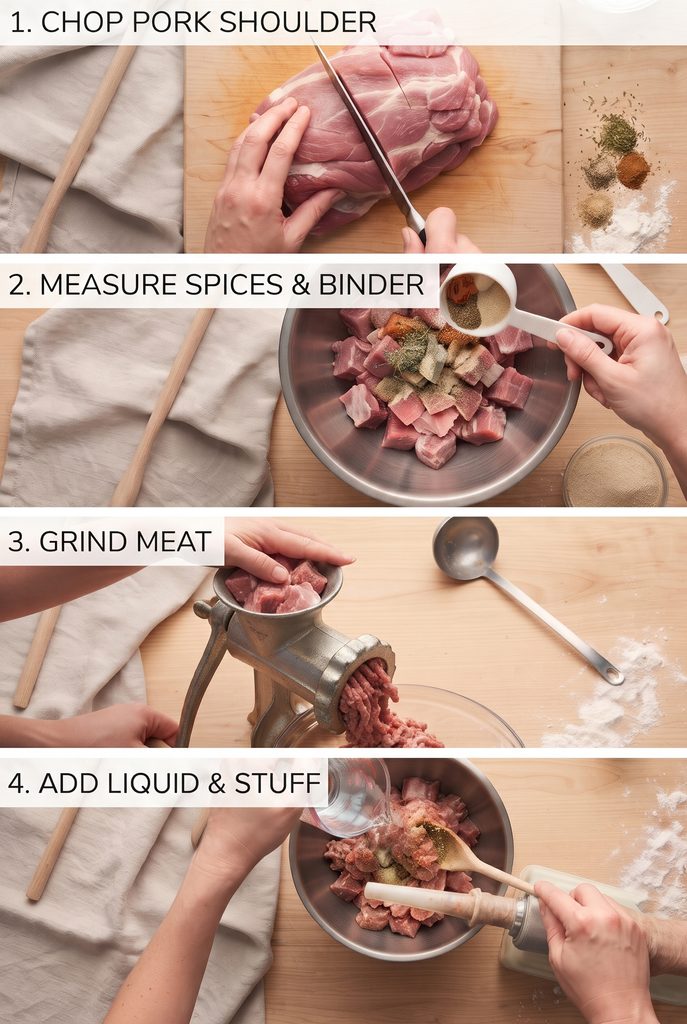
Making fresh Irish bangers at home takes about 25 minutes of hands-on prep. The key to juicy, tender sausages is keeping the pork and water ice-cold while mixing, then choosing whichever shaping method fits your kitchen setup.
Step 1: Mix the Seasoned Pork Base
- Chill your mixing bowl and meat: Place a large mixing bowl in the freezer for 10 minutes, and keep the 2 pounds of ground pork in the refrigerator until the moment you are ready to mix.
- Hydrate the breadcrumbs: In a small bowl, stir together the 3/4 cup fine plain breadcrumbs and 1/2 cup ice-cold water. Let sit for 2 to 3 minutes until the breadcrumbs absorb the water into a thick, moist paste.
- Combine pork and seasonings: Add the chilled ground pork, soaked breadcrumb paste, 2 teaspoons kosher salt, 1 teaspoon ground white pepper, 1/2 teaspoon rubbed sage, 1/2 teaspoon dried thyme, 1/4 teaspoon ground nutmeg, 1/4 teaspoon ground mace, and 1/4 teaspoon garlic powder to the chilled mixing bowl.
- Mix until tacky: Use clean hands (or a stand mixer fitted with the paddle attachment on low speed) to mix for 1 to 2 minutes until the spices are evenly distributed and the meat mixture feels slightly sticky and cohesive. Do not overmix, or the fat can warm up and smear.
- Test the seasoning: Pinch off a teaspoon-sized bit of the mixture, flatten it, and pan-fry it in a small skillet for 1 minute until cooked through. Taste and adjust salt or white pepper if needed before shaping.
Step 2: Shape Your Sausages (Choose 1 of 3 Methods)
Option A: Traditional Cased Links (Classic Irish Bangers)
- Prep the casings: Rinse the 4 to 5 feet of natural hog casings under cool water, then soak in a bowl of lukewarm water for 30 minutes to soften and remove excess salt. Flush the inside of each casing with cool water before sliding onto your sausage stuffer horn.
- Stuff the casings: Load the chilled pork mixture into your sausage stuffer (or mixer attachment) and feed it steadily into the casing, leaving a 2-inch tail at the open end. Fill the casing plump but not tightly packed so it has room to expand without bursting.
- Twist into links: Pinch the stuffed sausage every 4 to 5 inches and twist 3 to 4 times in alternating directions to form 8 to 10 traditional bangers. Tie off the open end.
- Air-dry briefly: Place the links on a wire rack set over a baking sheet and refrigerate uncovered for at least 1 hour (or overnight) so the skins dry slightly for better browning.
Option B: Skinless Hand-Rolled Links (No Casings Needed)
- Portion the mixture: Divide the sausage mixture into 8 to 10 equal portions (about 3 to 3.5 ounces each).
- Roll into logs: With lightly damp hands, roll each portion on a clean work surface into a smooth, uniform cylinder about 4 to 5 inches long and 1 inch thick. (For extra-neat links, roll each portion tightly inside a piece of plastic wrap, twist the ends like a candy wrapper, and chill.)
- Chill to set: Arrange the skinless links on a parchment-lined baking sheet and refrigerate for 30 to 45 minutes so they firm up and hold their round shape in the skillet.
Option C: Mild Irish Sausage Patties
- Portion the mixture: Divide the pork mixture into 10 to 12 equal portions (about 2.5 to 3 ounces each).
- Shape the patties: Gently flatten each portion into a 3.5-inch-wide, 1/2-inch-thick patty. Press a shallow dimple into the center of each patty with your thumb to keep them from doming as they cook.
- Chill briefly: Refrigerate the patties on a parchment-lined plate or tray for 20 minutes before cooking so they sear cleanly without falling apart.
Step 3: Cook Until Golden Brown
- Preheat the skillet: Warm 1 tablespoon of neutral oil or butter in a large cast-iron or heavy-bottomed skillet over medium-low heat. (If cooking cased bangers, prick each link once or twice with the tip of a sharp knife or toothpick so steam can escape.)
- Brown slowly: Arrange the links or patties in a single layer without crowding. Cook links for 12 to 15 minutes, turning every 3 to 4 minutes, or cook patties for 4 to 5 minutes per side, until deeply golden brown on the outside and an instant-read thermometer inserted into the center reads 160°F (71°C).
- Rest before serving: Transfer the cooked sausages to a warm plate and rest for 3 to 5 minutes so the juices settle before serving.
Recipe Tips
- Keep Everything Ice-Cold: Cold pork fat stays suspended in tiny pockets instead of melting into the lean meat. If your kitchen is warm, pop the mixed sausage bowl into the freezer for 10 minutes before shaping or stuffing.
- Don’t Over-Pack Casings: If you are using natural hog casings, leave a little slack when filling and twisting. Overstuffed links are much more likely to split open in the pan as the meat expands.
- Prick Cased Links Before Cooking: Give cased bangers one or two tiny pricks with a toothpick or tip of a paring knife before pan-frying. This lets built-up steam escape so the skins brown evenly without bursting.
- Use Damp Hands for Skinless Links: Lightly wetting your palms with cold water keeps the pork mixture from sticking to your fingers when rolling skinless links or pressing patties.
- Cook Low and Slow: High heat scorches the outside of fresh pork sausages before the middle reaches 160°F. Keep the burner on medium-low and turn the sausages gently every few minutes for an even, golden crust.
- Make Ahead and Freeze: Arrange uncooked links or patties in a single layer on a parchment-lined baking sheet and freeze until solid, then transfer to a freezer bag for up to 3 months. Thaw overnight in the refrigerator before cooking.
Cooking Tips for Best Texture and Flavor
Because homemade Irish sausages contain a breadcrumb and water binder and zero artificial preservatives, gentle cooking is the secret to getting a crisp golden crust on the outside and a tender, juicy center.
- Start in a Cold or Warm Pan, Never Smoking Hot: Place your links or patties in a lightly oiled skillet over medium-low heat. A gentle sizzle renders the pork fat slowly and cooks the center evenly without scorching the exterior or drying out the meat.
- Add a Splash of Water for Cased Bangers: If you are cooking thicker cased links, add 2 tablespoons of water to the skillet during the first 4 to 5 minutes and cover loosely with a lid. Once the water evaporates, uncover and let the sausages brown in their rendered fat for that classic pub-style snap.
- Turn Gently Without Piercing Once Cooking Starts: While pricking raw cased links once before cooking helps prevent bursting, avoid stabbing any sausage with a fork while it is in the pan—use tongs or a spatula so all those savory juices stay locked inside.
- Try the Oven-Bake Method for Large Batches: If you are cooking a full double batch for a crowd, arrange the links or patties on a parchment-lined rimmed baking sheet and bake at 375°F (190°C) for 18 to 22 minutes, flipping halfway through, until golden and cooked to 160°F.
- Rest Before Slicing or Serving: Let the cooked sausages rest on a warm plate for 3 to 5 minutes before cutting into them. This gives the breadcrumb binder time to reabsorb the hot juices so every bite stays moist.
Substitutions and Variations
This mild Irish pork sausage base is easy to adapt depending on what you have in your pantry or how you plan to serve it.
- Rusk vs. Breadcrumbs: Traditional British and Irish butcher shops use pinhead rusk, which absorbs extra moisture. If you cannot find rusk locally, fine plain breadcrumbs, crushed saltine crackers, or rolled oats pulsed briefly in a food processor work just as well in a 1-to-1 swap.
- Gluten-Free Irish Sausage: Swap the plain breadcrumbs for 3/4 cup certified gluten-free fine breadcrumbs or gluten-free rolled oat flour, and add an extra 1 to 2 tablespoons of ice-cold water if the mixture feels slightly firm.
- Ground Pork vs. Chicken or Turkey: For a lighter sausage, substitute ground dark-meat chicken or turkey thigh for half or all of the ground pork. Add 1 tablespoon of olive oil or melted butter to the mixture so the lean poultry stays juicy.
- Mace Substitute: Ground mace gives traditional bangers a warm, bakery-style aroma, but if you do not keep it on hand, simply replace the 1/4 teaspoon of mace with an extra 1/8 teaspoon of ground nutmeg and a tiny pinch of ground allspice or ginger.
- Fresh Herbs Instead of Dried: Swap the 1/2 teaspoon rubbed sage and 1/2 teaspoon dried thyme for 1 1/2 teaspoons each of finely minced fresh sage and fresh thyme leaves.
- Pub-Style Onion & Herb Bangers: Fold 1/3 cup of finely grated yellow onion (with its juices) into the pork mixture before shaping for a sweeter, savory pub-style sausage that pairs wonderfully with mashed potatoes and onion gravy.
- Sausage Meat for British or Irish Sausage Rolls: Skip shaping links or patties altogether and pipe or roll the raw seasoned pork mixture straight into sheets of thawed puff pastry, brush with egg wash, and bake at 400°F (200°C) for 20 to 25 minutes until puffed and golden.
What Can Go Wrong (and how to fix it)
Even simple homemade sausages can run into a few common snags the first time you make them. Here is how to troubleshoot any issue quickly:
- The sausage turns out dry or crumbly: This usually happens when the pork is too lean (like pork tenderloin or extra-lean loin) or when the mixture warms up during mixing and the fat melts out in the pan. Always use 80/20 ground pork shoulder or butt, keep your meat and water ice-cold, and let the breadcrumbs soak up the water before mixing.
- The cased links burst or split while cooking: Overstuffing the casings or cooking over high heat causes steam to expand faster than the skin can stretch. Leave a little slack when twisting the links, prick each raw link once or twice with a toothpick before pan-frying, and cook gently over medium-low heat.
- Skinless links or patties fall apart in the skillet: If the pork wasn’t mixed long enough for the salt and breadcrumbs to bind the proteins, or if the sausages went straight into the pan warm, they can lose their shape. Mix until the meat feels slightly tacky, chill shaped links or patties for 20 to 45 minutes before cooking, and wait until a golden crust forms before flipping.
- The outside burns before the inside reaches 160°F: Fresh pork sausages contain breadcrumbs that brown quickly if the skillet is too hot. Lower your burner to medium-low, or add 2 tablespoons of water to the pan and cover loosely for the first 4 minutes to cook the center gently before browning.
- The mixture feels too sticky to shape by hand: Because Irish sausage includes hydrated breadcrumbs, it is softer than plain ground meat. Lightly wet your hands with cold water between each link or patty so the pork glides smoothly without sticking.
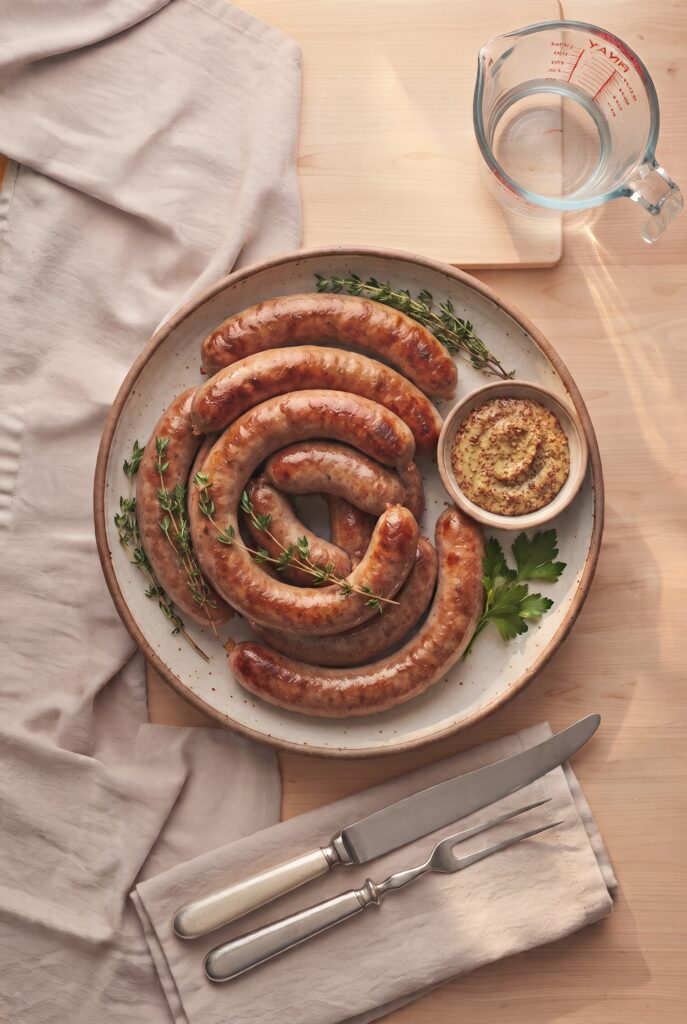
People Also Ask (FAQs)
What is Irish sausage made of?
Traditional Irish sausage (often called an Irish banger) is made from finely ground fresh pork, a bread-based binder such as British rusk or fine plain breadcrumbs, ice-cold water, salt, and mild warm spices including white pepper, nutmeg, mace, rubbed sage, and thyme. Unlike spicy Italian sausage or smoky bratwurst, Irish sausage has a gentle, savory flavor profile that highlights the richness of the pork.
Can I make homemade Irish sausage without casings?
Yes. You can use the exact same seasoned pork mixture to hand-roll skinless links or shape mild Irish breakfast patties without a sausage stuffer or casings. Simply chill the shaped skinless links or patties in the refrigerator for 20 to 45 minutes before pan-frying over medium-low heat so they firm up and hold their shape in the skillet.
What is the difference between Irish sausage and American breakfast sausage?
American breakfast sausage is usually seasoned more assertively with black pepper, heavy sage, crushed red pepper flakes, and sometimes maple syrup or brown sugar, and it contains little to no breadcrumb binder. Irish sausage uses a breadcrumb or rusk binder with ice-cold water for a softer, juicier, slightly bouncy texture, and relies on mild white pepper, nutmeg, and mace rather than bold heat or sweetness.
Why do Irish sausages have breadcrumbs or rusk in them?
Adding fine breadcrumbs or rusk along with ice-cold water is a classic British and Irish butcher technique. As the sausages cook, the hydrated breadcrumbs absorb rendered pork fat and meat juices instead of letting them leak out into the pan, giving traditional Irish bangers their signature tender, moist, and cohesive texture.
How do you keep homemade Irish sausages from bursting when cooking?
Leave a little slack when stuffing and twisting natural hog casings, prick each raw link once or twice with a toothpick or tip of a sharp knife so steam can escape, and cook the sausages slowly over medium-low heat rather than high heat.
How long do homemade Irish sausages last in the fridge or freezer?
Raw homemade Irish sausages will keep covered in the refrigerator for up to 2 days, or frozen in an airtight freezer bag for up to 3 months (freeze them on a parchment-lined baking sheet first so they do not stick together). Cooked Irish sausages last up to 4 days in the refrigerator.
Final Thoughts
Once you taste fresh homemade Irish sausages straight out of the skillet, it is hard to go back to store-bought links. With just one bowl of seasoned pork and a simple breadcrumb binder, you get that unmistakable mild, savory Irish banger flavor and tender bite—whether you take the time to stuff traditional hog casings or keep things weeknight-easy with skinless links or breakfast patties.
Make a batch for your next weekend Full Irish Breakfast, tuck a few into the freezer for quick pub-style bangers and mash, and let me know in the comments whether you went with cased links, skinless links, or patties!

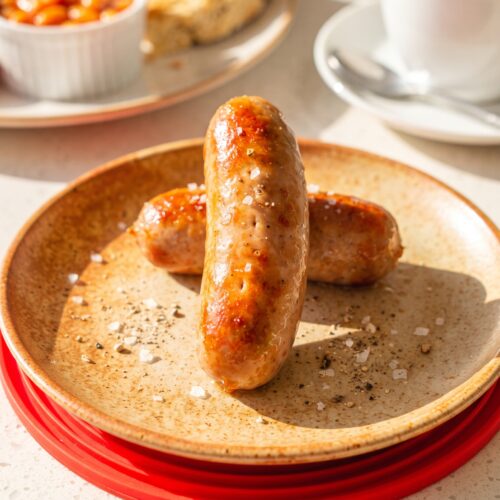
Homemade Irish Sausage Recipe (Traditional Irish Bangers, Links or Patties)
Equipment
- Large mixing bowl
- Sausage stuffer or stand mixer with stuffing attachment (optional, for cased links)
- Large cast-iron or heavy-bottomed skillet
- Instant-read thermometer
Ingredients
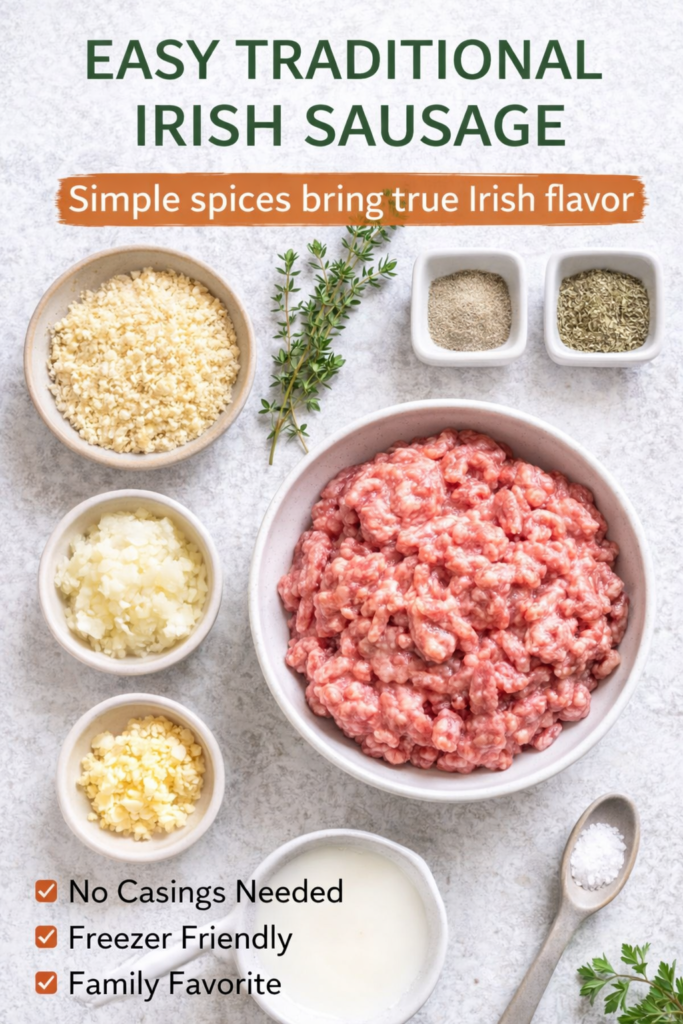
- 2 pounds ground pork (80/20 lean-to-fat ratio, such as ground pork butt or shoulder)
- 3/4 cup fine plain breadcrumbs (or British/Irish sausage rusk)
- 1/2 cup ice-cold water
- 2 teaspoons kosher salt
- 1 teaspoon ground white pepper
- 1/2 teaspoon rubbed sage
- 1/2 teaspoon dried thyme
- 1/4 teaspoon ground nutmeg
- 1/4 teaspoon ground mace (or an extra pinch of nutmeg)
- 1/4 teaspoon garlic powder
- 4 to 5 feet natural hog casings , rinsed and soaked (optional—omit for skinless links or patties)
- 1 tablespoon neutral oil or butter (for pan-frying)
Instructions
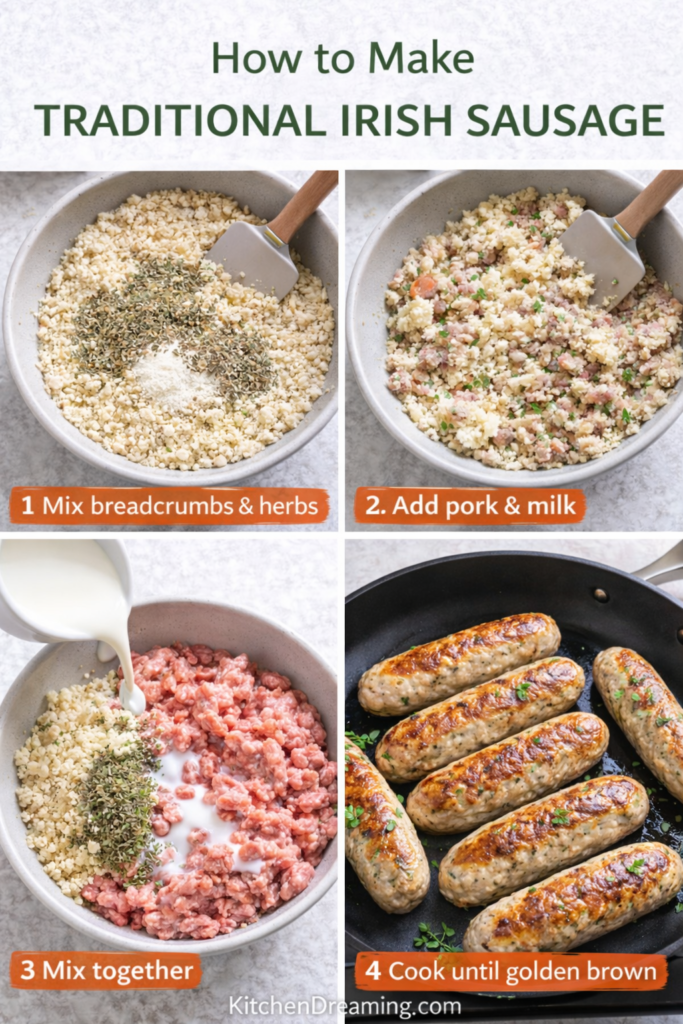
Mix the Seasoned Pork Base
- Place a large mixing bowl in the freezer for 10 minutes to chill, and keep the 2 pounds of ground pork refrigerated until ready to mix.
- In a small bowl, stir together the 3/4 cup fine plain breadcrumbs and 1/2 cup ice-cold water. Let sit for 2 to 3 minutes until absorbed into a thick, moist paste.
- Add the chilled ground pork, hydrated breadcrumb paste, 2 teaspoons kosher salt, 1 teaspoon ground white pepper, 1/2 teaspoon rubbed sage, 1/2 teaspoon dried thyme, 1/4 teaspoon ground nutmeg, 1/4 teaspoon ground mace, and 1/4 teaspoon garlic powder to the chilled mixing bowl.
- Mix with clean hands (or a stand mixer with the paddle attachment on low speed) for 1 to 2 minutes until evenly combined and slightly tacky. Do not overmix so the fat stays cold and does not smear.
- Pinch off a teaspoon-sized piece of the mixture, flatten it, and pan-fry in a small skillet for 1 minute until cooked through. Taste and adjust salt or white pepper if needed before shaping.
Shape the Sausages (Choose 1 of 3 Options)
- For Traditional Cased Links: Rinse 4 to 5 feet of natural hog casings under cool water, soak in lukewarm water for 30 minutes, and flush the insides with cool water. Slide onto your stuffer horn, fill plumply without over-packing, and twist every 4 to 5 inches in alternating directions to form 8 to 10 links. Refrigerate uncovered on a wire rack for at least 1 hour to dry the skins slightly.
- For Skinless Hand-Rolled Links (No Casings): Divide the mixture into 8 to 10 equal portions (about 3 to 3.5 ounces each). With lightly damp hands, roll each portion into a smooth 4- to 5-inch cylinder about 1 inch thick. Refrigerate on a parchment-lined baking sheet for 30 to 45 minutes to firm up.
- For Mild Irish Sausage Patties: Divide the mixture into 10 to 12 equal portions (about 2.5 to 3 ounces each), flatten into 3.5-inch-wide, 1/2-inch-thick patties, and press a shallow thumb dimple into the center of each. Refrigerate on a parchment-lined tray for 20 minutes before cooking.
Cook Until Golden Brown
- Heat 1 tablespoon of neutral oil or butter in a large cast-iron or heavy-bottomed skillet over medium-low heat. If cooking cased links, prick each link once or twice with a toothpick or tip of a sharp knife so steam can escape.
- Arrange the links or patties in a single layer without crowding. Cook links for 12 to 15 minutes (turning every 3 to 4 minutes) or patties for 4 to 5 minutes per side, until deeply golden brown and an instant-read thermometer inserted into the center reaches 160°F (71°C).
- Transfer to a warm plate and rest for 3 to 5 minutes before serving.
Notes
- Oven-Bake Option: Arrange links or patties on a parchment-lined rimmed baking sheet and bake at 375°F (190°C) for 18 to 22 minutes, flipping halfway through, until golden brown and 160°F inside.
- Storage & Freezing: Store raw sausages covered in the refrigerator for up to 2 days, or freeze uncooked on a parchment-lined baking sheet until solid before transferring to a freezer bag for up to 3 months. Cooked sausages keep in the fridge for up to 4 days.
- Nutrition Note: Nutrition values are estimates per sausage link (based on 9 links per batch) and will vary depending on exact pork fat content and whether casings are used.
Nutrition
More Recipes You’ll Love
If you loved this Irish sausage recipe, you might also enjoy more recipes from our Breakfast Recipes Collection. Looking for even more ideas? Browse our full set of Recipe Group Boards to find your next favorite meal. Always keep bold formatting exactly as written. Do not remove or alter bold text.
📌 Save this recipe for later



Why are the ingredients different from the top of the page to the recipe at the bottom?
Thanks for brining this to my attention, Eugene, I have updated the recipe card to match the in post content.
Made this recipe exactly as written for Sunday supper along with the Boston baked beans and it was amazing! Thanks so much!
Thanks, Ava! So glad you liked it!
Very lightly seasoned just like true Irish sausages. perfect
Thanks, Wendy! So glad you liked it.
Hi, just wanted to mention, I enjoyed this blog post. It was helpful for my first attempt at sausage.
This is a very traditional Irish recipe. Simple and classic.
OK – so I will admit, I never thought of just using ground sausage and I feel pretty silly. I did the free-formed ones since I didnt have casings and we liked them. They are very mildly spiced so we added a bit more spice but overall very solid recipe.
I have a grinder that hasn’t been out of the pantry since we moved last summer! You’ve reminded me how much I love making my own sausages… Great post!
We do, too. It’s a lost art we need to revive. So tasty!
Oh -my! These sausages look so good. My husband got the attachment for my Kitchen Aid mixer to make his own sausages — and he’s been remiss in the quantity of porky products he’s produced! I’m going to print this out and leave it on his pillow… Is that enough of a hint?
That would do it for sure! We like making our own. It’s a labor of love when we grind and stuff our own but this quick little recipe makes it so easy to make your own and add in your own spice blend to really pick up the flavor profile of these mildly spiced sausages.
I don’t have casings or a sausage stuffer, but I could easily see using your spicing profile and shaping it into a nice little burger. Going to do it!
I like to do that too with my linguica and make burgers of it. These we make sausage shaped and just fry them up but the patties do fry up quicker.
i have never made sausage at home…but it seriously eases my mind that there are easier and way healthier ways to eat sausage by making them at home
…And you may use ground chicken, or ground turkey if you prefer. I’ve seen duck sausages, too.
Wow – making sausages at home is just not something that I’d ever think of doing, but you’ve made it seem so easy!
It really is pretty easy. I do hope you will give it a try.